- 中文
- English
- Español
The History of Lab-grown Diamonds
2022-12-19 15:15:52
Click:
“
Since the first diamonds were discovered more than 2,500 years ago, this dazzlin
”
Since the first diamonds were discovered more than 2,500 years ago, this dazzling gemstone has been highly valued. Compared with the long history of natural diamonds, the birth of lab-grown diamonds in the middle of the 20th century can be regarded as a new thing. However, thanks to the rapid development of technology, cultivated diamonds have already stepped out of the research and exploration stage, and the pace of its marketization is also accelerating, which has attracted attention from inside and outside the industry.
At the end of the 8th century, the French chemist Lavoisier discovered that diamonds are a kind of simple crystals composed of carbon elements formed under the conditions of high pressure and high temperature deep in the earth, which provided a theoretical basis for the technology of cultivating diamonds in later generations.
In 1952, William Everso, a scientist from the Federal Silicon Carbide Corporation of the United States, used Chemical Vapor Deposition (CVD) to continuously deposit carbon-containing gas on the diamond seed crystal, gradually accumulating and hardening to form diamonds.
In 1954, Dr. Hall, the head of General Electric's "Super Pressure Project", led a team to make a breakthrough in the field of growing diamond technology, which gave birth to what is known in the industry as "High Pressure High Temperature (HPHT)".
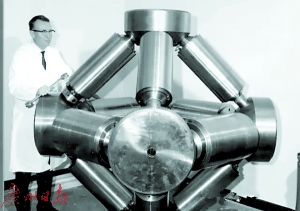
(Dr. Hall and the HPHT diamond synthesis machine at that time)
In 1963, China's first artificial fine-grained diamond was born, which was developed by the Institute of Geochemistry of the Chinese Academy of Sciences, the Institute of Physics of the Chinese Academy of Sciences, the Zhengzhou Sanmo Research Institute and the Academy of Geological Sciences.
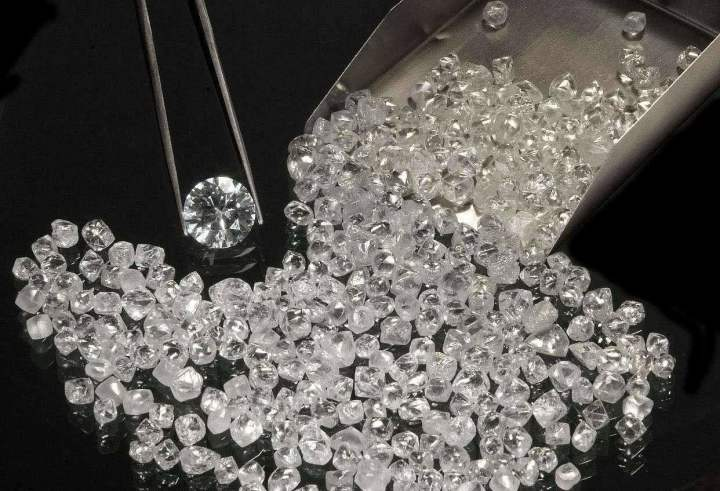
In 1970, the General Electric Company of the United States successfully cultivated large-grained gem-quality diamonds through improved technology, but did not carry out mass production.
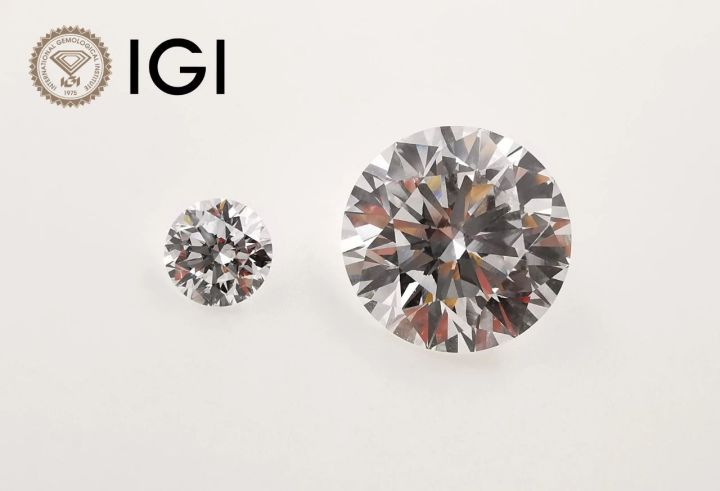
May 22, 2015 - IGI Hong Kong laboratory identified the world's largest colorless HPHT lab-grown diamond, which weighed 10.02 carats. It was polished from a record-setting 32.26-carat lab-grown diamond. The time does not exceed 300 hours.
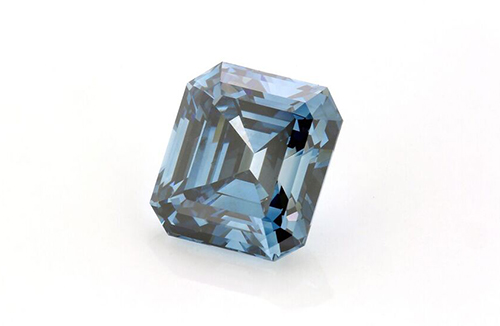
March 16, 2016 - Basel, New Diamond Technology (NDT) presents a 5.03-carat, VS1 clarity, emerald-cut Type IIb high-temperature, high-pressure (HPHT) grown blue diamond.
On May 29, 2018, De Beers Group announced the establishment of Lightbox Jewelry, a lab-grown diamond jewelry brand.
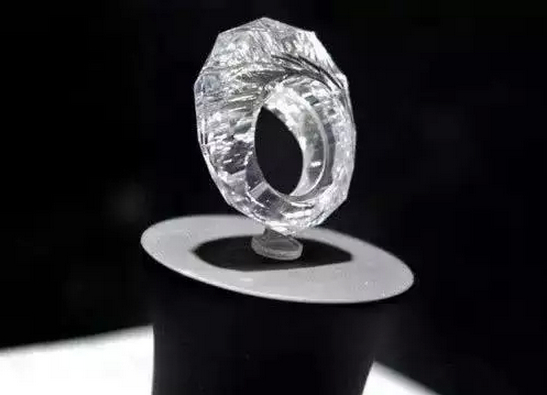
In 2018, Apple and San Francisco-based diamond manufacturing company Diamond Foundry teamed up to design the world's first 45-carat solid diamond ring—a solid diamond ring made entirely of lab-grown diamonds.
On March 9, 2020, IGI International Gemological Institute identified a 7.06-carat CVD-grown diamond. The birth of this diamond also marks the increasing maturity of high-quality, large-carat CVD-grown diamond technology.

From the end of the 18th century to 2020, from the emergence of CVD and HPHT technology to the formal entry of cultured diamonds into the jewelry field, the development of cultured diamonds has only a history of more than a hundred years. Compared with natural diamonds and other gemstones, it is undoubtedly the most important gemstone in the jewelry industry.









-

CVD Single-Crystal Diamonds: An Analysis of the Complete Processing Workflow from Gas-Phase Deposition to Finished Diamond Chips
MPCVD (Microwave Plasma Chemical Vapor Deposition) technology is currently the core process for producing high-quality single-crystal diamond s. Thanks to its advantages of low defect rates, high purity, and controllable large dimensions, it is widely used in fields such as semiconductor heat dissipation, precision optics, and high-end sensors. The final quality of single-crystal diamond s depends on comprehensive process control throughout the entire workflow—from vapor deposition growth to pos
-
Single-Crystal or Polycrystalline Diamond — Which Has Greater Potential?
As diamond continues to enter industries such as semiconductors, thermal management, optics, high-power electronics, and precision machining, the requirements for diamond materials are also evolving.
-
Diamond Polishing and Grinding Processes: Core Challenges and Industry Hurdles
Diamond is often hailed as the “ultimate material” – ranking 10 on the Mohs hardness scale, boasting an ultra‑high thermal conductivity (~2,200 W/(m·K)), excellent chemical stability, and broad optical transparency. These properties make it irreplaceable in cutting‑edge applications such as semiconductor heat dissipation, high‑end optics, and quantum chips. Yet the paradox of “good materials are hard to process” is nowhere more evident than in diamond. From rough grinding for planarization to at
-
Single-Crystal vs Polycrystalline CVD Diamond: Process Difference Lies in Growth Logic, Not Equipment
The process difference between single crystal and polycrystalline CVD diamond lies not in equipment, but in growth logic. Single crystal and polycrystalline CVD diamond are two functional new materials with completely independent growth mechanisms, lattice structures and performance systems. Their process logic, product features and application boundaries diverge fundamentally from the very start of deposition and growth. Comparing or selecting materials without considering their underlying crys