- 中文
- English
- Español
The Origin of Diamond Grading(Ⅰ)
2023-03-29 14:44:35
Click:
“
Because diamonds are difficult to process, before the diamond cutting technology
”
Because diamonds are difficult to process, before the diamond cutting technology is mature and perfect, the quality of diamonds is determined according to the perfection of the crystal, the brightness of the crystal surface and the weight of the diamond, and the color and clarity do not affect the price.
Before the 16th century, India was the only producer of diamonds in the world.
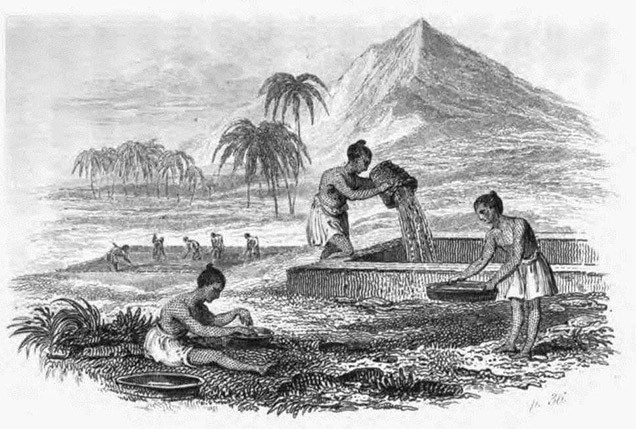
In 1724, with the discovery of Brazilian diamonds, Brazil gradually replaced India as the main producer of diamonds in the world. The diamond resources produced in Brazil have been the main source of diamonds in the world for more than 100 years. As the supply of diamonds continues to increase, people's perceptions of diamond quality are quietly undergoing a major shift, with cut quality gradually replacing crystal form.
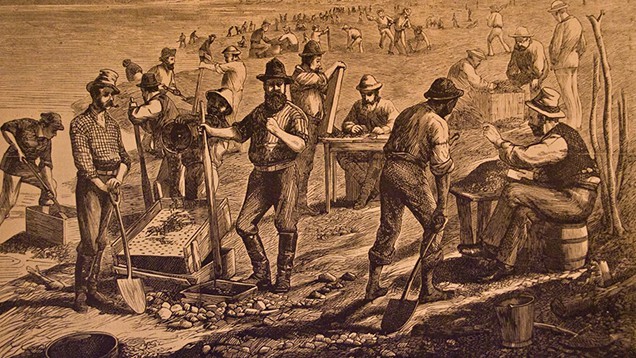
After the discovery of diamonds in South Africa in 1867, a large number of diamond resources were mined, and the output of diamonds increased day by day. Along with the extensive use of diamonds and the development of diamond cutting and grinding technology, people pay more and more attention to the quality of diamond processing. At the same time, the color and clarity of diamonds have also begun to receive more attention from people, and have gradually become important factors in diamond quality evaluation.
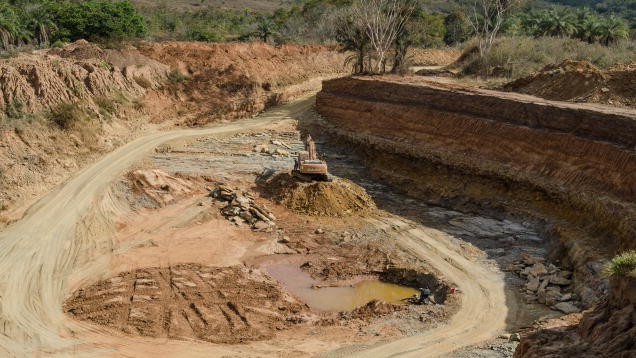
In the mid-19th century, the names of diamond mines such as Golcondo, Bagagem, Canavievas, Diamatinas and Bahias were used to describe the color of diamonds. Among them, Golcondo is an important diamond mine origin in ancient India, and the rest are the names of diamond mines in Brazil. Golcondo represents the best color diamonds, followed by Bagagem Canavieras, Diamantinas and Bahias in that order.
With the continuous development of the diamond industry, the evaluation of diamond quality has become more stringent, and the terminology for evaluating diamond grades has also changed, forming a color grading term called "old term", that is, a term describing the color grade of diamonds. It became the name of the diamond mine in South Africa, and was divided into Jager, River, Top Wesselton, Wesselton, Crystal and Cape according to the quality of the color. At the same time, the concept of diamond clarity and cut has also been developed.









-

CVD Single-Crystal Diamonds: An Analysis of the Complete Processing Workflow from Gas-Phase Deposition to Finished Diamond Chips
MPCVD (Microwave Plasma Chemical Vapor Deposition) technology is currently the core process for producing high-quality single-crystal diamond s. Thanks to its advantages of low defect rates, high purity, and controllable large dimensions, it is widely used in fields such as semiconductor heat dissipation, precision optics, and high-end sensors. The final quality of single-crystal diamond s depends on comprehensive process control throughout the entire workflow—from vapor deposition growth to pos
-
Single-Crystal or Polycrystalline Diamond — Which Has Greater Potential?
As diamond continues to enter industries such as semiconductors, thermal management, optics, high-power electronics, and precision machining, the requirements for diamond materials are also evolving.
-
Diamond Polishing and Grinding Processes: Core Challenges and Industry Hurdles
Diamond is often hailed as the “ultimate material” – ranking 10 on the Mohs hardness scale, boasting an ultra‑high thermal conductivity (~2,200 W/(m·K)), excellent chemical stability, and broad optical transparency. These properties make it irreplaceable in cutting‑edge applications such as semiconductor heat dissipation, high‑end optics, and quantum chips. Yet the paradox of “good materials are hard to process” is nowhere more evident than in diamond. From rough grinding for planarization to at
-
Single-Crystal vs Polycrystalline CVD Diamond: Process Difference Lies in Growth Logic, Not Equipment
The process difference between single crystal and polycrystalline CVD diamond lies not in equipment, but in growth logic. Single crystal and polycrystalline CVD diamond are two functional new materials with completely independent growth mechanisms, lattice structures and performance systems. Their process logic, product features and application boundaries diverge fundamentally from the very start of deposition and growth. Comparing or selecting materials without considering their underlying crys