- 中文
- English
- Español
What is the Fire of a Diamond
2023-04-20 16:22:33
Click:
“
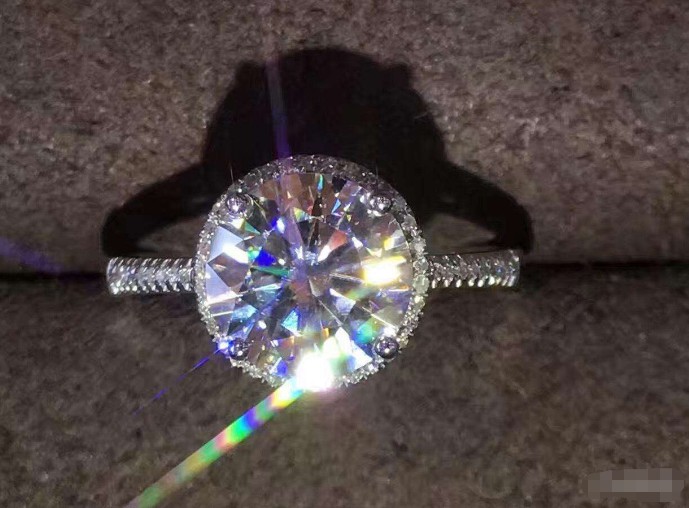
Fire is the colored light reflected by a diamond. Dispersion refers to the phenomenon that white light is decomposed into a continuous spectrum composed of monochromatic light of different wavelengths when it passes through the inclined surface of a transparent object, thereby forming a phenomenon of spectral color, which is also called "fire color".
”
Fire is the colored light reflected by a diamond. Dispersion refers to the phenomenon that white light is decomposed into a continuous spectrum composed of monochromatic light of different wavelengths when it passes through the inclined surface of a transparent object, thereby forming a phenomenon of spectral color, which is also called "fire color".
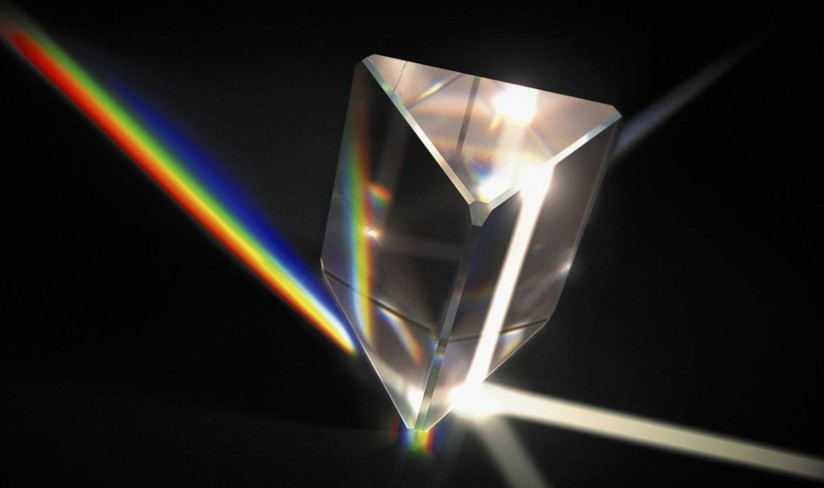
The dispersion effect of a material is expressed by the difference in refractive index between blue light (430.8nm) and red light (686.7nm) of a specific wavelength. This difference is called the dispersion rate. A gemstone with a larger dispersion rate has a stronger dispersion effect and stronger fire; the dispersion value of a diamond is 0.044, which is a gem with strong dispersion, so a diamond has a strong fire.
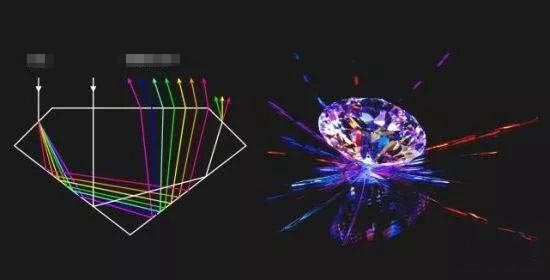
When a beam of white light is irradiated vertically on the table, the white light will not be dispersed on the table; but when the light enters the facet of the inner pavilion of the diamond from the crown, it is totally reflected by the facet, and then passes through the surface of the crown. The oblique facets are refracted, and the purple light and red light form fire due to their different refractive indices. As the incident angle increases, the dispersion effect is also enhanced, and the fire is more obvious.









-

CVD Single-Crystal Diamonds: An Analysis of the Complete Processing Workflow from Gas-Phase Deposition to Finished Diamond Chips
MPCVD (Microwave Plasma Chemical Vapor Deposition) technology is currently the core process for producing high-quality single-crystal diamond s. Thanks to its advantages of low defect rates, high purity, and controllable large dimensions, it is widely used in fields such as semiconductor heat dissipation, precision optics, and high-end sensors. The final quality of single-crystal diamond s depends on comprehensive process control throughout the entire workflow—from vapor deposition growth to pos
-
Single-Crystal or Polycrystalline Diamond — Which Has Greater Potential?
As diamond continues to enter industries such as semiconductors, thermal management, optics, high-power electronics, and precision machining, the requirements for diamond materials are also evolving.
-
Diamond Polishing and Grinding Processes: Core Challenges and Industry Hurdles
Diamond is often hailed as the “ultimate material” – ranking 10 on the Mohs hardness scale, boasting an ultra‑high thermal conductivity (~2,200 W/(m·K)), excellent chemical stability, and broad optical transparency. These properties make it irreplaceable in cutting‑edge applications such as semiconductor heat dissipation, high‑end optics, and quantum chips. Yet the paradox of “good materials are hard to process” is nowhere more evident than in diamond. From rough grinding for planarization to at
-
Single-Crystal vs Polycrystalline CVD Diamond: Process Difference Lies in Growth Logic, Not Equipment
The process difference between single crystal and polycrystalline CVD diamond lies not in equipment, but in growth logic. Single crystal and polycrystalline CVD diamond are two functional new materials with completely independent growth mechanisms, lattice structures and performance systems. Their process logic, product features and application boundaries diverge fundamentally from the very start of deposition and growth. Comparing or selecting materials without considering their underlying crys