- 中文
- English
- Español
Application and prospects of diamond polycrystalline heat dissipation in the field of new energy
2024-10-30 11:09:20
Click:
“
With the rise of new energy industry, thermal management technology has become the key. Diamond polycrystalline leads the new energy thermal management revolution with its high thermal conductivity and other characteristics. This article discusses its application, market size and trend, and looks forward to its prospects in new energy.
”
With the rise of new energy industry, thermal management technology has become the key. Diamond polycrystalline leads the new energy thermal management revolution with its high thermal conductivity and other characteristics. This article discusses its application, market size and trend, and looks forward to its prospects in new energy.

Potovoltaic Industry Applications

Diamond polycrystalline materials play an important role in heat dissipation of solar panels and photovoltaic inverters. For solar panels, diamond polycrystalline can be made into structures such as heat sinks and heat dissipation films. With its high thermal conductivity, it can quickly transfer the generated heat to the external environment, ensuring that the panels operate within a suitable operating temperature range, thereby improving the photoelectric conversion efficiency. For photovoltaic inverters, a key component in photovoltaic systems, diamond polycrystalline materials can be used in their heat dissipation structures, such as heat sinks and cooling fans, to effectively conduct heat generated during the operation of the inverter, prevent performance degradation or damage caused by overheating, and ensure the stable operation of the inverter.

Diamond polycrystalline materials help with thermal management of battery packs and supercapacitors. For battery packs, its heat dissipation structure conducts heat quickly, maintains a suitable operating temperature, and improves the performance of the energy storage system; for supercapacitors, the heat dissipation structure effectively dissipates heat, maintains its stable operation, and avoids performance degradation.
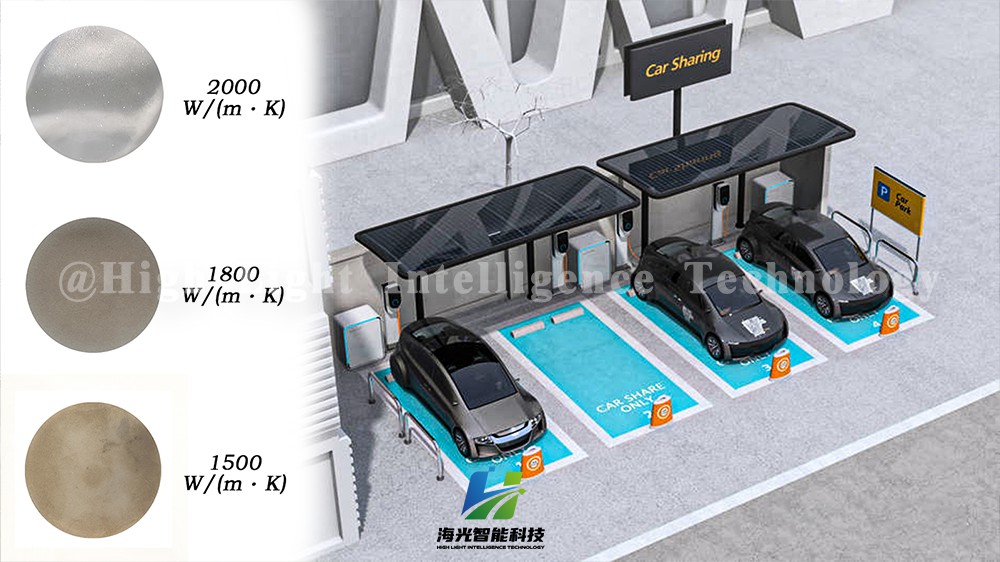
The thermal management market for new energy vehicles is growing rapidly, and the global and Chinese market sizes will reach 226.46 billion and 96.748 billion respectively in 2025. Diamond polycrystalline materials, as efficient heat dissipation materials, have broad market prospects, with global sales of 15.2 billion in 2023 and are expected to increase to 45 billion by 2030, with a CAGR of 16.3%. Technological progress and policy support will drive the market to continue to grow.

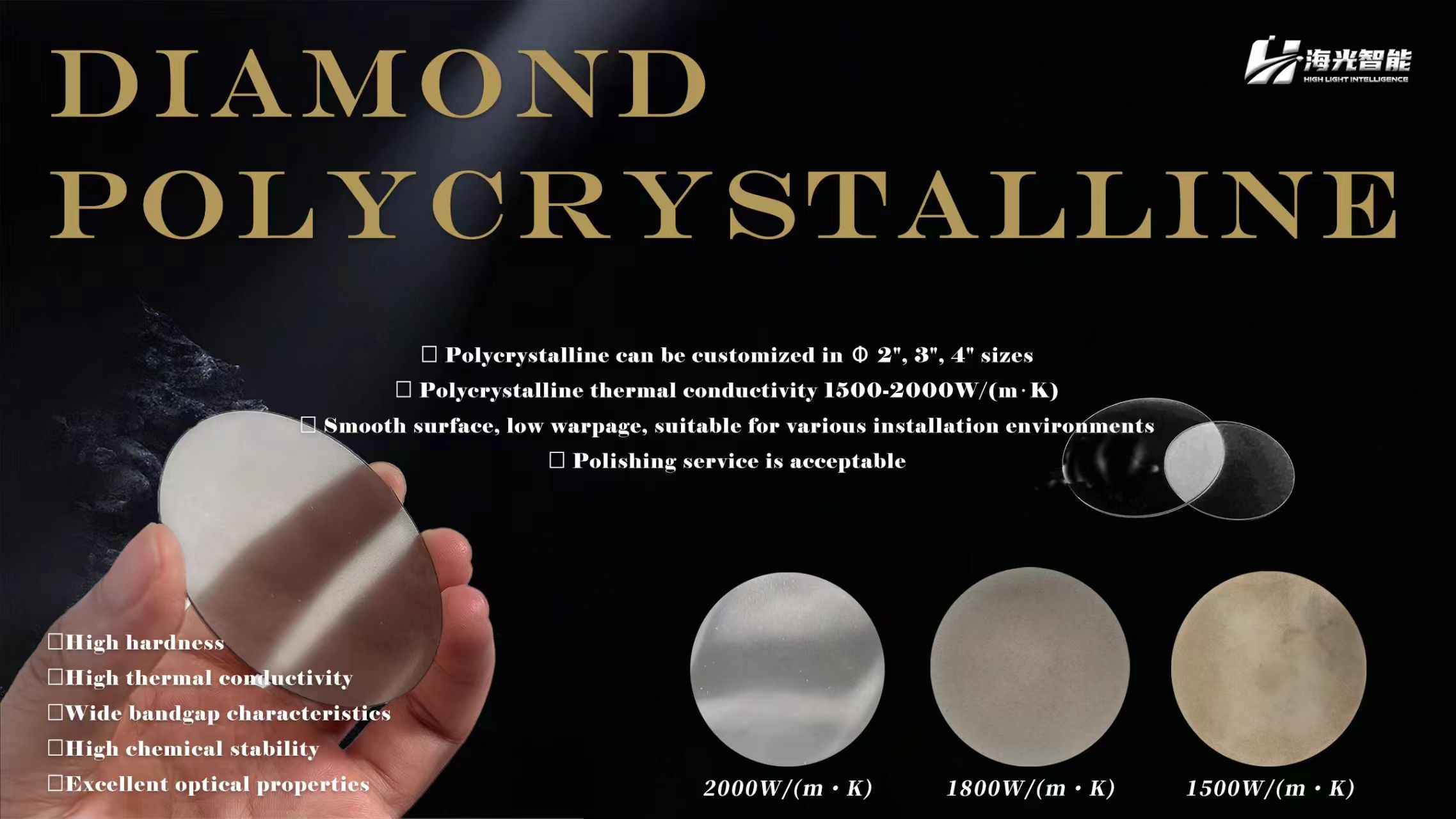
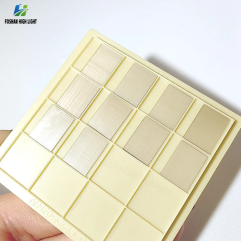
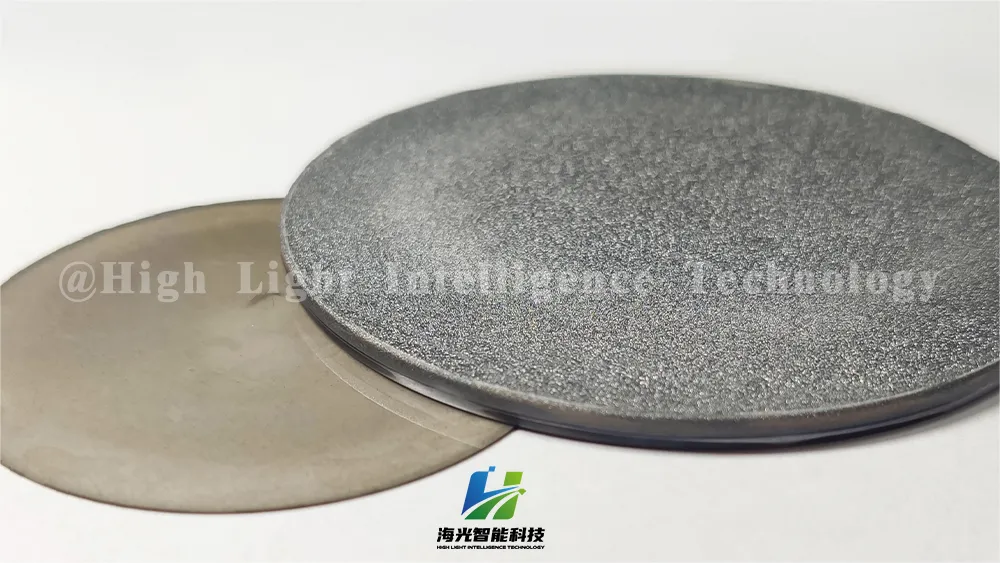
High Light Intelligence Technology's diamond polycrystalline can be customized in Φ2"3"4" sizes to precisely meet your needs. It has a smooth surface and low warpage, and is suitable for complex installation environments. Polishing services are provided to enhance product refinement. This material combines high hardness, high thermal conductivity (1500-2000W/(m·K)), wide bandgap, high chemical stability and excellent optical properties. It has excellent performance and is suitable for extreme environments and efficient thermal management.









-

Foshan Highlight Intelligent Technology invites you to the 140th Canton Fair—join us at Booth 21.2A23-24 in the Friendship Hall to share in the brilliance.
Foshan Highlight Intelligent Technology invites you to the 140th Canton Fair—join us at Booth 21.2A23-24 in the Friendship Hall to share in the brilliance.
-
CVD Single-Crystal Diamonds: An Analysis of the Complete Processing Workflow from Gas-Phase Deposition to Finished Diamond Chips
MPCVD (Microwave Plasma Chemical Vapor Deposition) technology is currently the core process for producing high-quality single-crystal diamond s. Thanks to its advantages of low defect rates, high purity, and controllable large dimensions, it is widely used in fields such as semiconductor heat dissipation, precision optics, and high-end sensors. The final quality of single-crystal diamond s depends on comprehensive process control throughout the entire workflow—from vapor deposition growth to pos
-
Single-Crystal or Polycrystalline Diamond — Which Has Greater Potential?
As diamond continues to enter industries such as semiconductors, thermal management, optics, high-power electronics, and precision machining, the requirements for diamond materials are also evolving.
-
Diamond Polishing and Grinding Processes: Core Challenges and Industry Hurdles
Diamond is often hailed as the “ultimate material” – ranking 10 on the Mohs hardness scale, boasting an ultra‑high thermal conductivity (~2,200 W/(m·K)), excellent chemical stability, and broad optical transparency. These properties make it irreplaceable in cutting‑edge applications such as semiconductor heat dissipation, high‑end optics, and quantum chips. Yet the paradox of “good materials are hard to process” is nowhere more evident than in diamond. From rough grinding for planarization to at