- 中文
- English
- Español
What conditions are required to build an MPCVD lab-grown diamond growth plant?
2026-02-06 09:59:55
Click:
“
With the rapid development of lab-grown diamonds in jewelry, semiconductors, thermal management, and other fields, MPCVD (Microwave Plasma Chemical Vapor Deposition) technology has become one of the mainstream methods for growing high-quality single-crystal diamonds. When evaluating entering the lab-grown diamond industry, the most crucial question for many companies is: what conditions are required to build an MPCVD growth plant?
”
With the rapid development of lab-grown diamonds in jewelry, semiconductors, thermal management, and other fields, MPCVD (Microwave Plasma Chemical Vapor Deposition) technology has become one of the mainstream methods for growing high-quality single-crystal diamonds. When evaluating entering the lab-grown diamond industry, the most crucial question for many companies is: what conditions are required to build an MPCVD growth plant?
I. Core Prerequisite: Defining the Application Direction
Before building an MPCVD plant, it is essential to clearly define the product positioning, as different application directions drastically affect equipment configuration, process complexity, and investment scale.
Common applications include:
Jewelry-grade lab-grown diamonds (white diamonds, colored diamonds, fancy-shaped diamonds)
Industrial-grade single-crystal diamonds (cutting tools, optical windows)
Diamond wafers for thermal management/semiconductors (heat sinks, substrates)
Different application directions determine:
Growth size
Growth rate
Gas ratio
Subsequent cutting, grinding, and inspection configuration. This is the 'first condition' among all requirements.
II. Conditions for a Stable Power Supply
In an MPCVD lab-grown diamond factory, electricity costs are a key factor affecting production efficiency and overall operations. Each MPCVD system typically requires 20–40 kW of three-phase industrial power and must operate continuously for long periods.
Unstable power supply or high electricity costs can lead to:
Plasma fluctuations → affecting diamond crystal quality
Equipment shutdowns or frequent restarts → reducing production efficiency
Increased operational costs → impacting investment returns
Therefore, when planning an MPCVD factory, a reasonable electricity budget and stable power supply are critical considerations. Electricity costs not only influence operational economics but also directly affect product quality and long-term sustainability.
Electricity costs directly determine the production stability, product quality, and return on investment of an MPCVD factory.
III. Funding and Operating Conditions
Building an MPCVD plant typically involves significant capital investment:
Equipment investment
Plant renovation
Electricity costs
Personnel and training
How We Help Build Your MPCVD Factory?
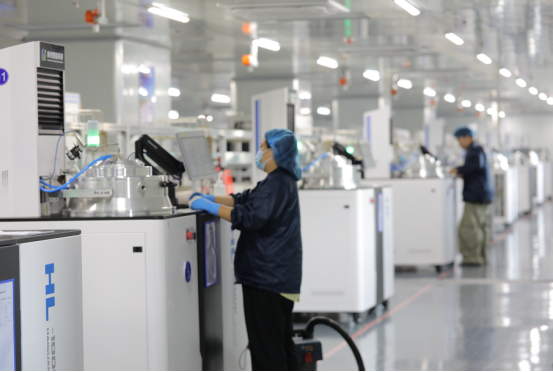
Provide Turnkey Project Service
Our company has a professional pre-sales and after-sales technical service team.
We can provide services as following:
Plant planning (CAD location planning)
Gas, water and circuit design (CAD design)
Gas and water construction services (optional)
Factory supporting facilities and machine planning
Engineer training - Equipment installation and commissioning
Product sales market guidance
Equipment technology is updated and upgraded, such as increased diamond deposition area, software upgrades, and mature and diversifed growth processes.
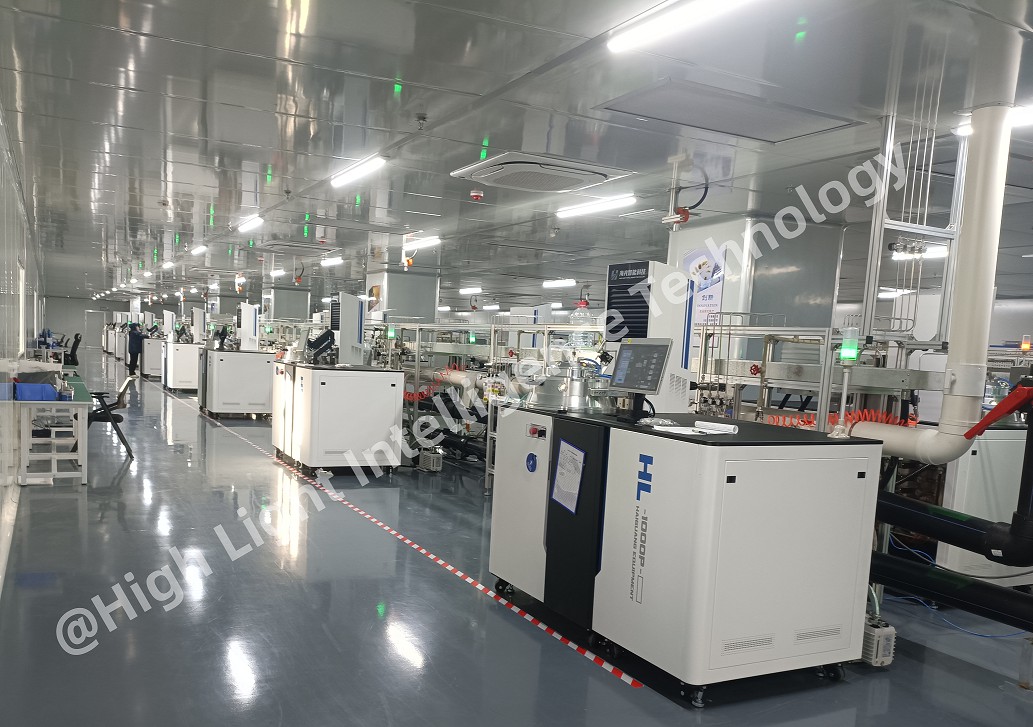
An MPCVD plant is not merely an 'equipment project,' but a 'systems engineering project.'
Building an MPCVD growth plant is not just about equipment prices, but about overall engineering capabilities, process accumulation, and a long-term operational mindset.
Only with a clear direction, adequate conditions, and a mature team can an MPCVD plant achieve stable growth, continuous output, and commercial success.
Feel free to reach out to our expert team to learn more.
High Light Intelligence Technology, a pioneer in the CVD diamond industry, has advanced MPCVD technology and CVD diamond production workshops. We focus on producing high-purity lab-grown diamonds for the jewelry industry, and at the same time create industrial-grade CVD diamond products, covering single crystals, polycrystalline, films and diamond surface metallization. We also provide 6kw/10kw/15kw MPCVD equipment to help customers in all aspects, from equipment to products, and then to all-round services, to create brilliance together.









-

CVD Single-Crystal Diamonds: An Analysis of the Complete Processing Workflow from Gas-Phase Deposition to Finished Diamond Chips
MPCVD (Microwave Plasma Chemical Vapor Deposition) technology is currently the core process for producing high-quality single-crystal diamond s. Thanks to its advantages of low defect rates, high purity, and controllable large dimensions, it is widely used in fields such as semiconductor heat dissipation, precision optics, and high-end sensors. The final quality of single-crystal diamond s depends on comprehensive process control throughout the entire workflow—from vapor deposition growth to pos
-
Single-Crystal or Polycrystalline Diamond — Which Has Greater Potential?
As diamond continues to enter industries such as semiconductors, thermal management, optics, high-power electronics, and precision machining, the requirements for diamond materials are also evolving.
-
Diamond Polishing and Grinding Processes: Core Challenges and Industry Hurdles
Diamond is often hailed as the “ultimate material” – ranking 10 on the Mohs hardness scale, boasting an ultra‑high thermal conductivity (~2,200 W/(m·K)), excellent chemical stability, and broad optical transparency. These properties make it irreplaceable in cutting‑edge applications such as semiconductor heat dissipation, high‑end optics, and quantum chips. Yet the paradox of “good materials are hard to process” is nowhere more evident than in diamond. From rough grinding for planarization to at
-
Single-Crystal vs Polycrystalline CVD Diamond: Process Difference Lies in Growth Logic, Not Equipment
The process difference between single crystal and polycrystalline CVD diamond lies not in equipment, but in growth logic. Single crystal and polycrystalline CVD diamond are two functional new materials with completely independent growth mechanisms, lattice structures and performance systems. Their process logic, product features and application boundaries diverge fundamentally from the very start of deposition and growth. Comparing or selecting materials without considering their underlying crys