- 中文
- English
- Español
How to Judge the Quality of MPCVD Diamond Growth Equipment
2026-02-06 15:19:06
Click:
“
A high return on investment is the sole criterion for evaluating the quality of a company's equipment.
”
A high return on investment is the sole criterion for evaluating the quality of a company's equipment.
Currently, the main CVD diamond growth equipment on the market is 2450 Hz cylindrical reactor chamber and dish reactor chamber equipment, as well as 915 Hz. Cylindrical reactor chamber equipment mostly uses 6KW or 8KW microwave sources. Due to the physical limitations of cylindrical chambers, their production capacity is too low, and they are gradually being phased out in a market environment where lab-grown diamond prices are gradually decreasing.
915 Hz machines, due to their low efficiency and huge power consumption, have not yet become mainstream in the market and are still under development.
Disc reactor chamber MPCVD diamond machines are mainly available in 10KW, 12KW, and 15KW, differing in energy level and microwave plasma coverage area. Currently, 10KW and above dish reactor chamber MPCVD machines are the most profitable and common equipment in the market.
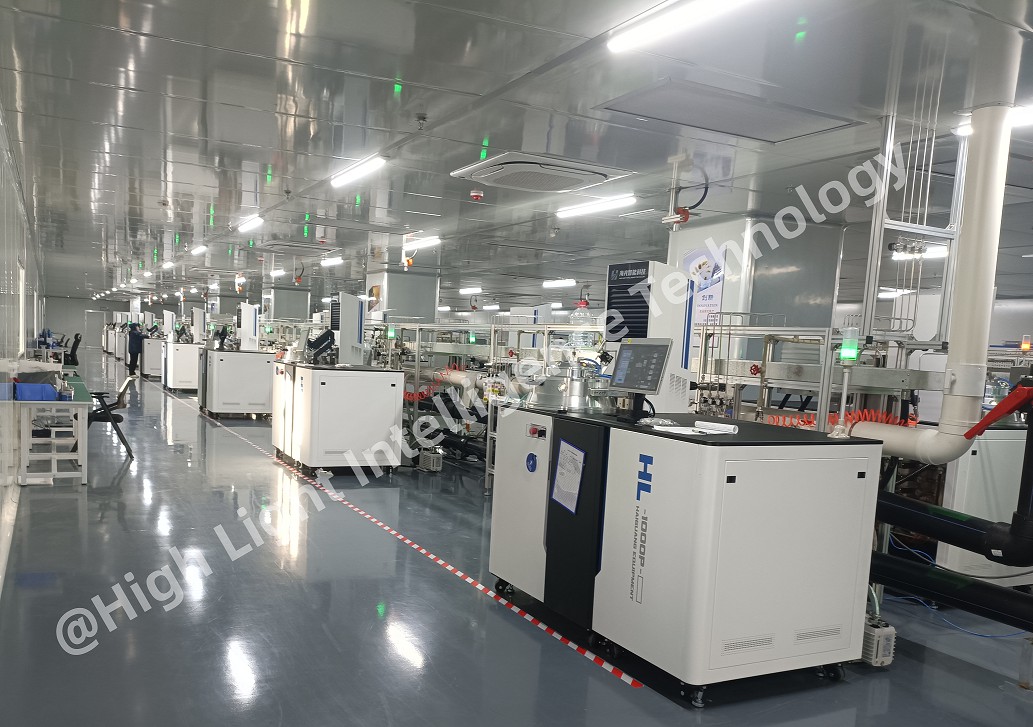
Taking Foshan High Light Intelligence Technology Co., Ltd.'s (hereinafter referred to as 'High Light') 10KW disc reactor chamber MP CVD equipment as an example, how can a high input-output ratio be obtained?
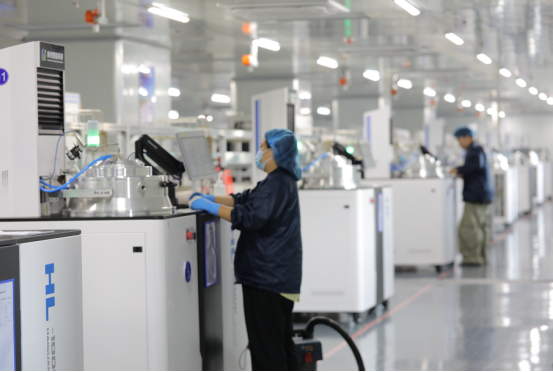
Input is divided into fixed assets and daily operation and maintenance costs. Fixed assets include the factory and its facilities, air and water systems, and constant temperature and humidity systems. High Light can provide customers with the best possible configuration of supporting facilities to maximize the effectiveness of the machines and systems while minimizing costs. Daily operation and maintenance typically includes electricity costs, personnel salaries, and other expenses.
Output is affected by the uniform growth area of the reactor chamber, yield rate, and production product planning.

How does MPCVD equipment achieve high output?
1. A plasma ball effect: It covers a wide area with uniform energy distribution. The temperature difference between the center and the periphery of the fireball is small.
2. A well-functioning water-cooling system within the chamber: When the cooling system is operating, the molybdenum wafers maintain a high degree of temperature uniformity.
3. System stability. Is the software system independently developed by the equipment manufacturer? How well is the software system matched with the equipment's hardware system? What is the duration of a single stable run?

To ensure the efficient operation of the above systems, High Light has actively engaged in research and development, and has obtained more than 20 patents to date. In particular, it has solved the problem of poor sealing of the disc reactor chamber, with 6 patents for the reactor chamber design alone.

(Patent & Certificate Links:https://www.highlight-it.com/Product/599160.html)
4. High compatibility between the machine and the formula ensures that diamond quality is controlled within the desired range. Taking jewelry-grade pure growth-colored DEF, VVS-VS clarity rough diamonds as an example, the yield rate has been increased from 70% to over 80%, with color precisely controlled within the DEF color range. The precision of the diamond growth formula can improve the yield rate and meet diverse customer needs. Examples include diamonds used for jewelry-grade lab-grown DEF color without color alteration, GHI diamonds used for color alteration, semiconductor-grade heat-dissipating diamond sheets, semiconductor-grade ultra-thin single-crystal wafers, optical-grade high-transmittance diamond windows, optical-grade ultra-thin CVD diamond wafers, and medical grade/ surgical grade cutting tools.

Besides the CVD diamond equipment itself, the application of supporting facilities such as laser cutting can also increase production capacity and reduce production costs. High Light collaborates with several laser cutting equipment companies to jointly develop technologies that reduce laser loss during cutting, shortening diamond growth time. After laser cutting, the surface roughness Ra reaches the hundred-nanometer level, allowing CVD diamond seed crystals to be directly placed into the reactor chamber for growth without surface polishing. Precision laser cutting can achieve ultra-thin sheets with a thickness of nearly 10 micrometers.

Furthermore, MPCVD equipment manufacturers also need to provide technical solutions for the supporting facilities of the diamond growth plant, such as water cooling systems, to ensure unified coordination of all facilities and achieve optimal production.
Engineer training is also included in the technical solutions. Engineers precisely control the diamond growth process, taking initiative and making adjustments promptly when problems arise, improving yield rates, and continuously learning and researching to improve formula performance and adapt to market changes and developments.

In summary, the efficient and low-cost growth of a batch of diamonds is not solely a matter of the diamond cultivation machine. The quality of a machine cannot be judged solely by whether its individual components are imported; suitability and matching are the optimal solution.
High Light Intelligence Technology, a pioneer in the CVD diamond industry, has advanced MPCVD technology and CVD diamond production workshops. We focus on producing high-purity lab-grown diamonds for the jewelry industry, and at the same time create industrial-grade CVD diamond products, covering single crystals, polycrystalline, films and diamond surface metallization. We also provide 6kw/10kw/15kw MPCVD equipment to help customers in all aspects, from equipment to products, and then to all-round services, to create brilliance together.









-

CVD Single-Crystal Diamonds: An Analysis of the Complete Processing Workflow from Gas-Phase Deposition to Finished Diamond Chips
MPCVD (Microwave Plasma Chemical Vapor Deposition) technology is currently the core process for producing high-quality single-crystal diamond s. Thanks to its advantages of low defect rates, high purity, and controllable large dimensions, it is widely used in fields such as semiconductor heat dissipation, precision optics, and high-end sensors. The final quality of single-crystal diamond s depends on comprehensive process control throughout the entire workflow—from vapor deposition growth to pos
-
Single-Crystal or Polycrystalline Diamond — Which Has Greater Potential?
As diamond continues to enter industries such as semiconductors, thermal management, optics, high-power electronics, and precision machining, the requirements for diamond materials are also evolving.
-
Diamond Polishing and Grinding Processes: Core Challenges and Industry Hurdles
Diamond is often hailed as the “ultimate material” – ranking 10 on the Mohs hardness scale, boasting an ultra‑high thermal conductivity (~2,200 W/(m·K)), excellent chemical stability, and broad optical transparency. These properties make it irreplaceable in cutting‑edge applications such as semiconductor heat dissipation, high‑end optics, and quantum chips. Yet the paradox of “good materials are hard to process” is nowhere more evident than in diamond. From rough grinding for planarization to at
-
Single-Crystal vs Polycrystalline CVD Diamond: Process Difference Lies in Growth Logic, Not Equipment
The process difference between single crystal and polycrystalline CVD diamond lies not in equipment, but in growth logic. Single crystal and polycrystalline CVD diamond are two functional new materials with completely independent growth mechanisms, lattice structures and performance systems. Their process logic, product features and application boundaries diverge fundamentally from the very start of deposition and growth. Comparing or selecting materials without considering their underlying crys