- 中文
- English
- Español
The Secret to Making Diamonds Look Larger: Choose the Right Setting to Make Smaller Carats Appear Bigger
2026-03-27 15:24:15
Click:
“
After selecting a loose diamond, the setting not only determines the diamond’s security but also directly affects its perceived size. With diamonds of the same weight, choosing the right setting design can effortlessly create the surprise of “small carats making a big impact,” saving on your budget while enhancing the diamond’s quality. Among these, pavé and prong settings are the two most classic and effective ways to make a diamond appear larger. Paired with specialized designs that maximize t
”
After selecting a loose diamond, the setting not only determines the diamond’s security but also directly affects its perceived size. With diamonds of the same weight, choosing the right setting design can effortlessly create the surprise of “small carats making a big impact,” saving on your budget while enhancing the diamond’s quality. Among these, pavé and prong settings are the two most classic and effective ways to make a diamond appear larger. Paired with specialized designs that maximize the diamond’s brilliance and perceived size, they cater to diverse tastes and needs.
Pavé setting is widely recognized as the “king of diamond enhancement,” particularly suited for those with limited budgets who seek a dramatic visual impact. Its core principle involves setting a circle of tiny accent diamonds around the center stone. The brilliance of these accent stones highlights the center diamond, creating a “stars surrounding the moon” effect that makes the center stone appear significantly larger than its actual size. The advantage of the pavé setting lies in its ability to balance diamond enhancement with durability. The small diamonds not only amplify the overall visual impact but also encase the edges of the center stone, reducing wear and tear while enhancing the ring’s overall brilliance, making it appear more luxurious and full.
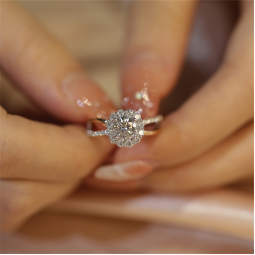
Prong setting is the most classic and versatile setting style. While it may not showcase the diamond as directly as a pavé setting, it excels in its simplicity and elegance, maximizing the display of the diamond’s natural fire and clarity, thereby indirectly highlighting its size. Prong setting secures the center diamond with metal prongs (typically 4 or 6). Because the prongs are small, they minimize obstruction of the diamond, allowing the table and crown to be fully exposed to light. This refracts more light, creating a visually more transparent and full appearance, thereby achieving a “larger-looking” effect.
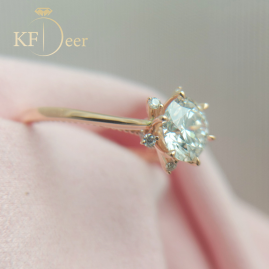
There are two key techniques for maximizing the diamond’s appearance with prong settings: First, choose a design with slender prongs, as they obscure the diamond less than thick prongs and make the table appear wider. Second, optimize the number and placement of the prongs; a 6-prong setting is more secure than a 4-prong setting and provides more even support, making the diamond appear rounder and fuller from every angle. Additionally, the thickness of the ring shank affects how the diamond appears. A thinner shank highlights the diamond’s fullness, while a mirror-polished surface reflects light, making the diamond appear even more brilliant and dazzling.
About Us:
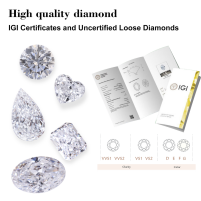
Leveraging over a decade of diamond research and development expertise and the advantages of a complete industrial chain, High Light Intelligent Technology meticulously crafts high-quality loose diamonds and jewelry collections. Our loose diamond selection includes both white and colored diamonds, with stock ranging from 0.5 to 25 carats. We offer custom loose diamond services and provide authoritative certification from institutions such as IGI.
In addition, we supply fine jewelry including stud earrings, necklaces, bracelets, and rings, primarily crafted in 14K and 18K gold, with options in white gold, rose gold, and yellow gold. Our jewelry undergoes a meticulous three-step polishing process, ensuring resistance to oxidation and a timeless, lustrous finish. Our master gem setters, with over a decade of industry experience, employ solid and secure setting techniques to fully guarantee both the comfort and aesthetic appeal of our pieces. For more information, please feel free to contact us.
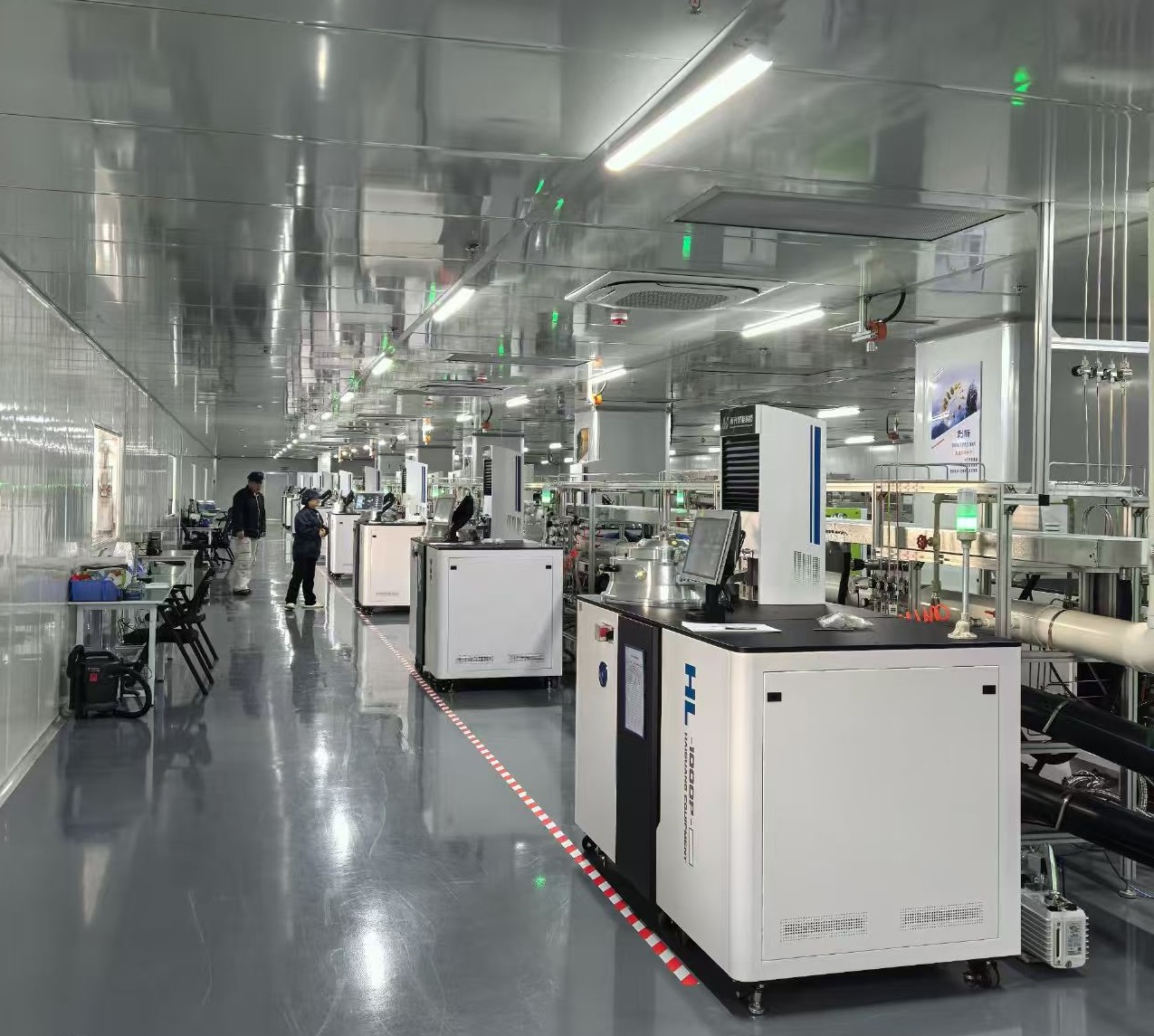
Foshan Highlight Intelligent Technology Co., Ltd. has been deeply involved in the CVD-grown diamond field for many years. Leveraging its mature core technologies and differentiated process layout, it has achieved full-dimensional coverage of white diamond products. All of the company's white diamond products are pure carbon crystals with a hardness of 10. Their physical and chemical properties are completely consistent with natural white diamonds, placing them firmly in the category of genuine diamonds.
Significant core technological advantages: Relying on a stable and controllable cultivation environment, it can produce high-color diamonds ranging from D to F, with clarity generally reaching VS1 or higher standards. They are virtually flawless to the naked eye, and their fire and brilliance rival top-grade natural white diamonds.
Our product highlights: Standardized grading standards, transparent and controllable selection: Strictly adhering to the international diamond grading system, key parameters such as color (D-J), clarity (SI1-VVS1), cut (EX-VG), and carat weight are clearly marked. Products come with authoritative IGI testing certificates, supporting full traceability and verification.
Green and sustainable development, fulfilling social responsibility: The cultivation process requires no extraction of earth's crustal resources, avoiding the environmental damage caused by natural diamond mining from the source. It is a superior choice that combines aesthetic value with environmental protection.
High cost-performance advantage, breaking down market price barriers: Compared to natural white diamonds, our CVD white diamonds are significantly more competitive in price. Within the same budget, consumers can choose larger carat or higher quality products, helping them easily achieve “real diamond freedom.”
*The articles and pictures are only for industry communication and sharing. If there is any infringement, please contact us to delete them.









-

CVD Single-Crystal Diamonds: An Analysis of the Complete Processing Workflow from Gas-Phase Deposition to Finished Diamond Chips
MPCVD (Microwave Plasma Chemical Vapor Deposition) technology is currently the core process for producing high-quality single-crystal diamond s. Thanks to its advantages of low defect rates, high purity, and controllable large dimensions, it is widely used in fields such as semiconductor heat dissipation, precision optics, and high-end sensors. The final quality of single-crystal diamond s depends on comprehensive process control throughout the entire workflow—from vapor deposition growth to pos
-
Single-Crystal or Polycrystalline Diamond — Which Has Greater Potential?
As diamond continues to enter industries such as semiconductors, thermal management, optics, high-power electronics, and precision machining, the requirements for diamond materials are also evolving.
-
Diamond Polishing and Grinding Processes: Core Challenges and Industry Hurdles
Diamond is often hailed as the “ultimate material” – ranking 10 on the Mohs hardness scale, boasting an ultra‑high thermal conductivity (~2,200 W/(m·K)), excellent chemical stability, and broad optical transparency. These properties make it irreplaceable in cutting‑edge applications such as semiconductor heat dissipation, high‑end optics, and quantum chips. Yet the paradox of “good materials are hard to process” is nowhere more evident than in diamond. From rough grinding for planarization to at
-
Single-Crystal vs Polycrystalline CVD Diamond: Process Difference Lies in Growth Logic, Not Equipment
The process difference between single crystal and polycrystalline CVD diamond lies not in equipment, but in growth logic. Single crystal and polycrystalline CVD diamond are two functional new materials with completely independent growth mechanisms, lattice structures and performance systems. Their process logic, product features and application boundaries diverge fundamentally from the very start of deposition and growth. Comparing or selecting materials without considering their underlying crys