- 中文
- English
- Español
From Lab-Grown Diamonds to Industrial Diamonds: Is It Time to Build an MPCVD Factory?
2026-09-14 15:12:10
Click:
“
The lab-grown diamond industry is entering a new stage.
Over the these few years, lab-grown diamonds have gradually gained wider acceptance in the jewelry market. With the development of production technology, equipment maturity and supply chain improvement, the industry is becoming more standardized and efficient.
But beyond jewelry, another opportunity is attracting more attention:Industrial diamond applications.
”
The lab-grown diamond industry is entering a new stage.
Over the these few years, lab-grown diamonds have gradually gained wider acceptance in the jewelry market. With the development of production technology, equipment maturity and supply chain improvement, the industry is becoming more standardized and efficient.
But beyond jewelry, another opportunity is attracting more attention:Industrial diamond applications.
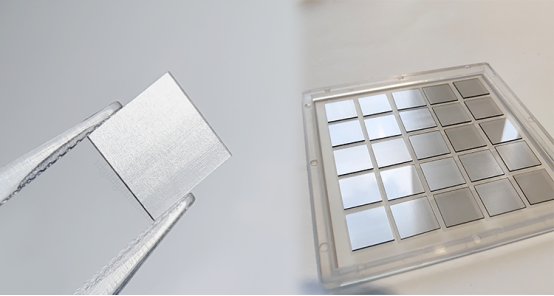
Due to its excellent thermal conductivity, hardness and chemical stability, diamond has unique advantages in areas such as:
· Diamond heat spreaders
· Semiconductor thermal management
· High-power electronic devices
· GaN and SiC applications
· Optical and advanced material applications
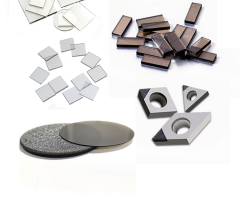
Especially with the rapid growth of AI computing and high-performance electronics, heat dissipation has become one of the key challenges for future technology development.
This brings an interesting question:
As the lab-grown diamond market becomes more mature, do you have any plans to enter the lab grown diamond and industrial diamond market and build an MPCVD factory?
So, what are the basic requirements to build an MPCVD production facility?Building an MPCVD factory is not only about purchasing equipment.
Before making this investment decision, several key questions need to be carefully considered.
1. What is the electricity cost?
MPCVD production requires stable and continuous power supply.
Electricity cost directly affects production cost and long-term competitiveness.
Before investing, it is important to evaluate:
·Local electricity price
·Power stability
·Industrial electricity policy
·Future energy cost trends
A location with lower and more stable energy costs may have significant advantages in large-scale production.
2. Is the investment budget sufficient?
Building an MPCVD factory requires investment in more than MPCVD Equipments.
The overall investment may include:
·Factory construction or rental
Cleanroom Renovation Costs
·MPCVD equipment
·Gas systems
·Cooling systems
·Power infrastructure
·Testing equipment
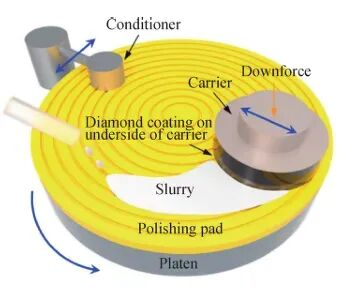
Polish equipments
·Technical team
·Daily operation costs
A clear investment plan and sufficient financial preparation are essential for long-term operation.
3. Is there an investor or strategic partner?
Running a growing factory is a long-term project with huge investment.
Industrial diamond production is a long-term project.
Having financial support or strategic partners can help accelerate development, including:
·Equipment investment
·Technology improvement
·Market expansion
·Customer development
The right partner can bring not only capital, but also industry resources.
4. Where is the target market?
Before building the factory, the most important question is:
Who are the customers?
Different markets require different products.
For example:
·Jewelry market → focus on color, clarity and carat size
·Industrial market → focus on heat sink use, quantum, optical use or cutting tool etc.
A successful factory should be built based on customer demand, not only production capability.

As a project manager in CVD industry, from our experience, building an MPCVD factory requires a complete consideration of:
Energy cost + Investment capability + Technical capability + Market demand
At our company, we can support customers with:
· MPCVD equipment solutions
· Factory planning suggestions
· Production line configuration
· Technical training and support
· Diamond growth solutions

Our goal is not simply to sell equipment, but to help customers build a reliable diamond production system, committed to making effort to provide turnkey projects for our clients.
The future opportunity of diamond may go beyond jewelry.
Do you want to set up a MPCVD Factory?
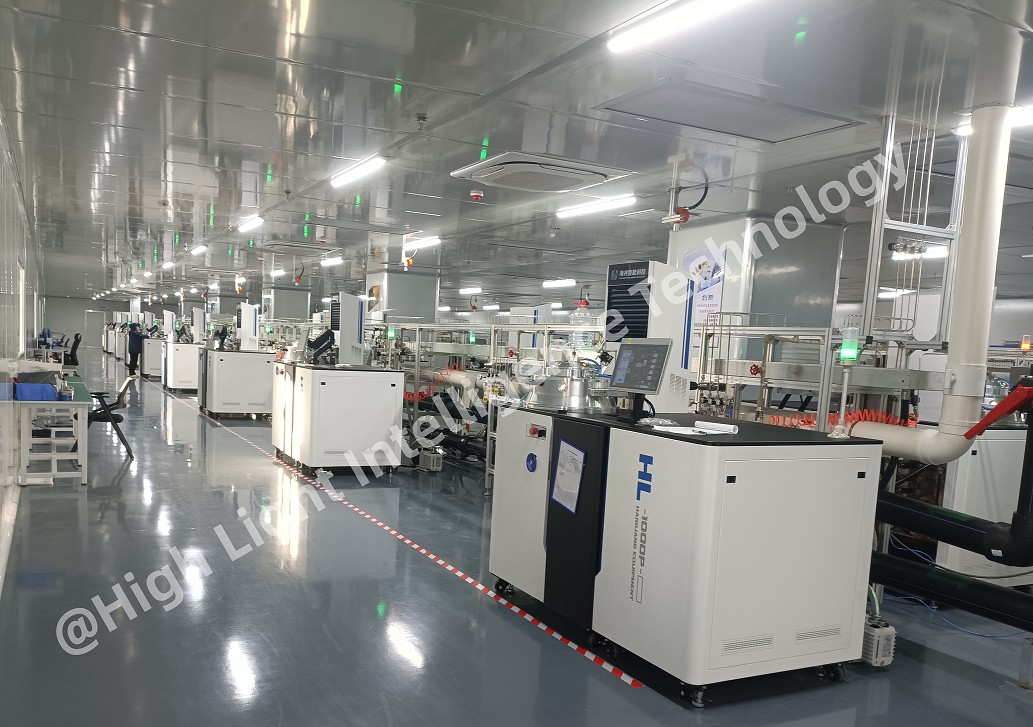
High Light Intelligence Technology, a pioneer in the CVD diamond industry, has advanced MPCVD technology and CVD diamond production workshops. We focus on producing high-purity lab-grown diamonds for the jewelry industry, and at the same time create industrial-grade CVD diamond products, covering single crystals, polycrystalline, films and diamond surface metallization. We also provide 6kw/10kw/15kw MPCVD equipment to help customers in all aspects, from equipment to products, and then to all-round services, to create brilliance together.









-

CVD Single-Crystal Diamonds: An Analysis of the Complete Processing Workflow from Gas-Phase Deposition to Finished Diamond Chips
MPCVD (Microwave Plasma Chemical Vapor Deposition) technology is currently the core process for producing high-quality single-crystal diamond s. Thanks to its advantages of low defect rates, high purity, and controllable large dimensions, it is widely used in fields such as semiconductor heat dissipation, precision optics, and high-end sensors. The final quality of single-crystal diamond s depends on comprehensive process control throughout the entire workflow—from vapor deposition growth to pos
-
Single-Crystal or Polycrystalline Diamond — Which Has Greater Potential?
As diamond continues to enter industries such as semiconductors, thermal management, optics, high-power electronics, and precision machining, the requirements for diamond materials are also evolving.
-
Diamond Polishing and Grinding Processes: Core Challenges and Industry Hurdles
Diamond is often hailed as the “ultimate material” – ranking 10 on the Mohs hardness scale, boasting an ultra‑high thermal conductivity (~2,200 W/(m·K)), excellent chemical stability, and broad optical transparency. These properties make it irreplaceable in cutting‑edge applications such as semiconductor heat dissipation, high‑end optics, and quantum chips. Yet the paradox of “good materials are hard to process” is nowhere more evident than in diamond. From rough grinding for planarization to at
-
Single-Crystal vs Polycrystalline CVD Diamond: Process Difference Lies in Growth Logic, Not Equipment
The process difference between single crystal and polycrystalline CVD diamond lies not in equipment, but in growth logic. Single crystal and polycrystalline CVD diamond are two functional new materials with completely independent growth mechanisms, lattice structures and performance systems. Their process logic, product features and application boundaries diverge fundamentally from the very start of deposition and growth. Comparing or selecting materials without considering their underlying crys