- 中文
- English
- Español
Real and Fake Diamonds: The Difference Between Lab-grown Diamonds and Moissanite
2024-03-07 17:19:04
Click:
“
Diamonds have always been the shining stars of the jewelry world, prized for their rarity, hardness and unique luster. However, with the rapid development of science and technology, we have ushered in the product of a new era of lab-grown diamonds. Although the formation method of lab-grown diamonds is different from natural diamonds, their chemical, physical and optical properties are the same as natural diamonds, so they are also regarded as a type of real diamonds. At the same time, there is
”
Diamonds have always been the shining stars of the jewelry world, prized for their rarity, hardness and unique luster. However, with the rapid development of science and technology, we have ushered in the product of a new era of lab-grown diamonds. Although the formation method of lab-grown diamonds is different from natural diamonds, their chemical, physical and optical properties are the same as natural diamonds, so they are also regarded as a type of real diamonds. At the same time, there is also a gemstone on the market that looks similar to diamonds - moissanite. This article will delve into the differences between lab-grown diamonds and moissanite to help consumers better understand these two gemstones.
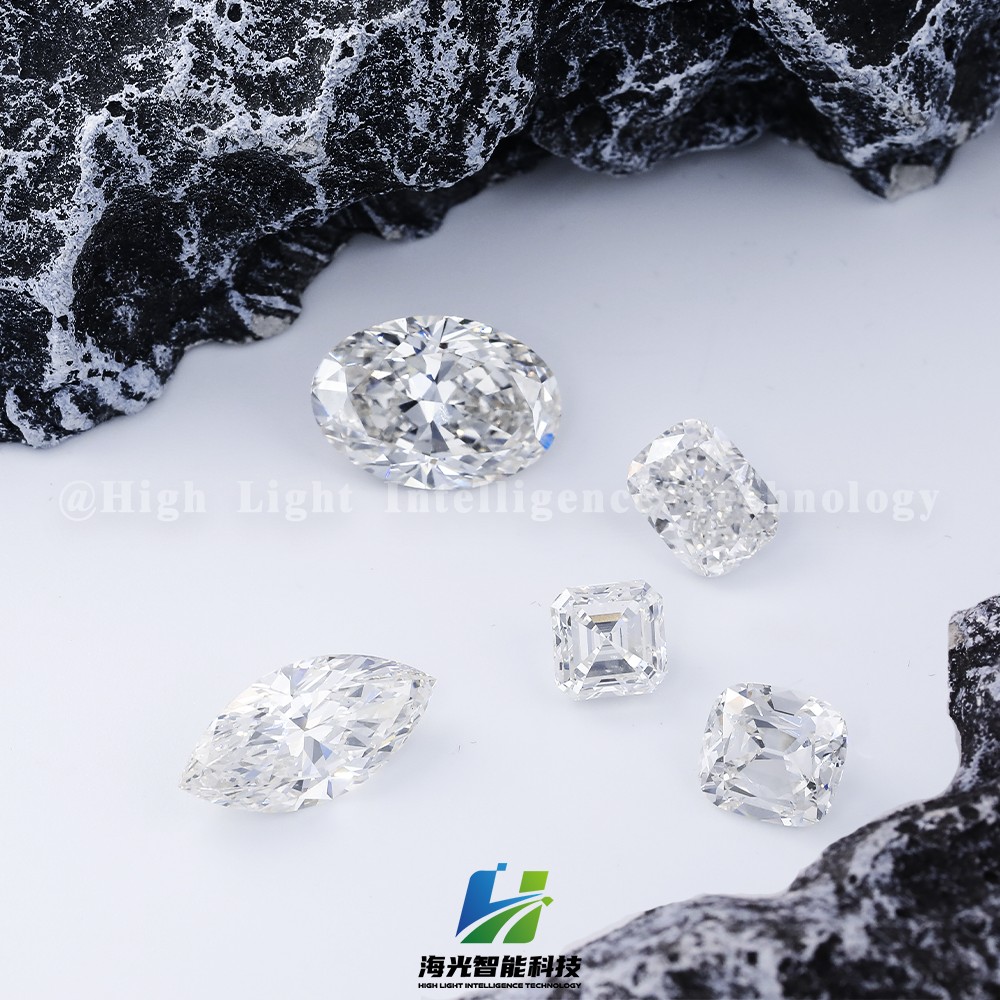
First, let’s learn more about lab-grown diamonds. Lab-grown diamonds, are grown in strictly controlled laboratory environments by simulating the high-pressure and high-temperature conditions in which natural diamonds are formed. Although their formation process is different from that of natural diamonds, lab-grown diamonds are almost identical to natural diamonds in terms of chemical composition, crystal structure, refractive index, and dispersion. From a scientific point of view, lab-grown diamonds also have all the properties of diamonds and are real diamonds.
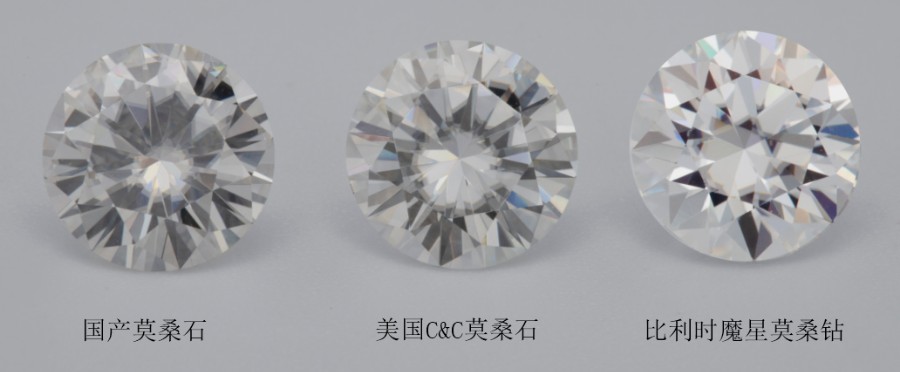
Unlike lab-grown diamonds, moissanite is a gemstone that is significantly different from diamonds. The main component of moissanite is silicon carbide, and its physical properties and chemical structure are significantly different from diamonds. Although moissanite is similar to diamond in some aspects, such as hardness and refractive index, its dispersion value is lower and the fire effect is not as bright as diamond. Additionally, moissanite has a different density than diamonds, allowing professional jewelry appraisers to easily differentiate between them.
Crystal structure:cubes
Crystal structure:hexagons
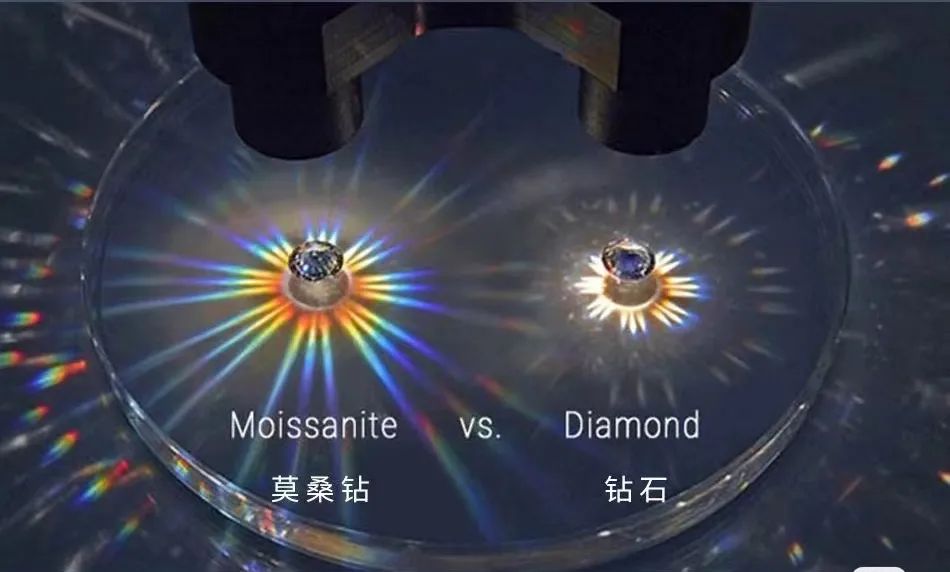
TO sum up, there are obvious differences between lab-grown diamonds and moissanite in terms of composition, properties and value. As a type of real diamond, lab-grown diamonds also have the beauty and hardness of diamonds; while moissanite is a different gemstone from diamonds, and its value and properties are much lower than diamonds. When purchasing diamonds, consumers should fully understand the characteristics of these two gemstones in order to make an informed choice.

As a manufacturer and supplier of MPCVD diamonds, High Light Intelligence Technology is developing rapidly in the cultivated diamond industry. We also provide diamond products to major commercial customers and academic researchers, contributing to the industry.









-

CVD Single-Crystal Diamonds: An Analysis of the Complete Processing Workflow from Gas-Phase Deposition to Finished Diamond Chips
MPCVD (Microwave Plasma Chemical Vapor Deposition) technology is currently the core process for producing high-quality single-crystal diamond s. Thanks to its advantages of low defect rates, high purity, and controllable large dimensions, it is widely used in fields such as semiconductor heat dissipation, precision optics, and high-end sensors. The final quality of single-crystal diamond s depends on comprehensive process control throughout the entire workflow—from vapor deposition growth to pos
-
Single-Crystal or Polycrystalline Diamond — Which Has Greater Potential?
As diamond continues to enter industries such as semiconductors, thermal management, optics, high-power electronics, and precision machining, the requirements for diamond materials are also evolving.
-
Diamond Polishing and Grinding Processes: Core Challenges and Industry Hurdles
Diamond is often hailed as the “ultimate material” – ranking 10 on the Mohs hardness scale, boasting an ultra‑high thermal conductivity (~2,200 W/(m·K)), excellent chemical stability, and broad optical transparency. These properties make it irreplaceable in cutting‑edge applications such as semiconductor heat dissipation, high‑end optics, and quantum chips. Yet the paradox of “good materials are hard to process” is nowhere more evident than in diamond. From rough grinding for planarization to at
-
Single-Crystal vs Polycrystalline CVD Diamond: Process Difference Lies in Growth Logic, Not Equipment
The process difference between single crystal and polycrystalline CVD diamond lies not in equipment, but in growth logic. Single crystal and polycrystalline CVD diamond are two functional new materials with completely independent growth mechanisms, lattice structures and performance systems. Their process logic, product features and application boundaries diverge fundamentally from the very start of deposition and growth. Comparing or selecting materials without considering their underlying crys