- 中文
- English
- Español
CVD Seed Crystals: The “Core Foundation” of the Synthetic Diamond Industry
2026-01-07 10:04:37
Click:
“
With the development of semiconductor technology, the improvement of chip performance poses a significant challenge to heat dissipation. Moore's Law is slowing down, and the process is approaching its limit. Advanced packaging is the key to continuing the performance improvement.
”
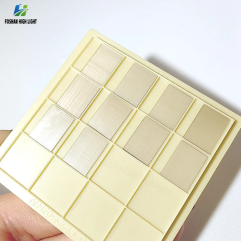
What are CVD seed ? Simply put, they serve as the “seed” substrate guiding the epitaxial growth of diamond crystals during the chemical vapor deposition (CVD) process for producing synthetic diamonds. Serving as the core reference for diamond growth, CVD seeds are typically precision-machined from high-quality natural diamonds or high-pressure high-temperature (HPHT) synthetic diamonds. They provide a stable crystallographic template for subsequent crystal growth, with their quality directly determining the performance and quality of the final diamond product. As such, they represent the foundational critical material at the origin of the synthetic diamond supply chain.

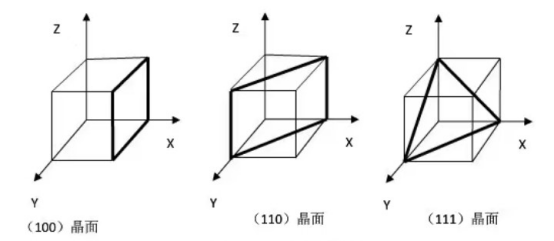
Crystal orientation is the core critical attribute of CVD seeds, referring to the direction of atomic arrangement within the crystal. It plays a decisive role in determining the growth morphology and properties of the diamond. CVD seed crystals exhibit crystal orientations of (100), (110), and (111), each suited for distinct applications: (100) and (110) orientations are used for growing jewelry-grade rough diamonds, while industrial single crystals require no specific orientation.
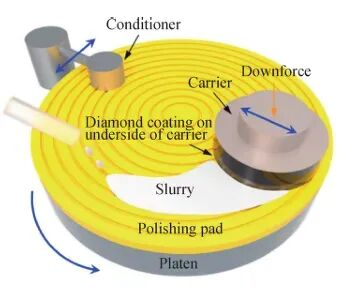
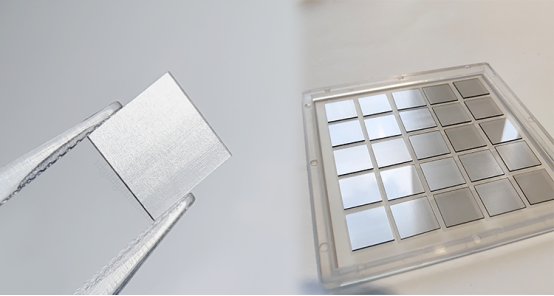
The production of high-quality CVD seed crystals involves extremely high barriers, requiring multiple precise and stringent process steps. The core workflow comprises three stages. The first step is raw material selection, prioritizing natural diamonds or high-pressure high-temperature (HPHT) synthetic diamonds with high purity and minimal defects as substrates—this is fundamental to ensuring the seed crystal's baseline quality. The second step involves directional machining. Through precision techniques like laser cutting and grinding, the substrate is processed into predetermined dimensions—currently, mainstream industrial-grade CVD seed crystals measure 5-15mm square. Producing oversized crystals (20mm+) is a key technical challenge in large-diamond fabrication. Precise control of crystal orientation during this stage is crucial to prevent growth defects later. The third step involves fine polishing and inspection. The processed seed crystal undergoes nanoscale polishing to ensure surface roughness meets standards, preventing interference with epitaxial growth. Subsequently, specialized inspection equipment is used for impurity detection and crystal orientation calibration. Furthermore, thickness control is critical, with conventional thicknesses ranging from 0.3 to 0.6mm, balancing support strength during growth and allowing sufficient allowance for subsequent processing.
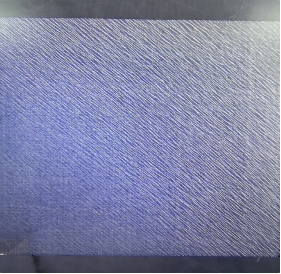
CVD seed crystals exhibit highly specialized applications across artificial diamond segments, demonstrating a “tiered adaptation” characteristic. In industrial processing, seeds for manufacturing diamond cutting and grinding tools prioritize dimensional stability with relatively relaxed purity requirements. In electronics, seeds for producing heat sinks and semiconductor substrates demand high purity and low defect levels to guarantee exceptional thermal conductivity and semiconductor performance, supporting advanced devices like SiC/GaN power modules and AI chips. In the jewelry sector, seed crystals for cultivated diamonds pursue crystal integrity and optical purity to ensure finished products exhibit exceptional fire and clarity.
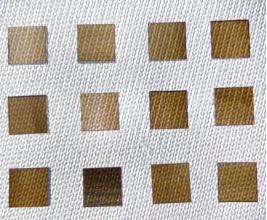
As demand for high-performance diamonds surges in advanced fields like new energy and semiconductors, CVD seeds are evolving toward larger dimensions, higher precision, and lower costs, continuously supporting the high-quality development of the synthetic diamond industry.
Foshan High Light Intelligence offers CVD seed in a full size range from 7-25mm, with thicknesses between 0.3-0.5mm. These are categorized into two major types based on crystal orientation: 100-type seeds support multi-directional growth on all sides and the front face, while 110-type seeds allow growth only on the front face, catering to diverse production requirements.
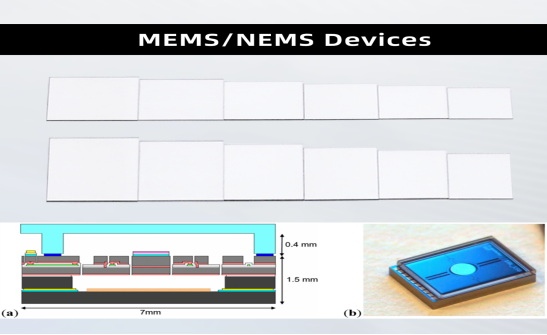
Quality control is stringent, employing dual inspection via metallurgical microscopes and polarizing microscopes to ensure no impurities, no edge defects, positive dimensional tolerances, and uniform stress distribution at 50x magnification. Supply options are flexible: smaller 7-9mm sizes undergo single-sided polishing for easier handling and inspection, while industrial-grade products can be customized to order. With comprehensive size coverage, premium quality standards, and flexible supply capabilities, High Light CVD seed crystals provide stable, reliable substrate support for lab-grown diamond enterprises, enabling efficient production of diverse high-quality lab-grown diamonds.
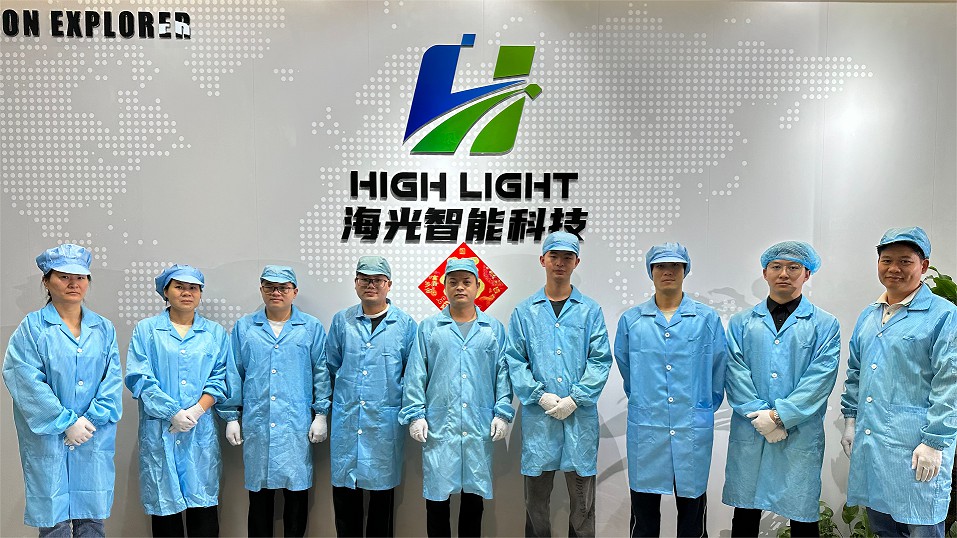
High Light Intelligence Technology, a pioneer in the CVD diamond industry, has advanced MPCVD technology and CVD diamond production workshops. We focus on producing high-purity lab-grown diamonds for the jewelry industry, and at the same time create industrial-grade CVD diamond products, covering single crystals, polycrystalline, films and diamond surface metallization. We also provide 6kw/10kw/15kw MPCVD equipment to help customers in all aspects, from equipment to products, and then to all-round services, to create brilliance together.









-

CVD Single-Crystal Diamonds: An Analysis of the Complete Processing Workflow from Gas-Phase Deposition to Finished Diamond Chips
MPCVD (Microwave Plasma Chemical Vapor Deposition) technology is currently the core process for producing high-quality single-crystal diamond s. Thanks to its advantages of low defect rates, high purity, and controllable large dimensions, it is widely used in fields such as semiconductor heat dissipation, precision optics, and high-end sensors. The final quality of single-crystal diamond s depends on comprehensive process control throughout the entire workflow—from vapor deposition growth to pos
-
Single-Crystal or Polycrystalline Diamond — Which Has Greater Potential?
As diamond continues to enter industries such as semiconductors, thermal management, optics, high-power electronics, and precision machining, the requirements for diamond materials are also evolving.
-
Diamond Polishing and Grinding Processes: Core Challenges and Industry Hurdles
Diamond is often hailed as the “ultimate material” – ranking 10 on the Mohs hardness scale, boasting an ultra‑high thermal conductivity (~2,200 W/(m·K)), excellent chemical stability, and broad optical transparency. These properties make it irreplaceable in cutting‑edge applications such as semiconductor heat dissipation, high‑end optics, and quantum chips. Yet the paradox of “good materials are hard to process” is nowhere more evident than in diamond. From rough grinding for planarization to at
-
Single-Crystal vs Polycrystalline CVD Diamond: Process Difference Lies in Growth Logic, Not Equipment
The process difference between single crystal and polycrystalline CVD diamond lies not in equipment, but in growth logic. Single crystal and polycrystalline CVD diamond are two functional new materials with completely independent growth mechanisms, lattice structures and performance systems. Their process logic, product features and application boundaries diverge fundamentally from the very start of deposition and growth. Comparing or selecting materials without considering their underlying crys