- 中文
- English
- Español
Why 1 Carat Equals 0.2 Grams and the Truth Behind Carat-to-Gram Conversion
2026-02-05 17:27:01
Click:
“
When it comes to diamond weight, many assume that 1 carat equals 0.2 grams. Yet few question how this conversion ratio originated. Some shoppers become confused by the terms “carat” and “points” when selecting diamonds, mistakenly believing ‘points’ is an independent weight unit separate from carats, or holding onto the misconception that “1 carat = 1 gram,” which can skew their purchasing decisions. Today, we'll debunk common misconceptions about diamond weight, clarify the logic behind carat-t
”
When it comes to diamond weight, many assume that 1 carat equals 0.2 grams. Yet few question how this conversion ratio originated. Some shoppers become confused by the terms “carat” and “points” when selecting diamonds, mistakenly believing ‘points’ is an independent weight unit separate from carats, or holding onto the misconception that “1 carat = 1 gram,” which can skew their purchasing decisions. Today, we'll debunk common misconceptions about diamond weight, clarify the logic behind carat-to-point conversions, and help you avoid pitfalls during your selection process.
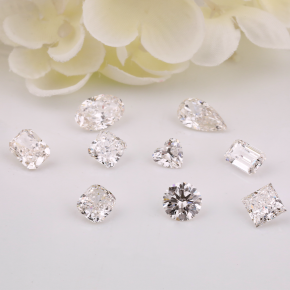
First, let's clarify a core misconception: the diamond “carat” is not a modern weight unit. Its origins trace back to ancient Greece and Rome, while the standard “1 carat = 0.2 grams” was only formally established in the 20th century—a journey reflecting evolution from natural measurement to standardized units. Initially, lacking precise measuring tools, people used naturally occurring, uniformly weighted plant seeds as a standard for diamond weight. This seed was the carob seed—known in Greek as “keration,” which gradually evolved into the modern term “carat.”
Given the remarkable uniformity in weight of carob seeds, each roughly equivalent to one another, ancient people agreed that the weight of one carob seed equaled one carat, thereby establishing a standard for measuring diamond weight. However, as time progressed, subtle variations in the weight of carob seeds across different regions emerged. Coupled with the increasing availability of measuring tools, this natural measurement system gradually became chaotic. The inconsistent weight of “one carat” across different regions severely disrupted diamond trade and circulation.
It wasn't until the 1907 International Weights and Measures Conference in Paris that representatives from various nations formally established a unified standard for diamond weight: defining one carat as 0.2 grams (200 milligrams) and stipulating that one carat could be subdivided into 100 points. This standard was widely adopted globally and remains in use today. This is the origin of “1 carat = 0.2 grams.” It is not a naturally occurring conversion ratio but a unified measurement standard established by humans to regulate diamond trade. It preserves the traditional “carat” unit while achieving precise alignment with modern metric units.
Next, let's clarify the conversion logic between carats and points—a common point of confusion when selecting diamonds. According to international standards, 1 carat = 100 points. This means “points” are fractional units of carats, not independent weight units. Similar to how we use ‘meter’ and “centimeter,” a point represents one-hundredth of a carat.
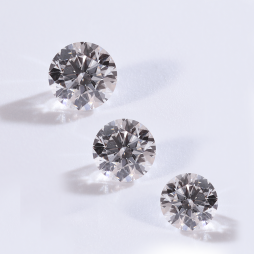
Here are some simple examples to aid quick memorization: A 0.5-carat diamond is a 50-point diamond weighing 0.1 grams. A 0.1-carat diamond is a 10-point diamond weighing just 0.02 grams. A 1.2-carat diamond is a 120-point diamond weighing 0.24 grams. Many mistakenly believe “points” are only used for small diamonds, but this isn't the case. Whether it's a 0.3-carat (30-point) small diamond or a 2-carat (200-point) large diamond, ‘points’ can be used to describe them. However, in everyday shopping, diamonds of 1 carat and above are more commonly referred to by “carats,” while smaller diamonds under 1 carat are more often described in “points” for greater precision.
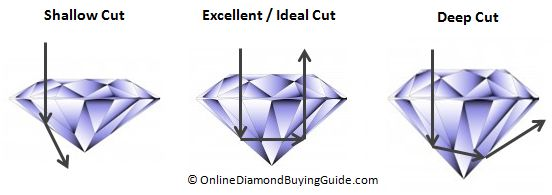
Beyond this, another common misconception exists: many equate a diamond's “carat weight” with its “size,” assuming larger carat numbers always mean bigger diamonds. This is not necessarily true. A diamond's size (diameter and table size) depends not only on its carat weight but also on its cut. Two diamonds of the same 1-carat weight can appear significantly different. A well-cut diamond will have a larger, fuller-looking table, making it appear visually larger than a poorly cut diamond. Conversely, a poorly cut diamond may appear much smaller than its carat-weight counterpart due to “hidden weight”—where the diamond's mass is concentrated in the bottom.
Armed with this knowledge, consumers can make more informed choices when purchasing diamonds. When budgets are limited, there's no need to fixate on “exact carat” diamonds (e.g., 1 carat). Diamonds of 0.50 or 0.70 carats offer a visual effect nearly indistinguishable from a 1-carat stone, yet at a significantly lower price. This understanding also helps consumers interpret labels like “30 points” or “80 points” accurately, avoiding misleading marketing claims.
About Us:
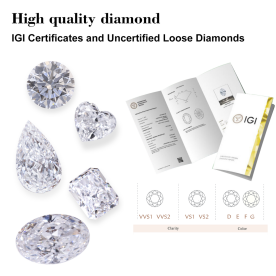
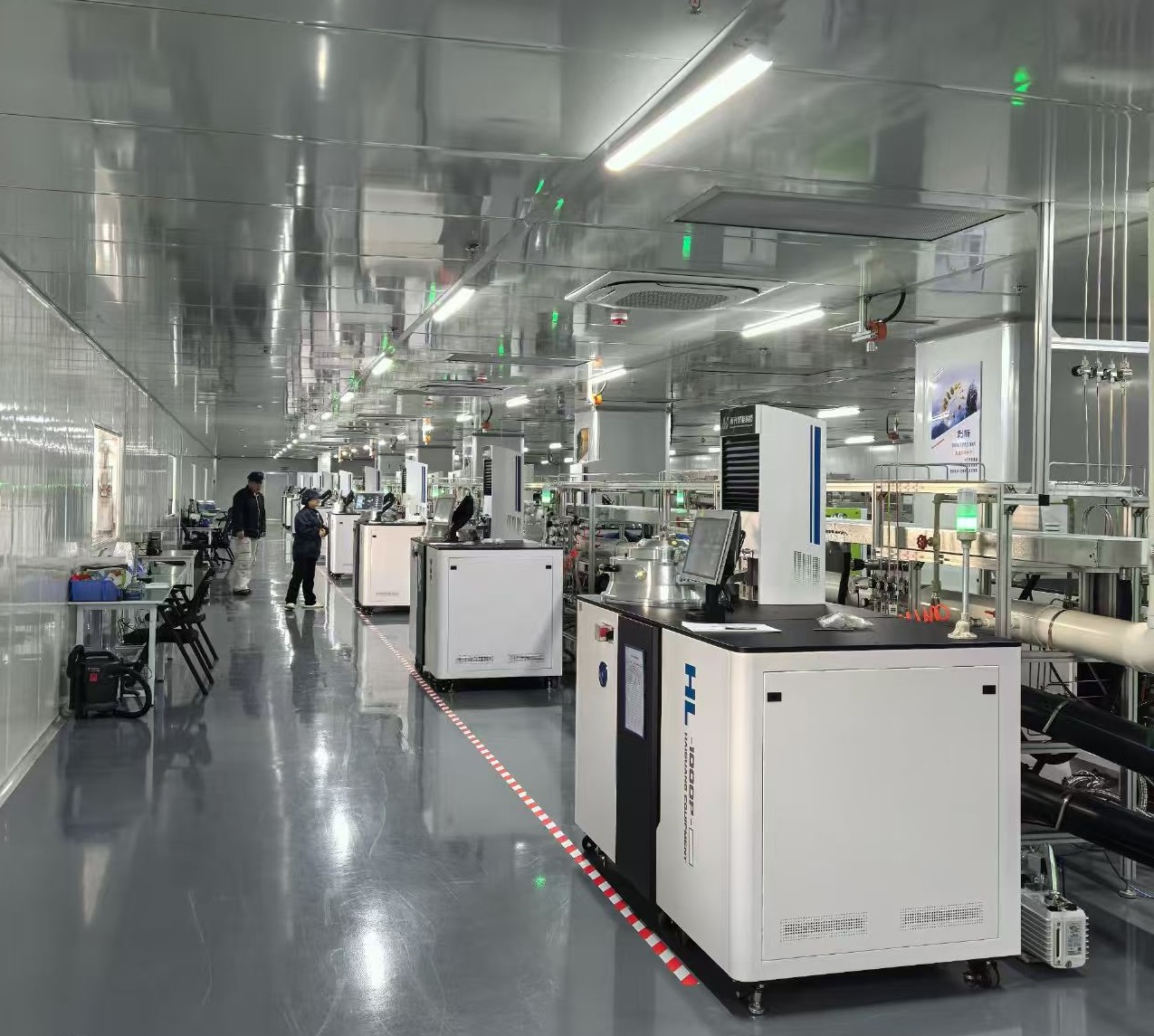
High Light Intelligence Technology has been engaged in the production and R&D of diamond materials for over a decade. We independently develop high-power MPCVD equipment and supply premium lab-grown diamonds, encompassing both white and colored diamonds. We accommodate all types of personalized customization requests. White loose diamonds span sizes from 0.01 to 37 carats, with color grades ranging from D to I and clarity levels reaching VVS to SI1. Fancy colored diamonds weigh between 1 and 18 carats, featuring color intensity from fancy light to fancy intense. All categories offer round, radiant, emerald, Asscher, and other specialty cuts, with shapes customizable to client specifications. All products come with authoritative certification, while bulk purchases without certificates are also accommodated. Our rigorous quality control system delivers high-value loose diamonds, making us a trusted partner for jewelry manufacturing and brand customization.
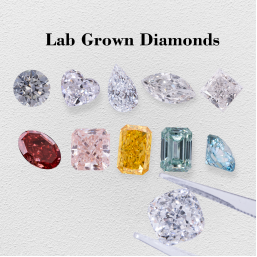
Foshan Highlight Intelligent Technology Co., Ltd. has been deeply involved in the CVD-grown diamond field for many years. Leveraging its mature core technologies and differentiated process layout, it has achieved full-dimensional coverage of white diamond products. All of the company's white diamond products are pure carbon crystals with a hardness of 10. Their physical and chemical properties are completely consistent with natural white diamonds, placing them firmly in the category of genuine diamonds.
Significant core technological advantages: Relying on a stable and controllable cultivation environment, it can produce high-color diamonds ranging from D to F, with clarity generally reaching VS1 or higher standards. They are virtually flawless to the naked eye, and their fire and brilliance rival top-grade natural white diamonds.
Our product highlights: Standardized grading standards, transparent and controllable selection: Strictly adhering to the international diamond grading system, key parameters such as color (D-J), clarity (SI1-VVS1), cut (EX-VG), and carat weight are clearly marked. Products come with authoritative IGI testing certificates, supporting full traceability and verification.
Green and sustainable development, fulfilling social responsibility: The cultivation process requires no extraction of earth's crustal resources, avoiding the environmental damage caused by natural diamond mining from the source. It is a superior choice that combines aesthetic value with environmental protection.
High cost-performance advantage, breaking down market price barriers: Compared to natural white diamonds, our CVD white diamonds are significantly more competitive in price. Within the same budget, consumers can choose larger carat or higher quality products, helping them easily achieve “real diamond freedom.”
*The articles and pictures are only for industry communication and sharing. If there is any infringement, please contact us to delete them.









-

CVD Single-Crystal Diamonds: An Analysis of the Complete Processing Workflow from Gas-Phase Deposition to Finished Diamond Chips
MPCVD (Microwave Plasma Chemical Vapor Deposition) technology is currently the core process for producing high-quality single-crystal diamond s. Thanks to its advantages of low defect rates, high purity, and controllable large dimensions, it is widely used in fields such as semiconductor heat dissipation, precision optics, and high-end sensors. The final quality of single-crystal diamond s depends on comprehensive process control throughout the entire workflow—from vapor deposition growth to pos
-
Single-Crystal or Polycrystalline Diamond — Which Has Greater Potential?
As diamond continues to enter industries such as semiconductors, thermal management, optics, high-power electronics, and precision machining, the requirements for diamond materials are also evolving.
-
Diamond Polishing and Grinding Processes: Core Challenges and Industry Hurdles
Diamond is often hailed as the “ultimate material” – ranking 10 on the Mohs hardness scale, boasting an ultra‑high thermal conductivity (~2,200 W/(m·K)), excellent chemical stability, and broad optical transparency. These properties make it irreplaceable in cutting‑edge applications such as semiconductor heat dissipation, high‑end optics, and quantum chips. Yet the paradox of “good materials are hard to process” is nowhere more evident than in diamond. From rough grinding for planarization to at
-
Single-Crystal vs Polycrystalline CVD Diamond: Process Difference Lies in Growth Logic, Not Equipment
The process difference between single crystal and polycrystalline CVD diamond lies not in equipment, but in growth logic. Single crystal and polycrystalline CVD diamond are two functional new materials with completely independent growth mechanisms, lattice structures and performance systems. Their process logic, product features and application boundaries diverge fundamentally from the very start of deposition and growth. Comparing or selecting materials without considering their underlying crys