- 中文
- English
- Español
The "color logic" of colored diamonds: Why can lab-grown colored diamonds replicate the rare colors of natural colored diamonds?
2026-02-07 10:12:55
Click:
“
In the diamond market, colored diamonds have always occupied a 'top spot'—natural pink and blue diamonds often fetch tens or even hundreds of millions of dollars at auctions, their core appeal stemming from the randomness and extreme scarcity of their color formation. The emergence of lab-grown colored diamonds, however, has broken down this 'rarity barrier' through technological breakthroughs, precisely replicating the brilliant colors of natural colored diamonds. It is not a simple imitation
”
In the diamond market, colored diamonds have always occupied a 'top spot'—natural pink and blue diamonds often fetch tens or even hundreds of millions of dollars at auctions, their core appeal stemming from the randomness and extreme scarcity of their color formation. The emergence of lab-grown colored diamonds, however, has broken down this 'rarity barrier' through technological breakthroughs, precisely replicating the brilliant colors of natural colored diamonds. It is not a simple imitation of natural colored diamonds, but rather a technologically upgraded product based on the same color-causing principles. Next, we will delve into the color secrets of lab-grown colored diamonds, from the essence of color formation and technological pathways to quality identification.

To understand the logic behind the color formation of colored diamonds, we must first clarify the origin of their colors. Natural diamonds are colorless by nature, their core component being pure carbon. The color they acquire is essentially due to the accidental introduction of 'impurity elements' or the creation of 'lattice defects' within the diamond crystal during millions of years of geological processes. These two factors together determine the color of natural colored diamonds, and this process is entirely dependent on nature, without any human intervention.
Impurity elements are one of the main causes of color in natural colored diamonds, with nitrogen and boron dominating most classic colors. Yellow and orange diamonds are the most common types of natural colored diamonds, formed by the inclusion of nitrogen in the diamond crystal: when nitrogen atoms are dispersed as single atoms in the carbon lattice, they absorb blue light, giving the diamond a gradient from light yellow to rich canary yellow. The higher the degree of nitrogen atom aggregation, the more saturated the yellow hue. The rarity of natural blue diamonds stems from the presence of boron. Boron atoms carry a negative charge and absorb red and orange light, giving the diamond its clear blue hue. Furthermore, the boron content in natural blue diamonds is extremely low, existing only in specific geological environments, which contributes to their exorbitant price and scarcity. Green diamonds, on the other hand, are formed in a more unique way. They are not formed due to impurities, but rather because the diamond is exposed to natural radioactive environments after formation, causing radiation damage to the crystal lattice and resulting in color. The color is mostly concentrated on the surface, rarely forming a uniform green throughout.
Compared to impurities, crystal defects are the 'secret' to the creation of natural pink and red diamonds, making these two types of colored diamonds the 'kings' of colored diamonds. The color of natural pink and red diamonds is unrelated to impurities; rather, it is caused by the intense pressure exerted on the diamond crystal during geological movements, leading to lattice slippage and dislocation. This 'plastic deformation' causes the diamond to absorb specific wavelengths of light, resulting in pink or red hues. Due to the uncontrollable nature of natural geological movements, the distribution of lattice defects in natural pink diamonds is extremely uneven, and the color often appears as color bands or color clusters. A uniform, dense pink color throughout is extremely rare. Red diamonds have an even higher degree of lattice defects, with a formation probability of only one in a billion, making them the rarest type of diamond in the world.

The color of natural colored diamonds is a 'random event,' while the breakthrough in lab-grown colored diamonds lies in the precise artificial control of color-causing conditions. In fact, lab-grown colored diamonds and natural colored diamonds have completely identical crystal structures, both being cubic structures within the isometric crystal system. This means that their color-causing principles are the same; the difference lies only in the fact that impurities and lattice defects in lab-grown colored diamonds can be controlled through technological means, thus accurately replicating the rare colors of natural colored diamonds. Currently, the mainstream lab-grown colored diamond technologies are HPHT (High Temperature High Pressure) and CVD (Chemical Vapor Deposition). While each has its own emphasis on color-causing pathways, both can achieve precise reproduction of the colors of natural colored diamonds.
The HPHT method simulates the formation environment of natural diamonds—maintaining a temperature of 1500-2000℃ and a pressure of 5-6 GPa—using seed crystals and carbon sources to grow diamond crystals. Its core advantage lies in the 'precise doping of impurity elements,' which can efficiently replicate classic colored diamond colors such as yellow, blue, and green. When replicating yellow diamonds, technicians add a precise amount of nitrogen to the carbon source. By controlling the dispersion and aggregation of nitrogen atoms, they adjust the saturation of the yellow hue as needed, stably producing diamonds ranging from light yellow to canary yellow and deep yellow. HPHT yellow diamonds also exhibit a more uniform nitrogen distribution, resulting in color consistency far exceeding that of natural yellow diamonds. In the cultivation of blue diamonds, the introduction of boron and precise control of its concentration allow for a gradient adjustment from light blue to royal blue, resolving the uneven color and color banding issues often found in natural blue diamonds. The replication of green diamonds, on the other hand, simulates the coloring process of natural green diamonds by first cultivating colorless diamonds and then subjecting them to artificial irradiation and annealing. This ultimately results in a uniform green color throughout, overcoming the limitation of natural green diamonds where the color is primarily surface-colored.

While the HPHT method excels at coloring due to impurities, the CVD method is superior in controlling lattice defects, successfully overcoming the challenge of replicating natural pink and red diamonds. The CVD method grows diamonds by depositing carbon atoms from the decomposition of methane gas onto a seed crystal wafer. The core logic of cultivating pink diamonds is precisely to replicate the lattice defect coloring principle of natural pink diamonds. During the growth process, technicians control the crystal growth rate by adjusting the methane concentration, growth temperature, and plasma power. Once the crystal reaches a specific stage, growth stress is artificially created—such as changing the temperature gradient and adjusting the gas flow rate—to induce controllable slippage and dislocation in the diamond lattice. The pink saturation is then adjusted by controlling the stress level, allowing for mass production of colors ranging from light pink and cherry blossom pink to fancy pink. Compared to the patchy color distribution and often accompanied by brown tones in natural pink diamonds, CVD pink diamonds have a more uniform distribution of lattice defects, resulting in a more transparent and even color. Furthermore, it can cultivate extremely rare violet diamonds, achieving a unique purple hue by controlling the type of lattice defects.
Comparing the color-causing characteristics of natural and lab-grown colored diamonds reveals their core differences: the color of natural colored diamonds is entirely determined by the geological environment, resulting in poor color uniformity, uncontrollable saturation, and the near impossibility of mass-producing rare colors; while lab-grown colored diamonds, through artificial control, allow for precise control over color uniformity and saturation, enabling the stable production of rare colors and offering greater quality stability. This answers a key consumer question—the color of lab-grown colored diamonds is not 'dyed,' but 'grown,' fundamentally different from post-dyeing processes.
The 'growth color' of lab-grown colored diamonds originates from elemental doping or lattice defects within the crystal, becoming integrated with the crystal structure. Tested by authoritative institutions, its color stability is consistent with that of natural colored diamonds, and it will not fade due to light, temperature, or acid/alkaline environments. Dyed diamonds, on the other hand, are colored by injecting dye into the diamond's cracks or pores. The color remains only on the surface, is easily faded, and traces of dye aggregation can be observed under a microscope. This falls under the category of 'enhancement treatment,' clearly distinguishing it from the natural growth color of lab-grown colored diamonds. Both the GIA (Gemological Institute of America) and NGTC (National Gemstone Testing Center) use the same grading standards for lab-grown colored diamonds as for natural colored diamonds, rating them based on three dimensions: color saturation, hue, and color uniformity. Certificates will clearly state 'lab-grown diamond,' but will not classify 'grown color' as 'treated color.'
The technological breakthrough in lab-grown colored diamonds has not only unlocked the color code of colored diamonds but also reshaped the landscape of the colored diamond consumer market. The scarcity of natural colored diamonds puts them out of reach for most consumers, while lab-grown colored diamonds, thanks to precise color-enhancing technology, have achieved three major upgrades in consumer value: In terms of cost-effectiveness, lab-grown colored diamonds of the same color and carat are priced at only 1/10 to 1/5 of natural colored diamonds, making fancy intense pink diamond rings and royal blue diamond pendants accessible luxury options; in terms of personalization, based on the controllability of color enhancement, full customization of color, carat, and cut is possible to meet the exclusive needs of consumers; in terms of quality, the color uniformity and saturation of lab-grown colored diamonds far surpass those of natural colored diamonds, and they do not have the color banding and overtone issues commonly found in natural colored diamonds, resulting in a more stunning wearing effect. Ultimately, lab-grown colored diamonds are not a substitute for natural colored diamonds, but rather an upgraded version based on the same coloring principles but achieved through technological innovation. They haven't overturned the collectible value of natural colored diamonds; instead, they offer new possibilities to the diamond consumer market—making once unattainable rare colors a vehicle for more people to express their individuality and showcase their taste. With the continuous advancement of coloring technology, lab-grown colored diamonds will unlock even more unique colors not found in natural diamonds, propelling the entire diamond industry into a new era of 'color freedom.'
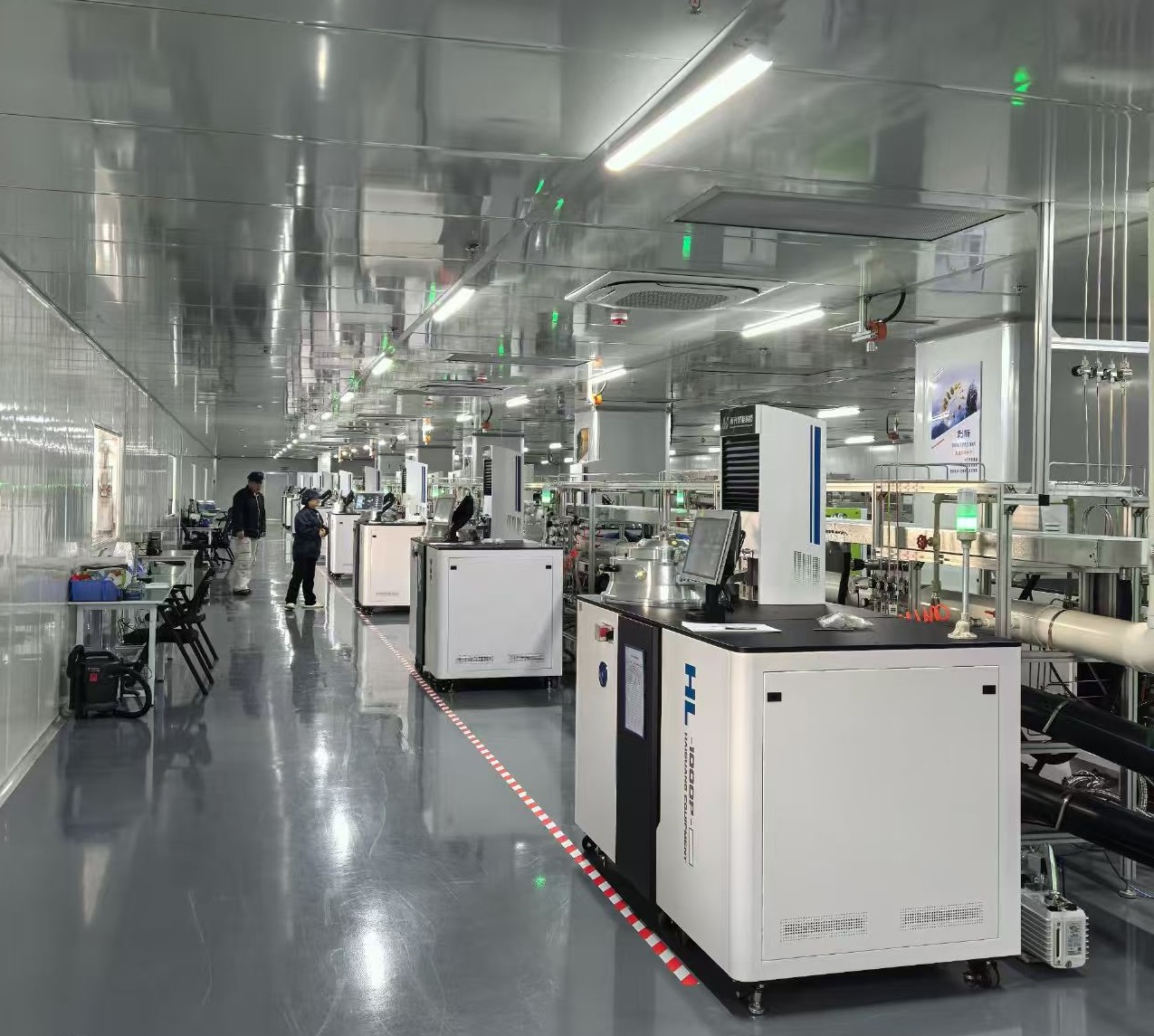
Foshan Highlight Intelligent Technology Co., Ltd. has been deeply involved in the CVD-grown diamond field for many years. Leveraging its mature core technologies and differentiated process layout, it has achieved full-dimensional coverage of white diamond products. All of the company's white diamond products are pure carbon crystals with a hardness of 10. Their physical and chemical properties are completely consistent with natural white diamonds, placing them firmly in the category of genuine diamonds.
Significant core technological advantages: Relying on a stable and controllable cultivation environment, it can produce high-color diamonds ranging from D to F, with clarity generally reaching VS1 or higher standards. They are virtually flawless to the naked eye, and their fire and brilliance rival top-grade natural white diamonds.
Our product highlights: Standardized grading standards, transparent and controllable selection: Strictly adhering to the international diamond grading system, key parameters such as color (D-J), clarity (SI1-VVS1), cut (EX-VG), and carat weight are clearly marked. Products come with authoritative IGI testing certificates, supporting full traceability and verification.
Green and sustainable development, fulfilling social responsibility: The cultivation process requires no extraction of earth's crustal resources, avoiding the environmental damage caused by natural diamond mining from the source. It is a superior choice that combines aesthetic value with environmental protection.
High cost-performance advantage, breaking down market price barriers: Compared to natural white diamonds, our CVD white diamonds are significantly more competitive in price. Within the same budget, consumers can choose larger carat or higher quality products, helping them easily achieve “real diamond freedom.”
*The articles and pictures are only for industry communication and sharing. If there is any infringement, please contact us to delete them.









-

CVD Single-Crystal Diamonds: An Analysis of the Complete Processing Workflow from Gas-Phase Deposition to Finished Diamond Chips
MPCVD (Microwave Plasma Chemical Vapor Deposition) technology is currently the core process for producing high-quality single-crystal diamond s. Thanks to its advantages of low defect rates, high purity, and controllable large dimensions, it is widely used in fields such as semiconductor heat dissipation, precision optics, and high-end sensors. The final quality of single-crystal diamond s depends on comprehensive process control throughout the entire workflow—from vapor deposition growth to pos
-
Single-Crystal or Polycrystalline Diamond — Which Has Greater Potential?
As diamond continues to enter industries such as semiconductors, thermal management, optics, high-power electronics, and precision machining, the requirements for diamond materials are also evolving.
-
Diamond Polishing and Grinding Processes: Core Challenges and Industry Hurdles
Diamond is often hailed as the “ultimate material” – ranking 10 on the Mohs hardness scale, boasting an ultra‑high thermal conductivity (~2,200 W/(m·K)), excellent chemical stability, and broad optical transparency. These properties make it irreplaceable in cutting‑edge applications such as semiconductor heat dissipation, high‑end optics, and quantum chips. Yet the paradox of “good materials are hard to process” is nowhere more evident than in diamond. From rough grinding for planarization to at
-
Single-Crystal vs Polycrystalline CVD Diamond: Process Difference Lies in Growth Logic, Not Equipment
The process difference between single crystal and polycrystalline CVD diamond lies not in equipment, but in growth logic. Single crystal and polycrystalline CVD diamond are two functional new materials with completely independent growth mechanisms, lattice structures and performance systems. Their process logic, product features and application boundaries diverge fundamentally from the very start of deposition and growth. Comparing or selecting materials without considering their underlying crys