- 中文
- English
- Español
The Ultimate Elegance: A Complete Guide to Choosing the Perfect Princess Cut Diamond
2026-02-07 14:10:53
Click:
“
In the world of sparkling gemstones, while the Round Brilliant cut represents tradition, the Princess Cut symbolizes independence, confidence, and modern romance.
”
In the world of sparkling gemstones, while the Round Brilliant cut represents tradition, the Princess Cut symbolizes independence, confidence, and modern romance. As a favorite among “fancy shape diamonds”, its unique geometric lines and brilliance (rivaling that of round diamonds) make it a top choice for engagement rings.
How do you select a high-quality Princess cut diamond? This in-depth guide breaks it down from a professional perspective.
1. Understanding the Princess Cut: More Than Just “Square”
In GIA grading reports, a Princess cut is officially described as a “Square Modified Brilliant.”Created in 1981, it is the masterpiece of cutters who successfully combined the fire of a round diamond with a modern square silhouette.
• Visual Characteristics: It resembles an inverted pyramid with a relatively deep pavilion (bottom).
• Value Proposition: Because the cutting process retains about 60%-80% of the rough stone's weight (much higher than round diamonds), you can often get a larger carat weight for the same budget.

2. Gold Standards for Selection
When choosing fancy shapes, you cannot rely solely on the certificate; visual balance and proportions are key.
● Ideal Length-to-Width Ratio
While Princess cuts can be rectangular, the most sought-after shape is a perfect square.
• Ideal Ratio: Between 1.00:1 and 1.05:1. Within this range, the diamond appears perfectly square to the naked eye.
• Caution: Ratios exceeding 1.10 may appear noticeably off-balance unless you specifically prefer a rectangular look.
● Symmetry: The Engine of Sparkle
The Princess cut features numerous facets, and their symmetry directly dictates the diamond's “fire.”
• The Imaginary Midline: When observing, imagine a line bisecting the diamond. The facets on the left and right should be identical in shape and size.
• Light & Dark Patterns: A premium Princess cut should show a balanced distribution of light and dark areas. Avoid stones with large dark shadows in the center, which indicate “light leakage.”
● Color and Clarity Pitfalls
• Color: Princess cuts tend to trap color in the corners. If you are sensitive to yellow tints, we recommend choosing H color or higher.
• Clarity: The complex faceting hides small inclusions well. However, ensure there are no open inclusions near the corners, as these are the most vulnerable points of the stone.

3. Protecting the “Fragile Cornersc”: Setting Advice
The most stunning yet delicate parts of a Princess cut diamond are its four sharp corners. Choosing the right setting is crucial for durability:
• V-Prong Setting: This is the gold standard. V-shaped prongs wrap around the corners like a protective cradle, preventing both chipping and loosening.
• Bezel Setting: This wraps the entire perimeter in metal, offering a modern aesthetic and the highest level of security.

4. The Art of Pairing
If you are designing a custom piece, the Princess cut pairs beautifully with:
• The Linear Look: Pair with Baguettes or Emerald-cut side stones to emphasize architectural lines.
• The Soft Transition: Use Trillion-cut side stones to bridge the sharp angles of the center stone, making the overall look appear larger and more fluid.

5. Empowered by Tech, Defining Modern Brilliance
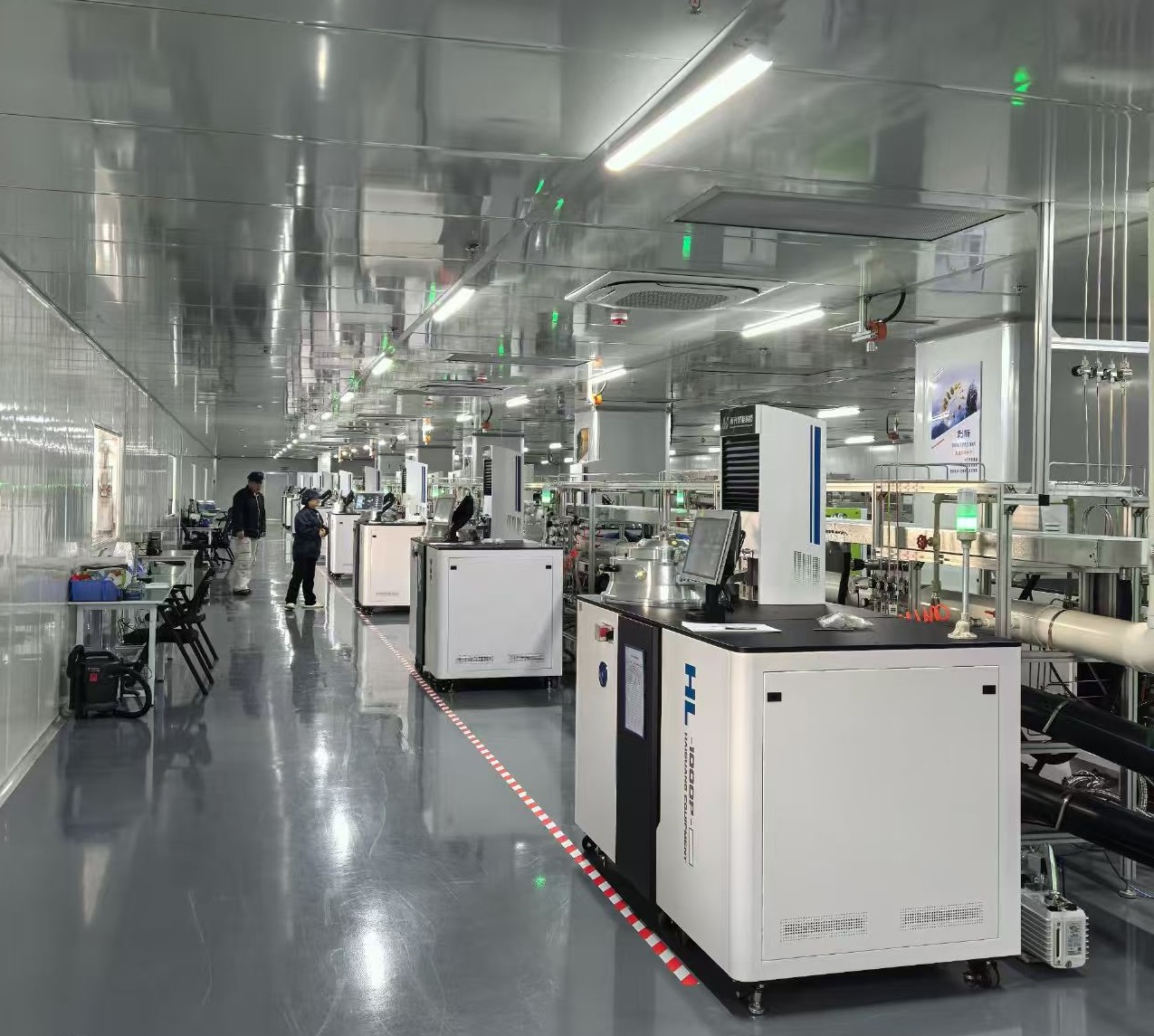
Choosing a perfect Princess cut diamond is a pursuit of both aesthetics and advanced craftsmanship. Foshan High Light Intelligent Technology Co., Ltd. is deeply rooted in CVD (Chemical Vapor Deposition) lab-grown diamond technology. With our self-developed high-power MPCVD systems (ranging from 6KW to 15KW), we precisely control every physical parameter of the diamond growth process.
From stable industrial-scale production to the refinement of jewelry-grade gemstones, High Light Intelligent provides more than just high-performance equipment. We are committed to ensuring that every lab-grown diamond, born from modern technology, possesses the same purity and fire as mined diamonds. Whether you are looking for premium Princess cut rough diamonds or a full-scale diamond growth turnkey solution, High Light Intelligent is your trusted partner.

Foshan Highlight Intelligent Technology Co., Ltd. has been deeply involved in the CVD-grown diamond field for many years. Leveraging its mature core technologies and differentiated process layout, it has achieved full-dimensional coverage of white diamond products. All of the company's white diamond products are pure carbon crystals with a hardness of 10. Their physical and chemical properties are completely consistent with natural white diamonds, placing them firmly in the category of genuine diamonds.
Significant core technological advantages: Relying on a stable and controllable cultivation environment, it can produce high-color diamonds ranging from D to F, with clarity generally reaching VS1 or higher standards. They are virtually flawless to the naked eye, and their fire and brilliance rival top-grade natural white diamonds.
Our product highlights: Standardized grading standards, transparent and controllable selection: Strictly adhering to the international diamond grading system, key parameters such as color (D-J), clarity (SI1-VVS1), cut (EX-VG), and carat weight are clearly marked. Products come with authoritative IGI testing certificates, supporting full traceability and verification.
Green and sustainable development, fulfilling social responsibility: The cultivation process requires no extraction of earth's crustal resources, avoiding the environmental damage caused by natural diamond mining from the source. It is a superior choice that combines aesthetic value with environmental protection.
High cost-performance advantage, breaking down market price barriers: Compared to natural white diamonds, our CVD white diamonds are significantly more competitive in price. Within the same budget, consumers can choose larger carat or higher quality products, helping them easily achieve “real diamond freedom.”
*The articles and pictures are only for industry communication and sharing. If there is any infringement, please contact us to delete them.









-

CVD Single-Crystal Diamonds: An Analysis of the Complete Processing Workflow from Gas-Phase Deposition to Finished Diamond Chips
MPCVD (Microwave Plasma Chemical Vapor Deposition) technology is currently the core process for producing high-quality single-crystal diamond s. Thanks to its advantages of low defect rates, high purity, and controllable large dimensions, it is widely used in fields such as semiconductor heat dissipation, precision optics, and high-end sensors. The final quality of single-crystal diamond s depends on comprehensive process control throughout the entire workflow—from vapor deposition growth to pos
-
Single-Crystal or Polycrystalline Diamond — Which Has Greater Potential?
As diamond continues to enter industries such as semiconductors, thermal management, optics, high-power electronics, and precision machining, the requirements for diamond materials are also evolving.
-
Diamond Polishing and Grinding Processes: Core Challenges and Industry Hurdles
Diamond is often hailed as the “ultimate material” – ranking 10 on the Mohs hardness scale, boasting an ultra‑high thermal conductivity (~2,200 W/(m·K)), excellent chemical stability, and broad optical transparency. These properties make it irreplaceable in cutting‑edge applications such as semiconductor heat dissipation, high‑end optics, and quantum chips. Yet the paradox of “good materials are hard to process” is nowhere more evident than in diamond. From rough grinding for planarization to at
-
Single-Crystal vs Polycrystalline CVD Diamond: Process Difference Lies in Growth Logic, Not Equipment
The process difference between single crystal and polycrystalline CVD diamond lies not in equipment, but in growth logic. Single crystal and polycrystalline CVD diamond are two functional new materials with completely independent growth mechanisms, lattice structures and performance systems. Their process logic, product features and application boundaries diverge fundamentally from the very start of deposition and growth. Comparing or selecting materials without considering their underlying crys