- 中文
- English
- Español
Why is Your Diamond Ring Losing Its Sparkle? Secrets to Restoring Brilliancy & Home Care Guide
2026-02-07 16:30:07
Click:
“
Many customers feel confused after wearing their diamond rings for a while: "Why does the diamond that was so dazzling when I first bought it now look cloudy? Even the setting seems to have lost its luster—is there something wrong with the quality?"
”
Many customers feel confused after wearing their diamond rings for a while: 'Why does the diamond that was so dazzling when I first bought it now look cloudy? Even the setting seems to have lost its luster—is there something wrong with the quality?'
Rest assured, this is not a quality defect. As a precious gemstone, a diamond's physical properties mean it needs a little 'TLC' (Tender Loving Care). Today, we’ll dive deep into why diamonds grow dull and share a professional DIY maintenance plan.
1. The Root Cause: Why Has Your Diamond Lost Its Fire?
A diamond's brilliance comes from its high refractive index and perfect Cut. When light enters the diamond, it reflects off precisely angled facets to create the 'fire' we all love.
The 'Cloudy' Truth: Lipophilicity (Attraction to Oil) Diamonds are naturally lipophilic, meaning they are 'oil magnets.' In daily life, skin oils, hand creams, perfumes, and even kitchen grease easily stick to the diamond's surface, forming a transparent 'oil film.' This film blocks light from entering and reflecting, making the diamond look dull and dirty.

2. The Refresh: A DIY 'Diamond SPA' at Home
If your ring has lost its sparkle, try these simple steps to make it look brand new:
1. Gentle Soak: Prepare a bowl of warm water and add a few drops of neutral detergent (like dish soap or baby shampoo).
2. Soften the Grime: Let the ring soak for 15-20 minutes to fully soften the oil buildup.
3. Detailed Scrub: Use an extra-soft toothbrush to gently scrub the bottom of the diamond and the crevices of the setting—these are the most common hiding spots for dirt.
4. Rinse & Dry: Rinse under warm running water and pat dry with a lint-free cloth or chamois.
Pro-Tip: Three Things to Avoid
1. No Toothpaste: Toothpaste contains micro-abrasives that are nearly as hard as quartz. Over time, they can leave tiny scratches on the metal setting and the diamond surface.
2. No Harsh Chemicals: Strong alkaline cleaners like laundry powder can corrode metal settings (especially 18K gold or Platinum), causing discoloration.
3. Don't Rinse Over an Open Drain: Always use a container or plug the sink to prevent your precious ring from accidentally slipping down the pipes!

3. Protection: How to Keep the Sparkle Alive
1.'Last On, First Off': Chemicals in makeup, hairspray, and sunscreen can oxidize the metal setting. Put your ring on after you’re done getting ready, and take it off before your skincare routine.
2.Stay Away from Grease: Take your ring off before cooking or deep cleaning. Grease and heavy cleaners are the 'number one enemies' of diamond brilliance.
3.Skip the Gym: While diamonds are hard, they are also brittle. Hard impacts during heavy exercise or manual labor can chip the diamond or loosen the prongs.
4.Give It Some Space: Diamonds are the hardest substance on Earth. If stored with other jewelry, they can scratch your gold, silver, or other gemstones. Store your ring separately in its original box or a soft pouch.

4. Professional Annual Check-ups
Just like a car needs a tune-up, your diamond ring needs an 'annual physical.' We recommend bringing your ring to a professional jeweler once a year for ultrasonic cleaning and a prong check to make sure the stone is secure and won't fall out. If you’re looking for reliable lab-grown diamonds or just want to chat about how they’re made, feel free to reach out. No fancy sales talk—just real advice from people who know diamonds. High Light Intelligent is always here for you in Foshan!

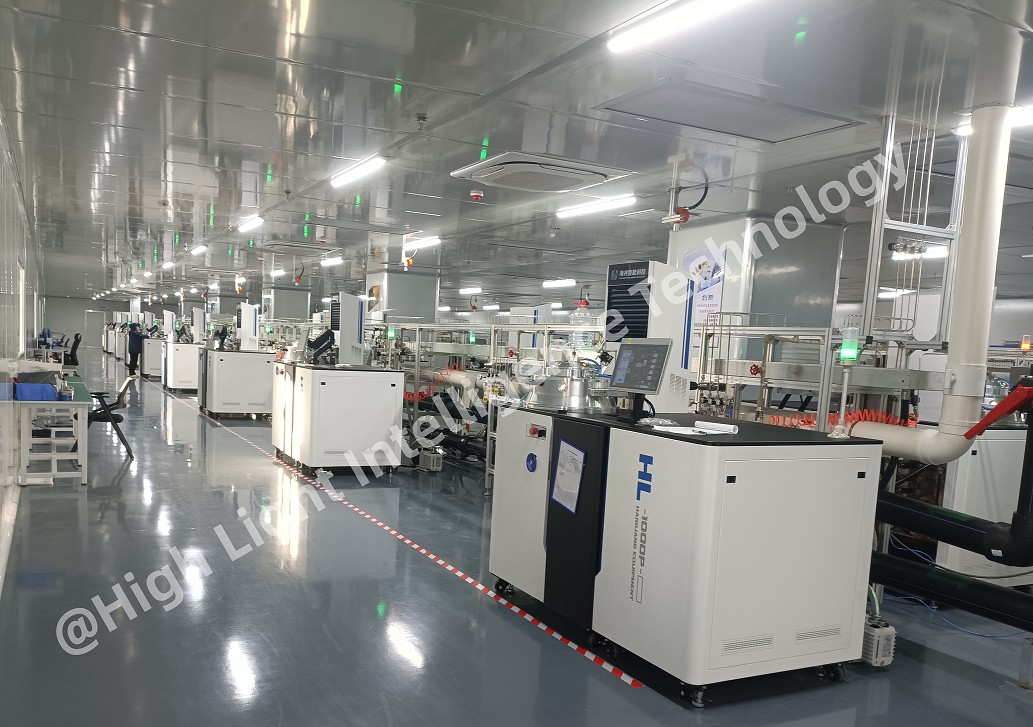
High Light Intelligence Technology, a pioneer in the CVD diamond industry, has advanced MPCVD technology and CVD diamond production workshops. We focus on producing high-purity lab-grown diamonds for the jewelry industry, and at the same time create industrial-grade CVD diamond products, covering single crystals, polycrystalline, films and diamond surface metallization. We also provide 6kw/10kw/15kw MPCVD equipment to help customers in all aspects, from equipment to products, and then to all-round services, to create brilliance together.
*The articles and pictures are only for industry communication and sharing. If there is any infringement, please contact us to delete them.









-

CVD Single-Crystal Diamonds: An Analysis of the Complete Processing Workflow from Gas-Phase Deposition to Finished Diamond Chips
MPCVD (Microwave Plasma Chemical Vapor Deposition) technology is currently the core process for producing high-quality single-crystal diamond s. Thanks to its advantages of low defect rates, high purity, and controllable large dimensions, it is widely used in fields such as semiconductor heat dissipation, precision optics, and high-end sensors. The final quality of single-crystal diamond s depends on comprehensive process control throughout the entire workflow—from vapor deposition growth to pos
-
Single-Crystal or Polycrystalline Diamond — Which Has Greater Potential?
As diamond continues to enter industries such as semiconductors, thermal management, optics, high-power electronics, and precision machining, the requirements for diamond materials are also evolving.
-
Diamond Polishing and Grinding Processes: Core Challenges and Industry Hurdles
Diamond is often hailed as the “ultimate material” – ranking 10 on the Mohs hardness scale, boasting an ultra‑high thermal conductivity (~2,200 W/(m·K)), excellent chemical stability, and broad optical transparency. These properties make it irreplaceable in cutting‑edge applications such as semiconductor heat dissipation, high‑end optics, and quantum chips. Yet the paradox of “good materials are hard to process” is nowhere more evident than in diamond. From rough grinding for planarization to at
-
Single-Crystal vs Polycrystalline CVD Diamond: Process Difference Lies in Growth Logic, Not Equipment
The process difference between single crystal and polycrystalline CVD diamond lies not in equipment, but in growth logic. Single crystal and polycrystalline CVD diamond are two functional new materials with completely independent growth mechanisms, lattice structures and performance systems. Their process logic, product features and application boundaries diverge fundamentally from the very start of deposition and growth. Comparing or selecting materials without considering their underlying crys