- 中文
- English
- Español
The Ultimate Guide to Diamond Testers: Everything You Need to Know About Use and Selection
2026-08-05 16:04:57
Click:
“
A diamond tester is a portable electronic instrument that distinguishes diamonds from other materials based on differences in thermal conductivity. It is typically shaped like a thick pen or a small remote control, with a fine metal sensing probe at the tip.
”
I. What Is a Diamond Tester?
A diamond tester is a portable electronic instrument that distinguishes diamonds from other materials based on differences in thermal conductivity. It is typically shaped like a thick pen or a small remote control, with a fine metal sensing probe at the tip.
Diamond has one of the highest thermal conductivity rates of any natural material – it conducts heat extremely quickly. In contrast, most diamond simulants – such as cubic zirconia (CZ), glass, crystal, and synthetic corundum – have very poor thermal conductivity. Diamond testers leverage this physical difference to rapidly determine whether a gemstone is likely a diamond, making them an efficient screening tool in jewelry settings.

II. How Does a Diamond Tester Work?
When powered on, the probe tip automatically heats up to a fixed detection temperature. When the probe is placed vertically against the surface of the stone being tested, the stone draws heat away from the probe. A built‑in precision sensor monitors the cooling rate in real time and classifies the stone accordingly:
• Very rapid cooling / extremely high thermal conductivity: The unit emits a continuous 'beep‑beep' tone, and the indicator light moves to the DIAMOND zone.
• Slow cooling / low thermal conductivity: The unit gives no audible response, or the indicator light moves to the SIMULANT zone.
Key point: A diamond tester measures thermal conductivity, not chemical composition. Therefore, it is suitable only for preliminary screening based on thermal differences.
III. What Can a Diamond Tester Identify? What Cannot?
✅ Reliable differentiation (accuracy >95%)
Ideal for rapid counter‑side screening, it can consistently distinguish:
• Diamond vs. cubic zirconia (CZ)
• Diamond vs. common simulants such as glass, crystal, synthetic corundum
• Diamond vs. other inexpensive low‑grade diamond imitations

IV. Core Differences Between Generation 1, Generation 2, and Generation 3 Diamond Testers
The evolution of diamond testers focuses on expanding detection parameters and improving accuracy, eliminating the blind spots of earlier models. The differences are clearly defined as follows:
First Generation – Basic Thermal‑Conductivity Only (Entry‑Level)
This model relies solely on thermal conductivity data. Its strengths are low cost and simple operation, enabling quick separation of diamond from CZ, glass, and other common simulants. However, its major weakness is that it cannot distinguish moissanite – it will falsely read moissanite as diamond, making its detection capability quite limited.
Second Generation – Thermal + Electrical Conductivity (Mainstream Practical Choice)
This type adds an electrical conductivity detection module on top of the thermal function. With dual‑parameter verification, it accurately differentiates natural diamond, moissanite, and ordinary simulants, perfectly filling the main blind spot of first‑generation models. It is currently the best value choice for jewelry stores and personal use.
Third Generation – Smart Multi‑Parameter (High‑End Advanced)
Equipped with a microprocessor, UV fluorescence, thermal, electrical, and other sensors, this is an intelligent screening device. It covers all the functions of the second generation and uses multi‑dimensional data to provide a reference hint of 'Natural Diamond / Suspected Lab‑Grown Diamond.'
Important reminder: This is only an auxiliary screening tool and cannot replace a professional laboratory certificate; it is not a legal basis for determining diamond grade or natural origin.
Easy‑to‑remember mnemonic:
• Gen 1 – reads only heat
• Gen 2 – tells moissanite apart
• Gen 3 – smart‑hints lab‑grown

V. Standard Step‑by‑Step Usage Guide (Avoid Errors & Protect Your Device)
More than 90% of testing errors come from improper operation. Carefully follow these steps to maximise accuracy while protecting the probe and the gemstone:
1. Clean the gemstone – eliminate surface contamination
Use a dedicated jewellery polishing cloth or an alcohol wipe to thoroughly clean the table (top flat surface) and the area to be tested. Remove all oil, sweat, and dust. Grease or dirt acts as an insulating layer that hinders heat conduction, which can easily cause a true diamond to be misread as a simulant.
2. Power on and allow warm‑up – wait for stabilisation
Turn on the device according to the manual. Let the probe warm up until the indicator light stabilises (usually 5–15 seconds). Do not test before warm‑up is complete – this will lead to data deviations and inaccurate results.
3. Choose the test point – avoid interference sources
Preferably test on the flat table (the largest flat surface) of the gemstone, as a flat contact area gives the most reliable readings. If the stone is already mounted, avoid touching any metal prongs, bezel, or shank – metal conducts heat very quickly and will cause false readings if contacted.
4. Touch vertically and lightly – hold steady without pressure
Place the probe perpendicular to the stone surface and gently touch it – never press hard. Keep the probe steady in contact for 3–5 seconds, then observe the indicator light, numerical display, and audible tone. Pressing too hard will wear the precision probe and may also scratch the stone's edges or damage the setting.
5. Read, reset, and repeat for confirmation
After a single test, lift the probe and allow it to return to room temperature before the next measurement. To avoid occasional errors, repeat the test 2–3 times on different flat areas of the same gemstone. Only accept the final judgement when all results are consistent.
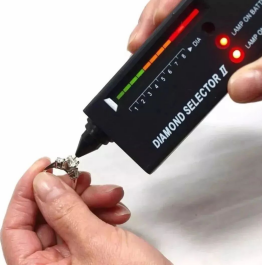
Remember: a diamond tester is a fast screening tool, not a substitute for professional gemological certification.
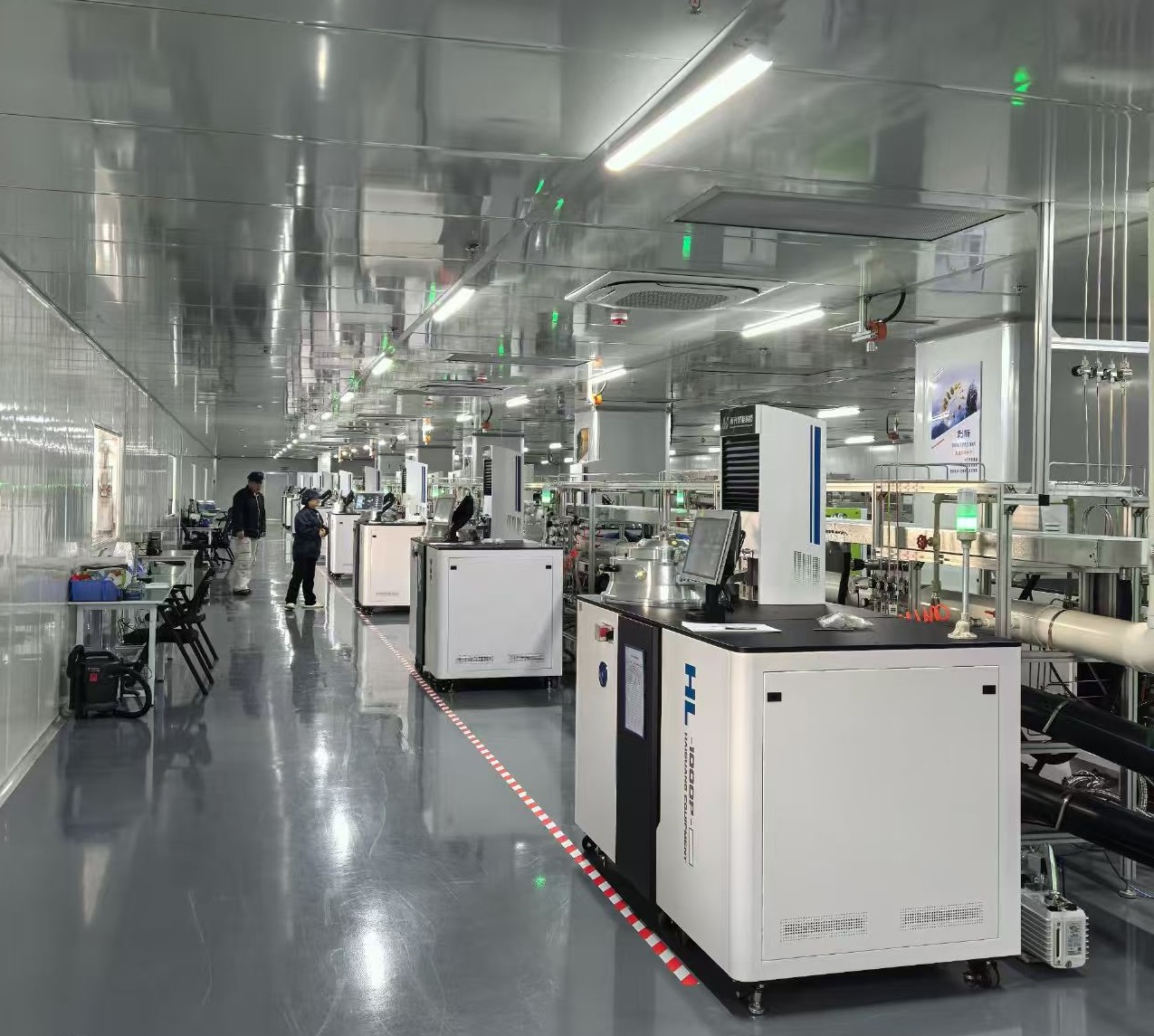
Foshan Highlight Intelligent Technology Co., Ltd. has been deeply involved in the CVD-grown diamond field for many years. Leveraging its mature core technologies and differentiated process layout, it has achieved full-dimensional coverage of white diamond products. All of the company's white diamond products are pure carbon crystals with a hardness of 10. Their physical and chemical properties are completely consistent with natural white diamonds, placing them firmly in the category of genuine diamonds.
Significant core technological advantages: Relying on a stable and controllable cultivation environment, it can produce high-color diamonds ranging from D to F, with clarity generally reaching VS1 or higher standards. They are virtually flawless to the naked eye, and their fire and brilliance rival top-grade natural white diamonds.
Our product highlights: Standardized grading standards, transparent and controllable selection: Strictly adhering to the international diamond grading system, key parameters such as color (D-J), clarity (SI1-VVS1), cut (EX-VG), and carat weight are clearly marked. Products come with authoritative IGI testing certificates, supporting full traceability and verification.
Green and sustainable development, fulfilling social responsibility: The cultivation process requires no extraction of earth's crustal resources, avoiding the environmental damage caused by natural diamond mining from the source. It is a superior choice that combines aesthetic value with environmental protection.
High cost-performance advantage, breaking down market price barriers: Compared to natural white diamonds, our CVD white diamonds are significantly more competitive in price. Within the same budget, consumers can choose larger carat or higher quality products, helping them easily achieve “real diamond freedom.”
*The articles and pictures are only for industry communication and sharing. If there is any infringement, please contact us to delete them.









-

CVD Single-Crystal Diamonds: An Analysis of the Complete Processing Workflow from Gas-Phase Deposition to Finished Diamond Chips
MPCVD (Microwave Plasma Chemical Vapor Deposition) technology is currently the core process for producing high-quality single-crystal diamond s. Thanks to its advantages of low defect rates, high purity, and controllable large dimensions, it is widely used in fields such as semiconductor heat dissipation, precision optics, and high-end sensors. The final quality of single-crystal diamond s depends on comprehensive process control throughout the entire workflow—from vapor deposition growth to pos
-
Single-Crystal or Polycrystalline Diamond — Which Has Greater Potential?
As diamond continues to enter industries such as semiconductors, thermal management, optics, high-power electronics, and precision machining, the requirements for diamond materials are also evolving.
-
Diamond Polishing and Grinding Processes: Core Challenges and Industry Hurdles
Diamond is often hailed as the “ultimate material” – ranking 10 on the Mohs hardness scale, boasting an ultra‑high thermal conductivity (~2,200 W/(m·K)), excellent chemical stability, and broad optical transparency. These properties make it irreplaceable in cutting‑edge applications such as semiconductor heat dissipation, high‑end optics, and quantum chips. Yet the paradox of “good materials are hard to process” is nowhere more evident than in diamond. From rough grinding for planarization to at
-
Single-Crystal vs Polycrystalline CVD Diamond: Process Difference Lies in Growth Logic, Not Equipment
The process difference between single crystal and polycrystalline CVD diamond lies not in equipment, but in growth logic. Single crystal and polycrystalline CVD diamond are two functional new materials with completely independent growth mechanisms, lattice structures and performance systems. Their process logic, product features and application boundaries diverge fundamentally from the very start of deposition and growth. Comparing or selecting materials without considering their underlying crys