- 中文
- English
- Español
Do Melee Diamonds Have Grading? Why Don't the Lab-Grown Melee Diamonds You Buy Come with 4C Certificates?
2026-08-03 09:47:55
Click:
“
Many people wonder when customizing a lab-grown diamond ring or shopping for pavé-set jewelry: "The center stone comes with an IGI certificate clearly stating its color, clarity, and cut. What about the surrounding small melee diamonds? Do they have a grading?"
”
Many people wonder when customizing a lab-grown diamond ring or shopping for pavé-set jewelry: 'The center stone comes with an IGI certificate clearly stating its color, clarity, and cut. What about the surrounding small melee diamonds? Do they have a grading?'
The answer is: In the regular consumer market, melee diamonds do not receive the detailed grading that loose diamonds above 30 points do, nor do they come with independent 4C certificates. However, this does not mean melee diamonds lack quality standards — it's simply that the evaluation method is completely different. By the end of this article, you'll understand the reasons behind it.
First, what are melee diamonds?
In the jewelry industry, melee diamonds typically refer to small diamonds under 0.3 carats (30 points). The smallest stones used in pavé settings can be as tiny as 0.001 carats, with a diameter of less than 1 millimeter. They are the 'golden supporting characters' of jewelry, primarily used to accentuate the center stone, cover the band, or create elaborate designs. Whether lab-grown or otherwise, once a diamond reaches this size, the rules are the same.

Why don't melee diamonds undergo detailed 4C grading?
There are three fundamental reasons: it's not cost-effective, it's technically impractical, and it's commercially unnecessary.
**1. The cost of certification far exceeds the value of the diamond itself.**
A 1-point (0.01 carat) lab-grown melee diamond may have a market price of just a dozen yuan or even less. Meanwhile, a reputable diamond grading report (such as an IGI certificate) costs several hundred yuan in testing fees. Spending hundreds to certify a stone worth just over ten yuan makes no commercial sense whatsoever. This is the core economic reason.
**2. The stones are too small, making precise measurement extremely difficult.**
The clarity component of 4C grading requires carefully searching for internal inclusions under 10x magnification and plotting them for grading, while color must be assessed under standard lighting. When a diamond is as tiny as a grain of rice, with minute facets, accurately determining clarity characteristics and measuring cut proportions involves significant margins of error. For diamonds this small, precision cannot be guaranteed, and there is little point in attempting it.
**3. Melee diamonds are batch-used 'accessories' where overall harmony matters most.**
Large center stones are sold for their brilliance and precise quality, priced stone by stone. Melee diamonds, on the other hand, play a supporting role in pavé settings. Designers and craftspeople care about whether an entire batch of diamonds visually matches in color and clarity, and whether the final setting looks harmonious and brilliantly sparkly. No one uses a magnifying glass to scrutinize the inclusion under the table of a 1-point diamond. Therefore, melee diamond trading is done by batch, with a general quality range provided — much like buying uniform-sized buttons, where each button does not require its own material test report.
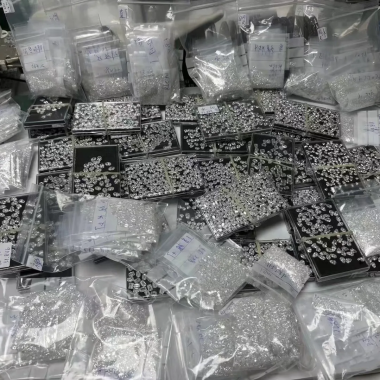
So do melee diamonds have quality standards? Absolutely.
'No grading' does not mean 'no standards.' In the wholesale and procurement process, melee diamonds have established quality classifications, mainly covering the following aspects:
- **Color Range:** For example, labeled as 'D-E color,' 'F-G color,' or 'H-I color,' providing a color range rather than a precise individual grade like D or E.
- **Clarity Description:** Usually roughly categorized as 'eye-clean' or 'VS-SI range,' without requiring laboratory-grade plotting.
- **Cut Distinction:** This is a very important point for selection. Good quality melee diamonds are full-cut (with the standard 57 facets, offering excellent brilliance, typically above 2 points), while cheaper options may use single-cut diamonds (only 17 facets, with noticeably weaker sparkle). This difference is visible to the naked eye and directly affects the jewelry's brilliance.
- **Authenticity Screening:** Though not 4C graded, some professional institutions offer 'melee diamond batch screening services,' primarily to detect whether any moissanite or other diamond simulants are mixed into the batch, ensuring all material is laboratory-grown diamond.

What can we learn from this when purchasing jewelry?
The value of melee diamonds lies in their overall effect. When buying pavé-set jewelry, don't worry about the specific parameters of each tiny stone. Instead, observe whether the overall color tone is uniform and whether the brilliance is vibrant and lively.
Pay attention to the cut and quantity of the melee diamonds. Full-cut stones are much more brilliant than single-cut ones. Many luxurious jewelry pieces may have a modest total melee weight, but use dozens or even hundreds of full-cut small diamonds, meaning the labor cost and the lab-grown diamond cost are not insignificant. This is where design and craftsmanship value lie.
Look for the merchant's description of melee diamond quality. Responsible brands will indicate the color range of the melee diamonds used (e.g., 'H color and above') and the cut type (e.g., 'full-cut diamonds'). This serves as assurance.

In summary, melee diamonds are not individually graded as a result of the jewelry industry's choices based on cost, technology, and commercial logic. They trade the extreme pursuit of individual uniqueness for the brilliant harmony and high cost-effectiveness of the overall design. Much like the uniform buttons on a finely tailored garment, we simply appreciate its overall beauty without needing a separate certificate for each button.
By understanding this, the next time you admire or purchase lab-grown diamond jewelry, you'll better appreciate the value of that collective sparkle.
Foshan Haiguang Intelligent Technology Co., Ltd. specializes in the research, development, and supply of high-quality laboratory-grown diamonds. We can provide premium lab-grown melee diamonds in D-E color and VS clarity and above in bulk, supporting full-cut customization to meet the pavé setting needs of jewelry brands and manufacturers. Whether you are creating a luxurious halo design or a brilliant band of light across a ring shank, we can offer you a lab-grown melee diamond solution with batch consistency and outstanding fire and brilliance. We welcome collaboration inquiries from jewelry industry peers and brands — let's make every pavé-set jewelry piece shine brilliantly together.
Want to learn more about lab-grown diamonds, or select a diamond piece with meticulously chosen accent stones? Feel free to browse our product collections or contact us for a one-on-one consultation.
Foshan Highlight Intelligent Technology Co., Ltd. has been deeply involved in the CVD-grown diamond field for many years. Leveraging its mature core technologies and differentiated process layout, it has achieved full-dimensional coverage of white diamond products. All of the company's white diamond products are pure carbon crystals with a hardness of 10. Their physical and chemical properties are completely consistent with natural white diamonds, placing them firmly in the category of genuine diamonds.
Significant core technological advantages: Relying on a stable and controllable cultivation environment, it can produce high-color diamonds ranging from D to F, with clarity generally reaching VS1 or higher standards. They are virtually flawless to the naked eye, and their fire and brilliance rival top-grade natural white diamonds.
Our product highlights: Standardized grading standards, transparent and controllable selection: Strictly adhering to the international diamond grading system, key parameters such as color (D-J), clarity (SI1-VVS1), cut (EX-VG), and carat weight are clearly marked. Products come with authoritative IGI testing certificates, supporting full traceability and verification.
Green and sustainable development, fulfilling social responsibility: The cultivation process requires no extraction of earth's crustal resources, avoiding the environmental damage caused by natural diamond mining from the source. It is a superior choice that combines aesthetic value with environmental protection.
High cost-performance advantage, breaking down market price barriers: Compared to natural white diamonds, our CVD white diamonds are significantly more competitive in price. Within the same budget, consumers can choose larger carat or higher quality products, helping them easily achieve “real diamond freedom.”
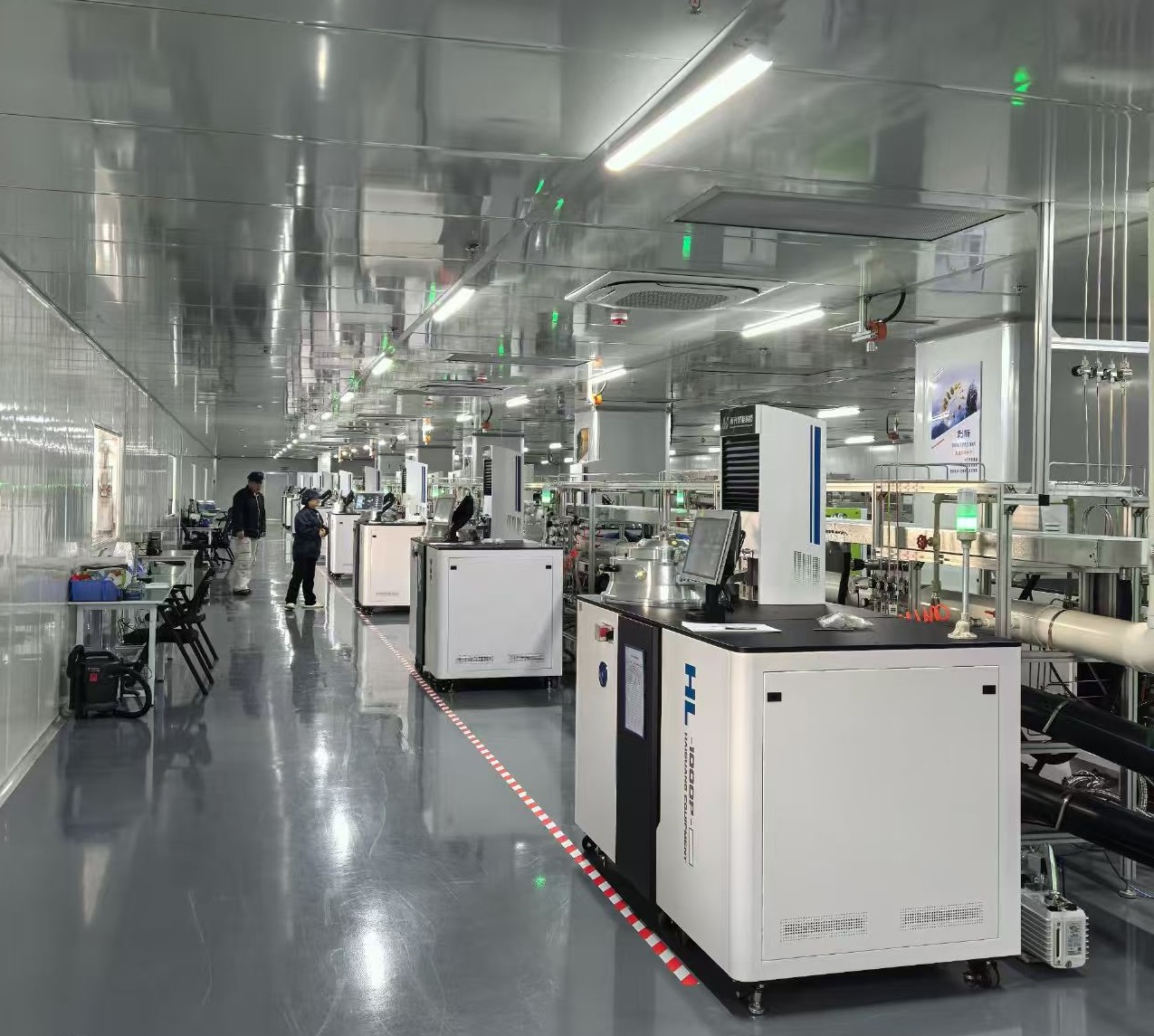
*The articles and pictures are only for industry communication and sharing. If there is any infringement, please contact us to delete them.









-

CVD Single-Crystal Diamonds: An Analysis of the Complete Processing Workflow from Gas-Phase Deposition to Finished Diamond Chips
MPCVD (Microwave Plasma Chemical Vapor Deposition) technology is currently the core process for producing high-quality single-crystal diamond s. Thanks to its advantages of low defect rates, high purity, and controllable large dimensions, it is widely used in fields such as semiconductor heat dissipation, precision optics, and high-end sensors. The final quality of single-crystal diamond s depends on comprehensive process control throughout the entire workflow—from vapor deposition growth to pos
-
Single-Crystal or Polycrystalline Diamond — Which Has Greater Potential?
As diamond continues to enter industries such as semiconductors, thermal management, optics, high-power electronics, and precision machining, the requirements for diamond materials are also evolving.
-
Diamond Polishing and Grinding Processes: Core Challenges and Industry Hurdles
Diamond is often hailed as the “ultimate material” – ranking 10 on the Mohs hardness scale, boasting an ultra‑high thermal conductivity (~2,200 W/(m·K)), excellent chemical stability, and broad optical transparency. These properties make it irreplaceable in cutting‑edge applications such as semiconductor heat dissipation, high‑end optics, and quantum chips. Yet the paradox of “good materials are hard to process” is nowhere more evident than in diamond. From rough grinding for planarization to at
-
Single-Crystal vs Polycrystalline CVD Diamond: Process Difference Lies in Growth Logic, Not Equipment
The process difference between single crystal and polycrystalline CVD diamond lies not in equipment, but in growth logic. Single crystal and polycrystalline CVD diamond are two functional new materials with completely independent growth mechanisms, lattice structures and performance systems. Their process logic, product features and application boundaries diverge fundamentally from the very start of deposition and growth. Comparing or selecting materials without considering their underlying crys