- 中文
- English
- Español
Z-Axis System: The Key to Stable Production of MPCVD Diamonds
2026-04-20 15:40:58
Click:
“
Microwave Plasma Chemical Vapor Deposition is the mainstream method for producing high-quality diamonds in the industry. When the equipment is running, it first pumps the reaction chamber into a vacuum state to strictly ensure the chamber is fully sealed and airtight. Then, the microwave device releases energy, and special mixed reaction gases are fed into the chamber. Under the action of energy, a stable plasma area is formed. These highly active plasmas provide stable heat and reaction conditi
”
1. Brief Introduction to MPCVD Technology
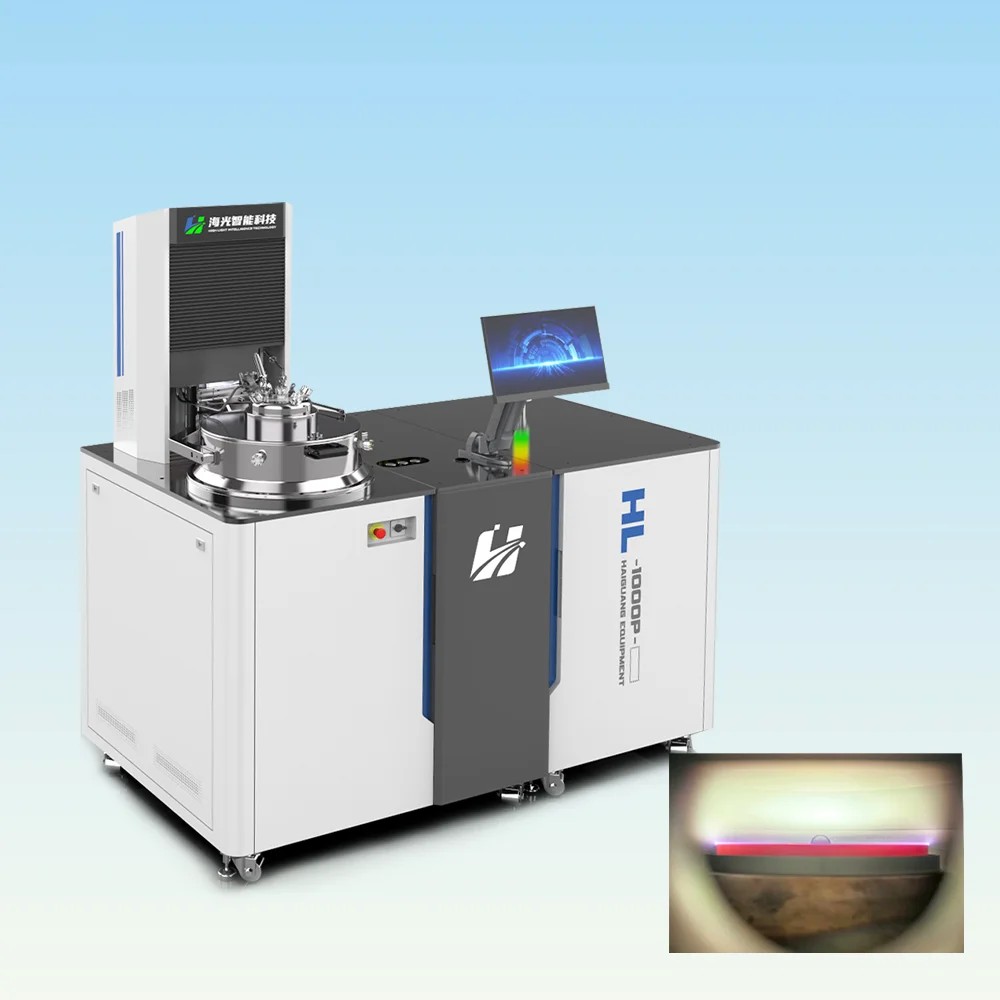
Microwave Plasma Chemical Vapor Deposition is the mainstream method for producing high-quality diamonds in the industry. When the equipment is running, it first pumps the reaction chamber into a vacuum state to strictly ensure the chamber is fully sealed and airtight. Then, the microwave device releases energy, and special mixed reaction gases are fed into the chamber. Under the action of energy, a stable plasma area is formed. These highly active plasmas provide stable heat and reaction conditions for diamond growth, allowing diamonds to crystallize slowly and evenly on the seed crystal substrate.
This production method causes no extra pollution, has high plasma purity, and the growth process is gentle and stable without damaging the formed diamond crystals. Therefore, it is widely used in the production of industrial diamonds, semiconductor heat dissipation materials, high-end lab-grown diamonds and other products.
2. Core Challenges in Continuous Diamond Growth
During the long-term growth of diamonds, the crystal thickness keeps increasing, which is a normal phenomenon in production, but it also brings a key technical problem. The plasma area is fixed above the crystal, and the two need to maintain a fixed distance to provide the standard temperature required for diamond growth. As the crystal becomes thicker, the distance between the crystal surface and the plasma keeps decreasing, which directly changes the growth temperature and makes it deviate from the optimal standard.
Unstable temperature will cause a series of problems, such as uneven diamond crystallization, increased internal stress, reduced appearance quality, and even defects like cracks and impurities. This not only lowers the product yield, but also restricts the mass production of large-size and thick-specification diamonds, which is a common production pain point to be solved in the industry.

3. Core Function of the Substrate Stage Lifting System
To solve the imbalance of temperature and spacing, the vertical lifting function of the substrate stage has become a core configuration of MPCVD diamond equipment. The design logic of this function is simple and practical. It dynamically compensates for the spacing change caused by crystal thickening by vertically adjusting the height of the substrate stage. After the diamond grows for a period of time, the equipment automatically lowers the substrate stage, always keeping the optimal growth distance between the crystal surface and the plasma. In this way, it stabilizes the temperature environment and ensures consistent crystallization quality throughout the process.
Foshan High Light Intelligent Technology has been deeply engaged in the diamond industry for more than ten years and has mature equipment R&D and production capabilities. Our full series of MPCVD equipment (6KW, 10KW, 15KW) are all equipped with this high-precision lifting system as standard. The system supports a wide lifting adjustment range of 0-12 mm with a single adjustment accuracy of 0.01 mm. It features precise adjustment and stable operation, fully meeting the strict requirements of industrial mass production.

4. Compatible with All Products to Meet Diverse Production Needs
High Light Intelligent has built a complete full industrial chain production system for diamonds. The lifting function of the substrate stage can fully adapt to the production needs of all kinds of our diamond products. From the cultivation of small-size CVD diamond seeds to the processing of large-size single crystal diamond heat sinks and polycrystalline diamond wafers, the lifting system can accurately control the growth environment, ensuring uniform internal stress, impurity-free and crack-free appearance of products.
At the same time, this technology is also widely used in the mass production of industrial diamond tool blanks, jewelry-grade lab-grown white diamonds and colored diamonds, covering all specifications from 0.003 carats to 25 carats. Stable spacing and temperature control keep the quality of products in different batches uniform, greatly improving production stability and meeting customers' diverse customized and mass production needs.

5. Empower Automated Production and Reduce Enterprise Operating Costs
The substrate stage lifting system adopts automatic control mode, which does not require frequent manual adjustment. It reduces errors caused by manual operation and cuts down the labor cost of factories. The system can run stably for a long time, adapt to the long-cycle continuous growth of diamonds, and perfectly match the production rhythm of large-scale factories.
As a comprehensive enterprise integrating equipment R&D, diamond production and technical services, High Light Intelligent not only provides high-performance MPCVD equipment, but also offers customers one-stop turnkey services including factory planning, equipment installation, technical training and process upgrading. Relying on the advantages of industry-university-research cooperation and overseas production experience, we use practical and stable equipment technology to help customers improve product yield, increase production efficiency and enhance core market competitiveness.

6. Summary
The vertical lifting function of the substrate stage is a key technology to ensure the stable production of MPCVD diamonds. It solves the industry problem of unstable temperature in diamond growth with a simple and efficient adjustment method, and is an important foundation for high-quality and large-scale diamond production.
In the future, High Light Intelligent will continue to optimize the core equipment technology, adhere to the design concept of simplicity, practicality, stability and high efficiency, and constantly upgrade core configurations such as the lifting system. We will provide global customers with better diamond production equipment and technical services, and boost the steady development of the diamond industry。
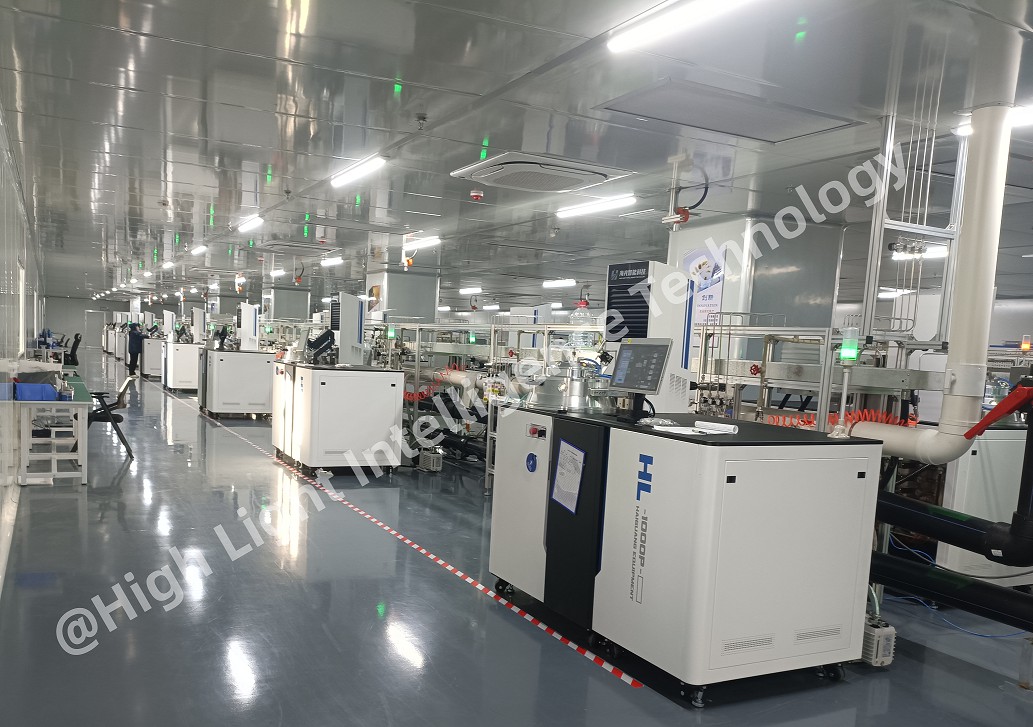
High Light Intelligence Technology, a pioneer in the CVD diamond industry, has advanced MPCVD technology and CVD diamond production workshops. We focus on producing high-purity lab-grown diamonds for the jewelry industry, and at the same time create industrial-grade CVD diamond products, covering single crystals, polycrystalline, films and diamond surface metallization. We also provide 6kw/10kw/15kw MPCVD equipment to help customers in all aspects, from equipment to products, and then to all-round services, to create brilliance together.









-

CVD Single-Crystal Diamonds: An Analysis of the Complete Processing Workflow from Gas-Phase Deposition to Finished Diamond Chips
MPCVD (Microwave Plasma Chemical Vapor Deposition) technology is currently the core process for producing high-quality single-crystal diamond s. Thanks to its advantages of low defect rates, high purity, and controllable large dimensions, it is widely used in fields such as semiconductor heat dissipation, precision optics, and high-end sensors. The final quality of single-crystal diamond s depends on comprehensive process control throughout the entire workflow—from vapor deposition growth to pos
-
Single-Crystal or Polycrystalline Diamond — Which Has Greater Potential?
As diamond continues to enter industries such as semiconductors, thermal management, optics, high-power electronics, and precision machining, the requirements for diamond materials are also evolving.
-
Diamond Polishing and Grinding Processes: Core Challenges and Industry Hurdles
Diamond is often hailed as the “ultimate material” – ranking 10 on the Mohs hardness scale, boasting an ultra‑high thermal conductivity (~2,200 W/(m·K)), excellent chemical stability, and broad optical transparency. These properties make it irreplaceable in cutting‑edge applications such as semiconductor heat dissipation, high‑end optics, and quantum chips. Yet the paradox of “good materials are hard to process” is nowhere more evident than in diamond. From rough grinding for planarization to at
-
Single-Crystal vs Polycrystalline CVD Diamond: Process Difference Lies in Growth Logic, Not Equipment
The process difference between single crystal and polycrystalline CVD diamond lies not in equipment, but in growth logic. Single crystal and polycrystalline CVD diamond are two functional new materials with completely independent growth mechanisms, lattice structures and performance systems. Their process logic, product features and application boundaries diverge fundamentally from the very start of deposition and growth. Comparing or selecting materials without considering their underlying crys