- 中文
- English
- Español
A Guide to CVD Diamond Mass Production
2026-08-05 14:49:54
Click:
“
In recent years, MPCVD technology has continued to demonstrate its technical advantages, including the ability to grow high-purity Type IIa diamonds, precise and controllable color, support for mass production of large-size wafers, and suitability for high-end semiconductor applications. Thanks to its unique product and process advantages, it has become the leading production solution in two key global markets: affordable luxury jewelry and high-end electronic heat dissipation. An increasing num
”
In recent years, MPCVD technology has continued to demonstrate its technical advantages, including the ability to grow high-purity Type IIa diamonds, precise and controllable color, support for mass production of large-size wafers, and suitability for high-end semiconductor applications. Thanks to its unique product and process advantages, it has become the leading production solution in two key global markets: affordable luxury jewelry and high-end electronic heat dissipation. An increasing number of jewelry companies and technology manufacturers are beginning to establish their own CVD diamond production lines. Building an in-house CVD diamond factory is not merely a matter of purchasing equipment; it is a systematic endeavor involving equipment, processes, formulations, operations and maintenance, and quality control. Only by selecting the right solution and mastering core technologies can companies achieve efficient mass production and stable profitability.
Selecting the right MPCVD equipment is the first step in establishing a factory and is also critical to determining mass production efficiency and product positioning. High-power equipment is not a one-size-fits-all solution; blindly purchasing large-scale equipment can lead to wasted costs and idle capacity. To address different production scenarios, we have developed a tiered equipment matrix: the 6kW desktop MPCVD model, featuring high precision and low energy consumption, is well-suited for laboratory R&D; 10 kW high-power MPCVD mass-production models, capable of meeting the industrial mass-production demands for white diamonds, colored diamonds, and large-size semiconductor-grade diamonds. Customers can flexibly select models based on their product positioning, avoiding excessive investment while precisely matching their production capacity needs.

Exclusively customized growth recipes are the core competitive advantage driving differentiated quality and breakthroughs in product categories. Leveraging our mass production experience across all product categories, we can tailor recipes to specific needs: For the jewelry sector, we have developed growth recipes for colored CVD diamonds, precisely controlling the ratios of dopant elements and deposition parameters to ensure consistent color tones, uniform fire, and excellent clarity, enabling the stable production of high-end, impurity-free Type IIa diamonds; For the industrial sector, we customize high-purity colorless diamond growth formulations tailored for high-end heat dissipation applications such as AI chips and 5G RF components.

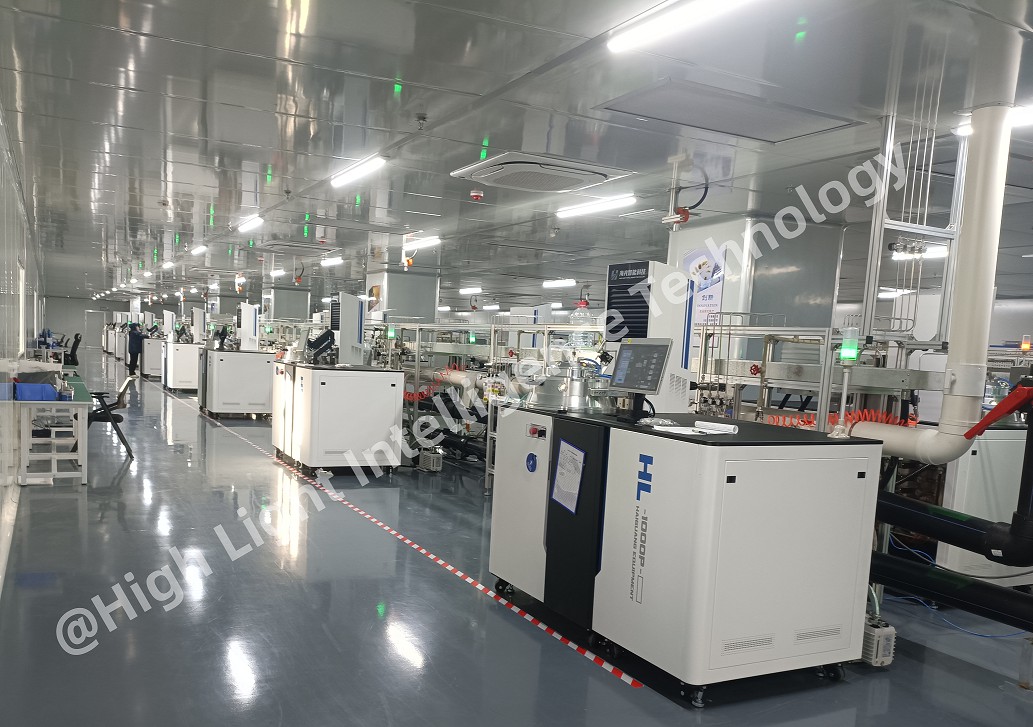
Standardized process control and full-cycle technical support are key to continuously improving yield rates and reducing production costs. During mass production, issues such as parameter deviations and improper equipment operation and maintenance are major causes of low yield rates. By iteratively refining our intelligent plasma control system, we achieve precise voltage stabilization, constant temperature, and stable current in the growth environment, effectively preventing common defects such as haze and impurities, and significantly improving batch-to-batch consistency. At the same time, for overseas customers who have established their own factories using equipment purchased from us, we provide one-stop implementation support. This includes full-cycle services such as equipment installation and commissioning, process optimization, recipe iteration, lifetime maintenance and repair, and operator training, addressing pain points such as technical gaps, operational and maintenance difficulties, and challenges in improving yield rates after production begins.

Leveraging High Light Intelligent Technology’s comprehensive strategic layout—which encompasses in-house equipment R&D, rough diamond mass production, and industrial materials research—we continuously optimize equipment parameters and growth formulations based on feedback from downstream market applications. The resulting iterations of equipment and processes further enhance product yield and quality, creating a virtuous cycle of “equipment iteration—process upgrade—quality improvement.” Meanwhile, our integrated operational model effectively controls production costs, enabling us to offer partner clients lower startup costs and more stable quality standards.

The CVD diamond industry is currently in a golden window of opportunity driven by the upgrade in jewelry consumption and the evolution of semiconductor materials. Whether you are a startup establishing a diamond factory, upgrading existing production lines, or customizing high-end diamond materials, High Light can provide global partners with one-stop solutions for factory construction and mass production, helping clients quickly capture the benefits of the high-end CVD diamond market. If you have relevant planning needs, we welcome partners from all sectors to contact us to discuss cooperation opportunities.
High Light Intelligence Technology, a pioneer in the CVD diamond industry, has advanced MPCVD technology and CVD diamond production workshops. We focus on producing high-purity lab-grown diamonds for the jewelry industry, and at the same time create industrial-grade CVD diamond products, covering single crystals, polycrystalline, films and diamond surface metallization. We also provide 6kw/10kw/15kw MPCVD equipment to help customers in all aspects, from equipment to products, and then to all-round services, to create brilliance together.









-

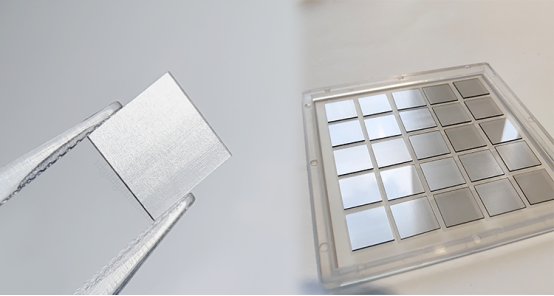
CVD Single-Crystal Diamonds: An Analysis of the Complete Processing Workflow from Gas-Phase Deposition to Finished Diamond Chips
MPCVD (Microwave Plasma Chemical Vapor Deposition) technology is currently the core process for producing high-quality single-crystal diamond s. Thanks to its advantages of low defect rates, high purity, and controllable large dimensions, it is widely used in fields such as semiconductor heat dissipation, precision optics, and high-end sensors. The final quality of single-crystal diamond s depends on comprehensive process control throughout the entire workflow—from vapor deposition growth to pos
-
Single-Crystal or Polycrystalline Diamond — Which Has Greater Potential?
As diamond continues to enter industries such as semiconductors, thermal management, optics, high-power electronics, and precision machining, the requirements for diamond materials are also evolving.
-
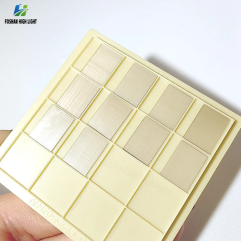
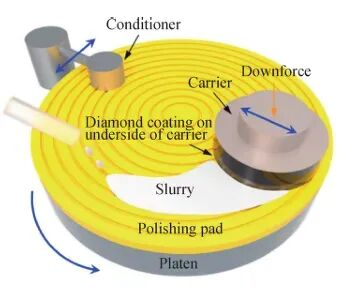
Diamond Polishing and Grinding Processes: Core Challenges and Industry Hurdles
Diamond is often hailed as the “ultimate material” – ranking 10 on the Mohs hardness scale, boasting an ultra‑high thermal conductivity (~2,200 W/(m·K)), excellent chemical stability, and broad optical transparency. These properties make it irreplaceable in cutting‑edge applications such as semiconductor heat dissipation, high‑end optics, and quantum chips. Yet the paradox of “good materials are hard to process” is nowhere more evident than in diamond. From rough grinding for planarization to at
-
Single-Crystal vs Polycrystalline CVD Diamond: Process Difference Lies in Growth Logic, Not Equipment
The process difference between single crystal and polycrystalline CVD diamond lies not in equipment, but in growth logic. Single crystal and polycrystalline CVD diamond are two functional new materials with completely independent growth mechanisms, lattice structures and performance systems. Their process logic, product features and application boundaries diverge fundamentally from the very start of deposition and growth. Comparing or selecting materials without considering their underlying crys