- 中文
- English
- Español
How Diamond Became the Ultimate Thermal Solution in the Era of Computing Power
2026-04-03 17:26:40
Click:
“
The iconic narrative behind the legendary "A Diamond is Forever" slogan has long been upended by China's industrial prowess. Once synonymous with luxury and rarity, this gem has shed its glamorous aura to become an indispensable thermal management material for high-power devices. In an era of explosive growth in AI computing power, it has taken up the mantle of "cooling to save computing power".
”
The iconic narrative behind the legendary 'A Diamond is Forever' slogan has long been upended by China's industrial prowess. Once synonymous with luxury and rarity, this gem has shed its glamorous aura to become an indispensable thermal management material for high-power devices. In an era of explosive growth in AI computing power, it has taken up the mantle of 'cooling to save computing power'.
With NVIDIA’s latest generation of GPUs surpassing 1000W of power consumption, and cooling energy use accounting for up to 40% of total data center operating costs, traditional thermal solutions using copper and aluminum have hit their fundamental physical limits. Thermal management is no longer a supporting link in the industrial chain — it is the core bottleneck restricting breakthroughs in computing power, device miniaturization, and energy efficiency optimization.
As an ultimate wide-bandgap semiconductor material, diamond has emerged as an irreplaceable all-round player in thermal management. Between 2025 and 2026, driven by multiple key technological breakthroughs and commercialization milestones, diamond thermal management has officially moved beyond the laboratory stage, entering its Year of Mass Production.

Ⅰ.Four Core Advantages That Set the Performance Bar for Thermal Management
Diamond’s rapid rise as the core material for high-end thermal management stems from its all-round performance superiority over traditional materials, perfectly aligning with the industry trend of high power, miniaturization, and high integration:
1. Unrivaled Thermal Conductivity: Diamond is the material with the highest known thermal conductivity in nature. Single crystal diamond achieves a maximum thermal conductivity of 2400 W/m·K — 5.5 times that of pure copper and 9.6 times that of pure aluminum — efficiently meeting the thermal dissipation needs of kilowatt-level power devices.
2. Exceptional Semiconductor Packaging Compatibility: Its thermal expansion coefficient is highly matched with substrate materials such as silicon (Si) and gallium nitride (GaN), fundamentally reducing thermal stress during packaging, preventing chip damage and packaging delamination, and significantly improving device reliability.
3. Ultra-Lightweight Design: Diamond has a thermal conductivity-to-density ratio of up to 625, 13.9 times that of pure copper. This enables slimmer, lighter thermal solutions for high-density chip packaging, aerospace, and other compact application scenarios.
4. Cost-Reducing Composite Modificatio: Diamond can be compounded with metals such as copper and aluminum to form new materials that retain ultra-high thermal conductivity while inheriting the formability and large-size processing advantages of metals. With costs reduced to just 1/3 of pure diamond heat sinks, this greatly lowers the threshold for large-scale industrial application.

Ⅱ.Three Core Technology Paths for Full-Scene Commercial Applications
Driven by technological breakthroughs and commercial practices, diamond thermal management has formed three core application paths, each with unique advantages to cover full-scene industrial needs:
1. Diamond Substrate: The semiconductor functional layer is epitaxially grown directly on the diamond substrate, delivering the lowest thermal resistance and highest heat dissipation efficiency. It is mainly used in extreme thermal dissipation scenarios such as high-end RF devices and quantum computing chips.
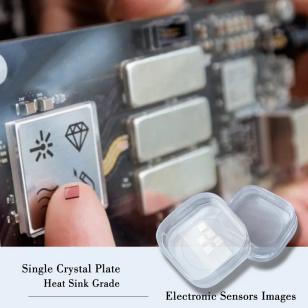
2. **Diamond Heat Sink**: A standalone thermal component in the back-end packaging process, which can be directly bonded to the chip surface for heat conduction without modifying existing chip designs or production lines. With strong compatibility and rapid implementation, it is the most commercially advanced path to date, already mass-validated in AI server GPUs, 5G base station RF devices, and optical modules.
3. Diamond Microchannel Cooling: An advanced solution deeply integrated with liquid cooling technology, which can operate stably even at an extreme heat flux of 1000W/cm², making it the core solution for future ultra-high heat flux scenarios.
Ⅲ.Cross-Sector Penetration Unlocks Massive Market Opportunities Across Multiple Tracks
With its outstanding performance and technological advantages, diamond thermal management has achieved full penetration across six core application scenarios: AI semiconductor chips, high-speed optical communication modules, new energy vehicles, 5G/6G communications, aerospace, quantum computing, and high-end medical equipment.
As costs continue to fall, market penetration is accelerating rapidly. The surging demand for high-power thermal management across these sectors is jointly driving the transition of diamond thermal solutions from a 'high-end niche product' to an 'industrial necessity'.

Ⅳ.The Year of Mass Production: A Trillion-Yuan Track Reaches Its Inflection Point
Driven by technological breakthroughs, falling costs, and exploding downstream demand, the diamond thermal management market has entered a period of rapid growth. As the Year of Mass Production, 2026 marks the industry’s official transition from a 'niche material' to a **trillion-yuan market track**.
According to industry research data, the global diamond thermal management market was valued at approximately USD 1.2 billion in 2025, and is projected to exceed USD 8 billion by 2030, maintaining a compound annual growth rate (CAGR) of 40%-50% — the fastest-growing segment in the entire thermal management industry.
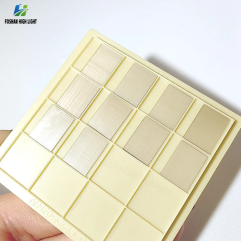
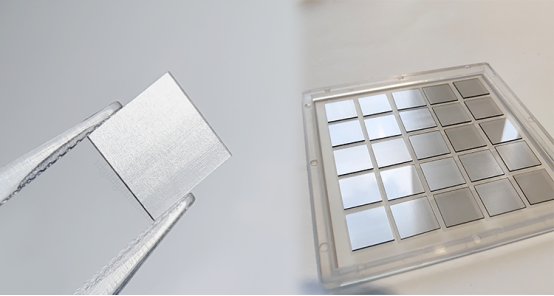
As a 17-year industry pioneer in the R&D and manufacturing of diamond materials, we offer a full product portfolio including heat sink grade single crystal diamond, surface metallized single crystal diamond, and polycrystalline diamond wafers. We also provide our customers with full-process technical support, from prototype development and small-batch sampling to large-scale mass production.
We are far more than a supplier of diamond thermal products — we are your long-term strategic partner. If you are facing technical bottlenecks related to thermal management, or looking for a reliable, scalable partner for diamond thermal solutions, please feel free to contact us at any time.
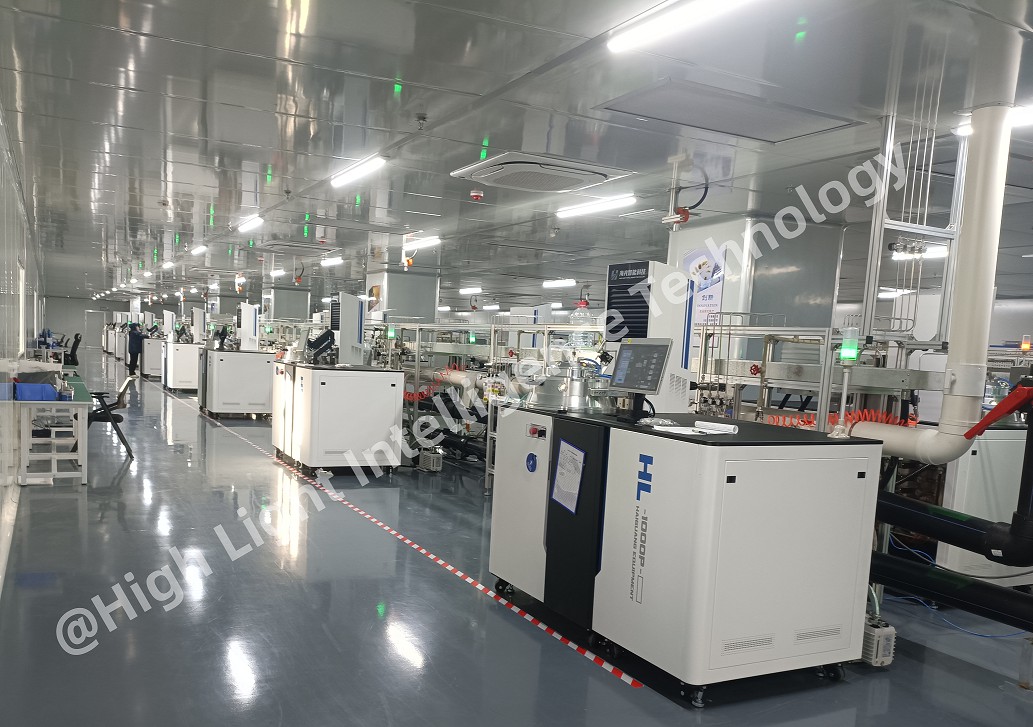
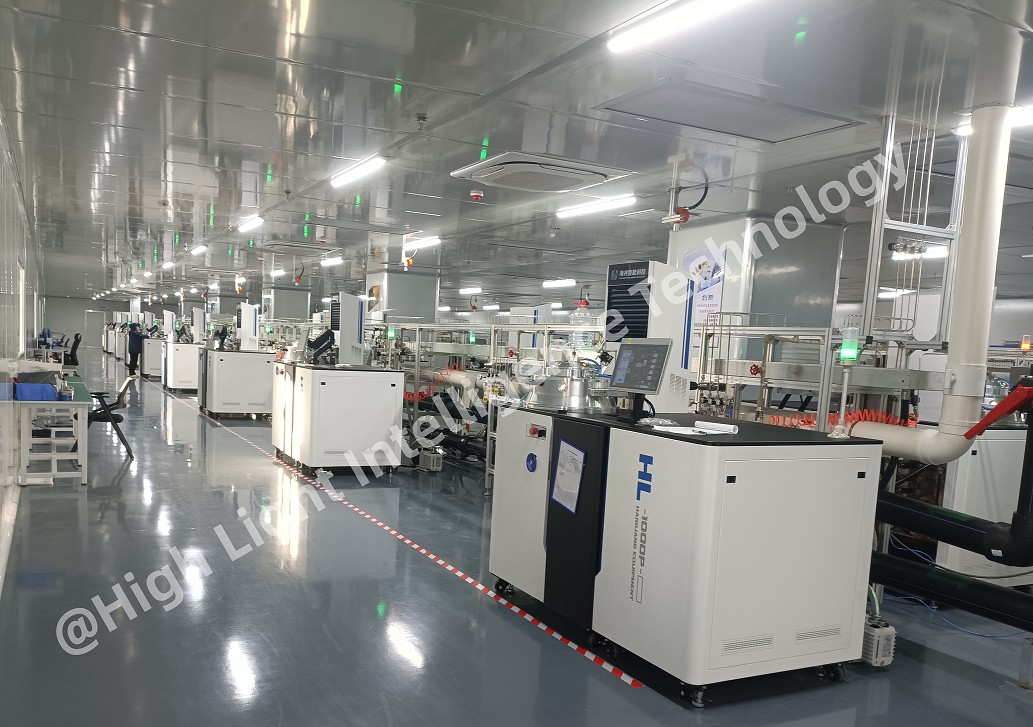
High Light Intelligence Technology, a pioneer in the CVD diamond industry, has advanced MPCVD technology and CVD diamond production workshops. We focus on producing high-purity lab-grown diamonds for the jewelry industry, and at the same time create industrial-grade CVD diamond products, covering single crystals, polycrystalline, films and diamond surface metallization. We also provide 6kw/10kw/15kw MPCVD equipment to help customers in all aspects, from equipment to products, and then to all-round services, to create brilliance together.









-

CVD Single-Crystal Diamonds: An Analysis of the Complete Processing Workflow from Gas-Phase Deposition to Finished Diamond Chips
MPCVD (Microwave Plasma Chemical Vapor Deposition) technology is currently the core process for producing high-quality single-crystal diamond s. Thanks to its advantages of low defect rates, high purity, and controllable large dimensions, it is widely used in fields such as semiconductor heat dissipation, precision optics, and high-end sensors. The final quality of single-crystal diamond s depends on comprehensive process control throughout the entire workflow—from vapor deposition growth to pos
-
Single-Crystal or Polycrystalline Diamond — Which Has Greater Potential?
As diamond continues to enter industries such as semiconductors, thermal management, optics, high-power electronics, and precision machining, the requirements for diamond materials are also evolving.
-
Diamond Polishing and Grinding Processes: Core Challenges and Industry Hurdles
Diamond is often hailed as the “ultimate material” – ranking 10 on the Mohs hardness scale, boasting an ultra‑high thermal conductivity (~2,200 W/(m·K)), excellent chemical stability, and broad optical transparency. These properties make it irreplaceable in cutting‑edge applications such as semiconductor heat dissipation, high‑end optics, and quantum chips. Yet the paradox of “good materials are hard to process” is nowhere more evident than in diamond. From rough grinding for planarization to at
-
Single-Crystal vs Polycrystalline CVD Diamond: Process Difference Lies in Growth Logic, Not Equipment
The process difference between single crystal and polycrystalline CVD diamond lies not in equipment, but in growth logic. Single crystal and polycrystalline CVD diamond are two functional new materials with completely independent growth mechanisms, lattice structures and performance systems. Their process logic, product features and application boundaries diverge fundamentally from the very start of deposition and growth. Comparing or selecting materials without considering their underlying crys