- 中文
- English
- Español
University of Glasgow Breakthrough! Breakthrough could enable diamond transistors for high-power applications
2025-02-26 10:11:36
Click:
“
Researchers at the University of Glasgow have made a milestone in developing a new generation of diamond transistors that will break through technical limitations and move closer to practical applications in high-power industries.
”
Researchers at the University of Glasgow have made a milestone in developing a new generation of diamond transistors that will break through technical limitations and move closer to practical applications in high-power industries.
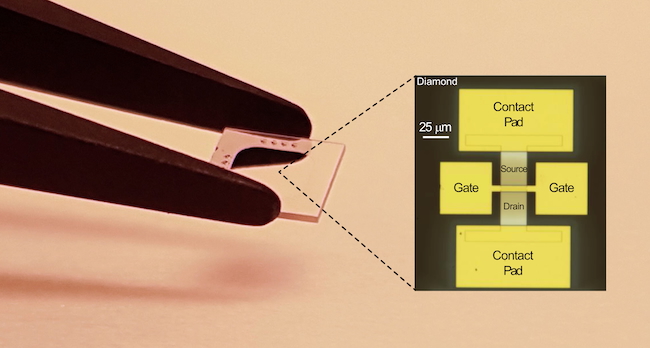

The research team has discovered a new method to make transistors out of diamond, which can be turned off by default and improve device safety. Diamond can withstand voltages much higher than silicon due to its wide bandgap properties, making it suitable for high-power applications. The transistor can be used in high-voltage, high-efficiency fields such as power grids and electric vehicles.
Professor David Moran's team at the University of Glasgow collaborated with universities in Australia and the United States, and the research results were published in Advanced Electronic Materials. Professor Moran pointed out that power electronic devices require high-power switches, but diamond transistors often lose sight of one thing while focusing on the other. His team successfully designed a diamond transistor that performs well in both shutdown and power supply functions, making significant progress.
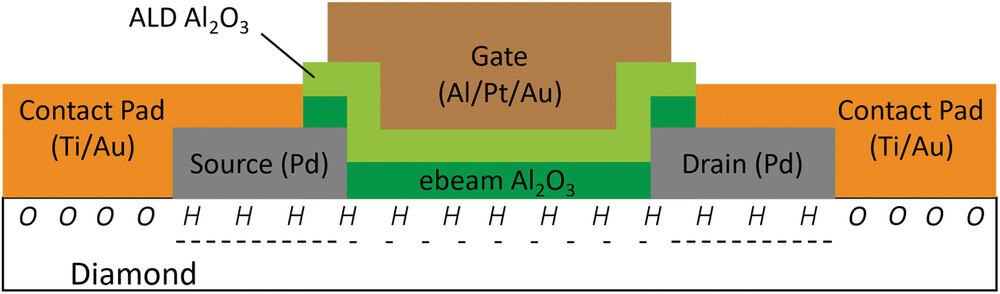
The research team at the University of Glasgow used surface chemistry technology to improve the performance of diamond, first coating it with hydrogen atoms and then with aluminum oxide. The new diamond transistor requires 6 volts to turn on, has a large current, and doubles the efficiency of charge movement. When turned off, the resistance is extremely high, there is almost no current leakage, and the safety performance is improved. Professor Moran said that this result is encouraging, and diamond transistors have great potential and low cost, but there are still challenges to overcome, hoping to promote future applications.
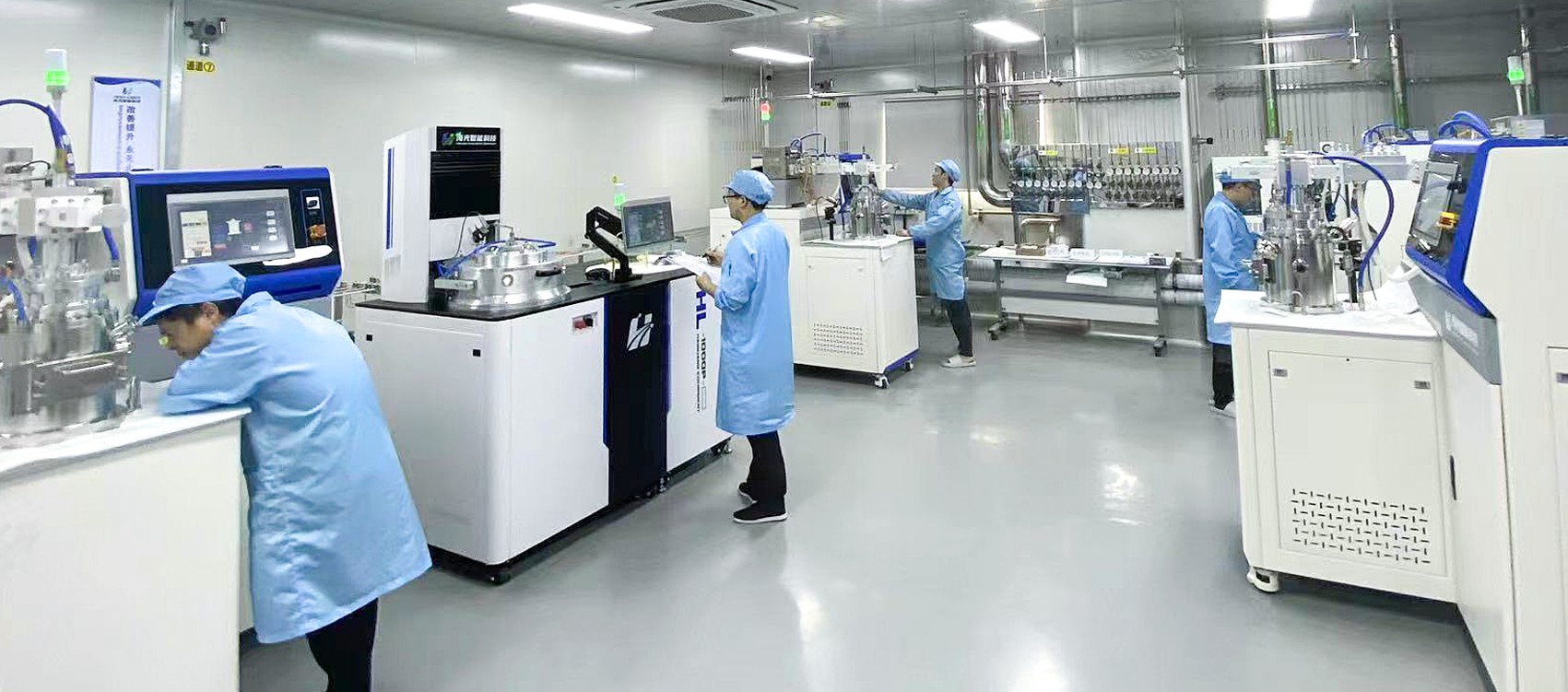
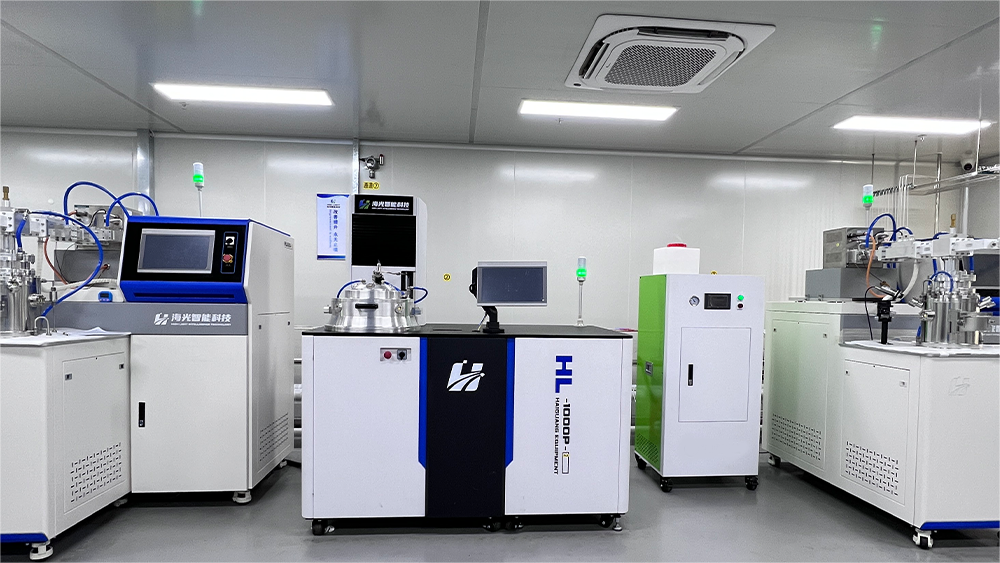
High Light Intelligence Technology, a pioneer in the CVD diamond industry, has advanced MPCVD technology and CVD diamond production workshops. We focus on producing high-purity lab-grown diamonds for the jewelry industry, and at the same time create industrial-grade CVD diamond products, covering single crystals, polycrystalline, films and diamond surface metallization. We also provide 6kw/10kw/15kw MPCVD equipment to help customers in all aspects, from equipment to products, and then to all-round services, to create brilliance together.
*The articles and pictures are only for industry communication and sharing. If there is any infringement, please contact us to delete them.









-

Foshan Highlight Intelligent Technology invites you to the 140th Canton Fair—join us at Booth 21.2A23-24 in the Friendship Hall to share in the brilliance.
Foshan Highlight Intelligent Technology invites you to the 140th Canton Fair—join us at Booth 21.2A23-24 in the Friendship Hall to share in the brilliance.
-
CVD Single-Crystal Diamonds: An Analysis of the Complete Processing Workflow from Gas-Phase Deposition to Finished Diamond Chips
MPCVD (Microwave Plasma Chemical Vapor Deposition) technology is currently the core process for producing high-quality single-crystal diamond s. Thanks to its advantages of low defect rates, high purity, and controllable large dimensions, it is widely used in fields such as semiconductor heat dissipation, precision optics, and high-end sensors. The final quality of single-crystal diamond s depends on comprehensive process control throughout the entire workflow—from vapor deposition growth to pos
-
Single-Crystal or Polycrystalline Diamond — Which Has Greater Potential?
As diamond continues to enter industries such as semiconductors, thermal management, optics, high-power electronics, and precision machining, the requirements for diamond materials are also evolving.
-
Diamond Polishing and Grinding Processes: Core Challenges and Industry Hurdles
Diamond is often hailed as the “ultimate material” – ranking 10 on the Mohs hardness scale, boasting an ultra‑high thermal conductivity (~2,200 W/(m·K)), excellent chemical stability, and broad optical transparency. These properties make it irreplaceable in cutting‑edge applications such as semiconductor heat dissipation, high‑end optics, and quantum chips. Yet the paradox of “good materials are hard to process” is nowhere more evident than in diamond. From rough grinding for planarization to at