- 中文
- English
- Español
How Often Should You Clean Your Diamond Ring?
2026-01-08 17:22:10
Click:
“
Diamonds are oil-absorbent, meaning they can accumulate oils from your skin and cosmetics, which can dull their shine over time. Therefore, diamond rings need to be cleaned regularly to maintain their brilliance. Typically, cleaning every two months is sufficient, but if you are exposed to oily environments frequently, you may want to clean your ring every two weeks.
Many people also wonder: should you take off your diamond ring every time you wash your hands or use hand soap? In this article, w
”
Diamonds are oil-absorbent, meaning they can accumulate oils from your skin and cosmetics, which can dull their shine over time. Therefore, diamond rings need to be cleaned regularly to maintain their brilliance. Typically, cleaning every two months is sufficient, but if you are exposed to oily environments frequently, you may want to clean your ring every two weeks.
Many people also wonder: should you take off your diamond ring every time you wash your hands or use hand soap? In this article, we'll address this concern, along with the cleaning frequency, methods, and other important care tips.
1. How Often Should You Clean Your Diamond Ring?
The cleaning frequency depends on your wearing habits and daily activities:
1. Daily Wear, Frequent Exposure to Cosmetics
Diamonds attract oils and residues from makeup, which can dull their shine. It’s recommended to clean your ring every two weeks if you wear it daily.
2. Frequent Exposure to Oil (e.g., Cooking or Dishwashing)
Oils can build up on the prongs and setting, so cleaning once a week is ideal.
3. Infrequent Wear or Long-Term Storage
If you don’t wear your diamond ring often, you can clean it every two to three months or even less frequently.

2. How to Clean Your Diamond Ring: Steps and Methods
Here are a few effective ways to clean your diamond ring at home:
1. Warm Water + Mild Cleaning Solution
Mix a small amount of mild cleaning solution with warm water, soak your diamond ring, gently brush with a soft toothbrush, rinse with warm water, and dry with a cloth.
2. Cold Water Soak
Soak your ring in cold water for about 30 minutes, then gently brush and dry with a clean cloth.
3. Jewelry-Specific Cleaning Liquid
Follow the instructions on a jewelry-specific cleaning solution. These usually come with special containers and are ideal for fine settings and high-end jewelry.
4. For Stubborn Dust in Crevices
If there is still dirt in the prong settings, use an electric water flosser to rinse it out or gently use a toothpick to remove debris (be very careful not to scratch the metal or prongs).

3. Diamond's 'Weaknesses' You Need to Know
Even though diamonds are extremely hard, they still have certain vulnerabilities:
1. Avoid Radiation Exposure
Strong radiation can cause irreversible color changes to the diamond.
2. Avoid Oil
Diamonds are oil-absorbent, and oil buildup can cover their brilliance. Clean them regularly to maintain their shine.
3. Avoid Strong UV Rays
Exposure to UV light, especially in filtered ozone environments, can damage the surface of a diamond, causing small pits.
4. Avoid High Heat
Despite being formed under extreme heat and pressure, diamonds are made of carbon. Heating them to about 800°C can cause them to burn and turn into carbon dioxide. Keep diamonds away from flames or extreme heat.
5. Avoid Strong Impacts
Diamonds are very hard but also very brittle. They can crack or shatter when subjected to strong impacts, so avoid activities that might cause them to hit hard surfaces.

4. Tips for Wearing Your Diamond Ring
1. Avoid wearing your diamond ring while cleaning with harsh acidic or alkaline chemicals, as they can damage the metal setting.
2. Store multiple diamond jewelry pieces separately to prevent scratches from friction.
3. Avoid wearing your diamond ring while swimming in chlorinated water, as chlorine can corrode the metal.
4. It’s recommended to take your diamond jewelry to a professional jeweler once a year for maintenance. During this check-up, ensure the prongs are secure, and have them tightened if necessary.

5. KF Deer Diamond Rings: Guarding Your Eternal Sparkle
KF Deer is a jewelry brand owned by Highlight Intelligent Technology. It provides jewelry sales channels for equipment clients and offers more diversified, personalized choices for every jewelry customer, allowing jewelry to become precious tokens that showcase personal charm and convey emotional value. We deeply understand that every KF Deer diamond ring carries the wearer's cherishment and emotions. Therefore, in addition to providing professional after-sales maintenance guidelines (including optional exclusive cleaning tool kits), we are committed to making jewelry care empowered by technology more hassle-free and reassuring.
Choosing KF Deer means choosing the dual protection of technology and craftsmanship. May your KF Deer diamond ring, under the joint blessing of scientific maintenance and brand guarantee, always shine as brightly as ever—just like those memorable moments and emotions, which remain dazzling and new even after years of tempering.

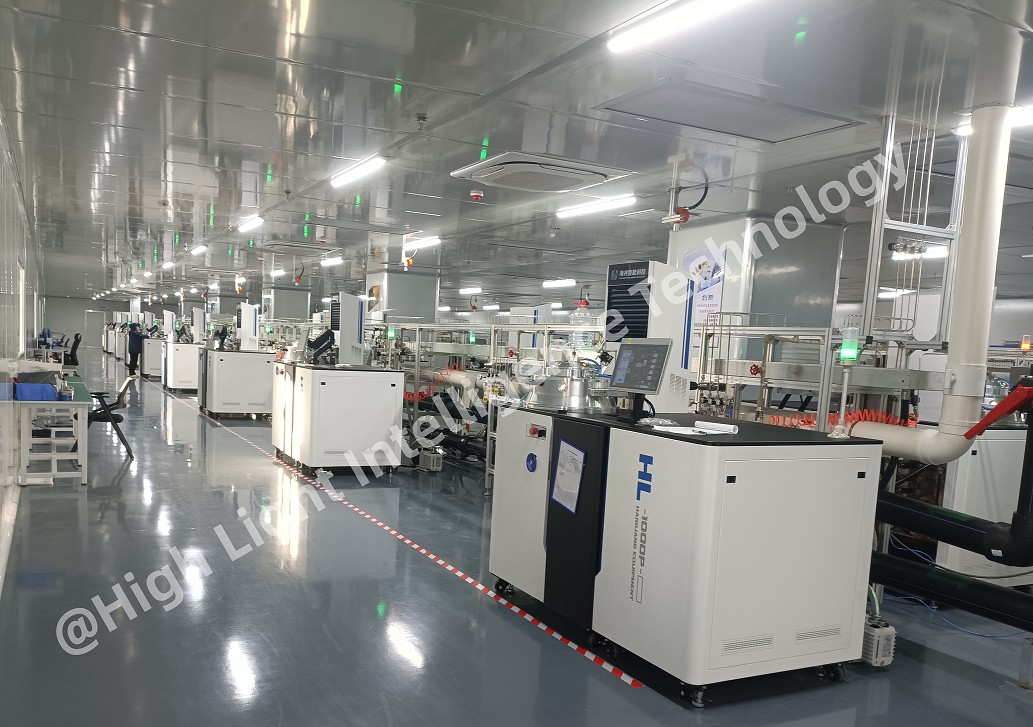
High Light Intelligence Technology, a pioneer in the CVD diamond industry, has advanced MPCVD technology and CVD diamond production workshops. We focus on producing high-purity lab-grown diamonds for the jewelry industry, and at the same time create industrial-grade CVD diamond products, covering single crystals, polycrystalline, films and diamond surface metallization. We also provide 6kw/10kw/15kw MPCVD equipment to help customers in all aspects, from equipment to products, and then to all-round services, to create brilliance together.
*The articles and pictures are only for industry communication and sharing. If there is any infringement, please contact us to delete them.









-

CVD Single-Crystal Diamonds: An Analysis of the Complete Processing Workflow from Gas-Phase Deposition to Finished Diamond Chips
MPCVD (Microwave Plasma Chemical Vapor Deposition) technology is currently the core process for producing high-quality single-crystal diamond s. Thanks to its advantages of low defect rates, high purity, and controllable large dimensions, it is widely used in fields such as semiconductor heat dissipation, precision optics, and high-end sensors. The final quality of single-crystal diamond s depends on comprehensive process control throughout the entire workflow—from vapor deposition growth to pos
-
Single-Crystal or Polycrystalline Diamond — Which Has Greater Potential?
As diamond continues to enter industries such as semiconductors, thermal management, optics, high-power electronics, and precision machining, the requirements for diamond materials are also evolving.
-
Diamond Polishing and Grinding Processes: Core Challenges and Industry Hurdles
Diamond is often hailed as the “ultimate material” – ranking 10 on the Mohs hardness scale, boasting an ultra‑high thermal conductivity (~2,200 W/(m·K)), excellent chemical stability, and broad optical transparency. These properties make it irreplaceable in cutting‑edge applications such as semiconductor heat dissipation, high‑end optics, and quantum chips. Yet the paradox of “good materials are hard to process” is nowhere more evident than in diamond. From rough grinding for planarization to at
-
Single-Crystal vs Polycrystalline CVD Diamond: Process Difference Lies in Growth Logic, Not Equipment
The process difference between single crystal and polycrystalline CVD diamond lies not in equipment, but in growth logic. Single crystal and polycrystalline CVD diamond are two functional new materials with completely independent growth mechanisms, lattice structures and performance systems. Their process logic, product features and application boundaries diverge fundamentally from the very start of deposition and growth. Comparing or selecting materials without considering their underlying crys