- 中文
- English
- Español
Jewelry-Grade Diamond Waste Rough and CVD Seed Crystals: The Transformation from “Substandard” to Industrial Powerhouse
2026-01-08 16:24:33
Click:
“
Within the diamond industry chain, not every crystal destined for the jewelry market becomes a dazzling gem in a display case. Those rough diamonds discarded due to excessive inclusions or irregular shapes, along with leftover CVD seed crystals from lab-grown diamond production, are now finding new life on the production frontlines as industrial powerhouses.
”
Within the diamond industry chain, not every crystal destined for the jewelry market becomes a dazzling gem in a display case. Those rough diamonds discarded due to excessive inclusions or irregular shapes, along with leftover CVD seed crystals from lab-grown diamond production, are now finding new life on the production frontlines as industrial powerhouses.

The stringent demands for clarity, color, and cut in jewelry-grade diamonds relegate vast quantities of crystals to “waste”: some incorporate impurities during growth, others lack sufficient symmetry to meet jewelry aesthetics. CVD seed crystals, serving as the “seeds” for lab-grown diamonds, also face replacement after multiple epitaxial growth cycles due to wear and defects. Yet these seemingly “useless” materials harbor diamond's most fundamental trait—natural superhardness.

With a Mohs hardness of 10, these scrap blanks and CVD seed crystals first become core materials for precision cutting tools. In gold jewelry workshops, engraving tools set with diamond scraps precisely carve intricate patterns. Their hardness far surpasses traditional metal tools, preventing blade wear during engraving. Industrial milling cutters in basic cutting applications also frequently use such diamonds as cutting edges to meet the processing demands of hard materials like metals and gemstones.

Their presence is equally common in daily production and life: the drill bits of ordinary handheld drills often feature a small diamond scrap embedded at the tip, enabling effortless penetration into hard substrates like tiles and stone. Glass cutters rely on diamond's hardness to achieve clean, flat glass edges with minimal force. These applications demand not the aesthetic appeal of jewelry-grade diamonds, but their indestructible physical properties—a need precisely met by low-cost rough and CVD seed crystals.

Transforming from “scrap” on jewelry production lines to “essential components” in industrial applications, diamond waste blanks and CVD seed crystals exemplify resource efficiency. Though devoid of aesthetic value, their fundamental physical properties make them indispensable “hard supports” in manufacturing and processing industries. This “turning waste into treasure” logic extends the diamond industry's value chain. A crystal that fails to become jewelry can still participate in creating more products as a tool.

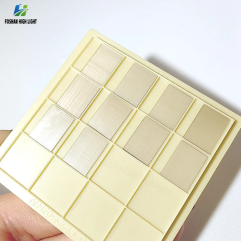
Foshan High Light Intelligence Technology is a manufacturer producing lab-grown diamonds using MPCVD equipment. Leveraging cutting-edge cultivation technology and stringent quality control, we create a series of lab-grown diamonds that combine quality with cost-effectiveness. We also supply various diamond industrial byproducts, including low-color rough, single-crystal wafers, clean CVD seed crystal waste, and waste CVD seed crystals. These materials are suitable for industrial processing applications, serving as raw materials for hard-cutting tools, substrates, and other products to meet diverse industrial production needs. Specific supply details can be discussed further.
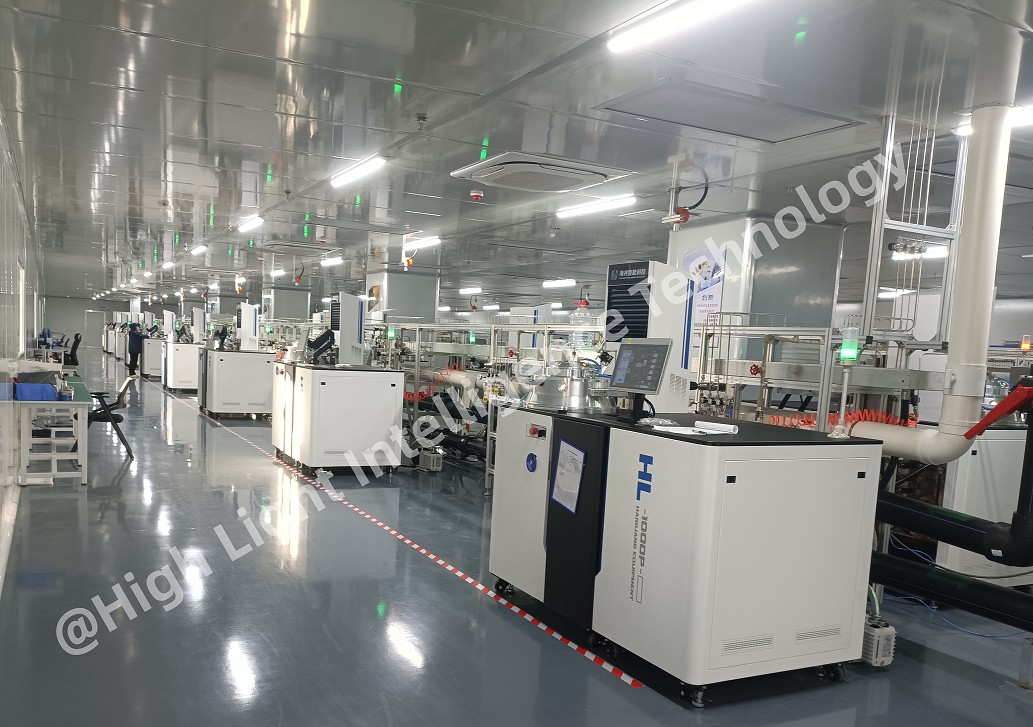
High Light Intelligence Technology, a pioneer in the CVD diamond industry, has advanced MPCVD technology and CVD diamond production workshops. We focus on producing high-purity lab-grown diamonds for the jewelry industry, and at the same time create industrial-grade CVD diamond products, covering single crystals, polycrystalline, films and diamond surface metallization. We also provide 6kw/10kw/15kw MPCVD equipment to help customers in all aspects, from equipment to products, and then to all-round services, to create brilliance together.
*The articles and pictures are only for industry communication and sharing. If there is any infringement, please contact us to delete them.









-

CVD Single-Crystal Diamonds: An Analysis of the Complete Processing Workflow from Gas-Phase Deposition to Finished Diamond Chips
MPCVD (Microwave Plasma Chemical Vapor Deposition) technology is currently the core process for producing high-quality single-crystal diamond s. Thanks to its advantages of low defect rates, high purity, and controllable large dimensions, it is widely used in fields such as semiconductor heat dissipation, precision optics, and high-end sensors. The final quality of single-crystal diamond s depends on comprehensive process control throughout the entire workflow—from vapor deposition growth to pos
-
Single-Crystal or Polycrystalline Diamond — Which Has Greater Potential?
As diamond continues to enter industries such as semiconductors, thermal management, optics, high-power electronics, and precision machining, the requirements for diamond materials are also evolving.
-
Diamond Polishing and Grinding Processes: Core Challenges and Industry Hurdles
Diamond is often hailed as the “ultimate material” – ranking 10 on the Mohs hardness scale, boasting an ultra‑high thermal conductivity (~2,200 W/(m·K)), excellent chemical stability, and broad optical transparency. These properties make it irreplaceable in cutting‑edge applications such as semiconductor heat dissipation, high‑end optics, and quantum chips. Yet the paradox of “good materials are hard to process” is nowhere more evident than in diamond. From rough grinding for planarization to at
-
Single-Crystal vs Polycrystalline CVD Diamond: Process Difference Lies in Growth Logic, Not Equipment
The process difference between single crystal and polycrystalline CVD diamond lies not in equipment, but in growth logic. Single crystal and polycrystalline CVD diamond are two functional new materials with completely independent growth mechanisms, lattice structures and performance systems. Their process logic, product features and application boundaries diverge fundamentally from the very start of deposition and growth. Comparing or selecting materials without considering their underlying crys