- 中文
- English
- Español
Not Just 4Cs! Diamond Brilliance: Unlock the Diamond's Radiant Beauty and Choose a Diamond That Knows How to Sparkle
2026-01-09 15:13:14
Click:
“
In diamond selection and valuation, “beauty” remains a crucial dimension for consumers. The key standard for measuring a diamond's aesthetic qualities lies in its optical property grading—a rating system based on light effects. A diamond's dazzling brilliance stems from the intricate interplay between light and its facets. This optical phenomenon manifests through four core dimensions: brightness (intensity of white light refraction), sparkle (dynamic flashes), fire (vibrancy of rainbow hues), a
”
In diamond selection and valuation, “beauty” remains a crucial dimension for consumers. The key standard for measuring a diamond's aesthetic qualities lies in its optical property grading—a rating system based on light effects. A diamond's dazzling brilliance stems from the intricate interplay between light and its facets. This optical phenomenon manifests through four core dimensions: brightness (intensity of white light refraction), sparkle (dynamic flashes), fire (vibrancy of rainbow hues), and symmetry (uniformity of light reflection). The combined expression of these dimensions determines a diamond's visual appeal.

It is important to clarify that optical performance grading does not negate the traditional 4Cs standard. Rather, it serves as a crucial complement to the 4Cs, offering a precise focus on and pursuit of a diamond's optical beauty. For a long time, the 4Cs standard (carat weight, clarity, color, cut) has served as the basis for measuring a diamond's rarity, providing the industry with a unified dimension for assessing scarcity. However, its limitations are also evident—it cannot comprehensively cover a diamond's optical aesthetic characteristics. Even two diamonds with identical 4C ratings may exhibit significant differences in brilliance and visual appeal. This discrepancy arises because the 4Cs struggle to accurately capture how details like facet angles and symmetry precision influence light reflection.

Optical performance grading fills this gap. To more precisely quantify a diamond's optical performance, its light characteristics are categorized into nine distinct levels, each corresponding to a clear star rating standard, as shown below:

The highest tier, Ultimate, corresponds to 1-3 stars, significant peak optical performance that delivers the most dazzling brilliance. The next tier, Excellent, corresponds to 1-2 stars, indicating outstanding optical properties that consistently produces bright fire and sparkling luster. The third tier is Good, also corresponding to 1-2 stars, offering balanced optical performance that meets basic aesthetic expectations for daily wear. The lowest tier is Poor, corresponding to 1-2 stars, exhibiting weak optical effects with subpar luster and sparkle. These nine optical performance tiers provide consumers and the industry with a quantifiable, comparable basis for evaluating optical beauty, establishing clear criteria for judging whether a diamond is sufficiently brilliant and beautiful.
For consumers, this complementary assessment system between light performance and the 4Cs enables more objective and rational diamond selection. For the industry, it enriches the dimensions of diamond valuation, shifting the focus beyond rarity to encompass aesthetic appeal. This advancement propels the industry toward better alignment with consumers' genuine aesthetic preferences.

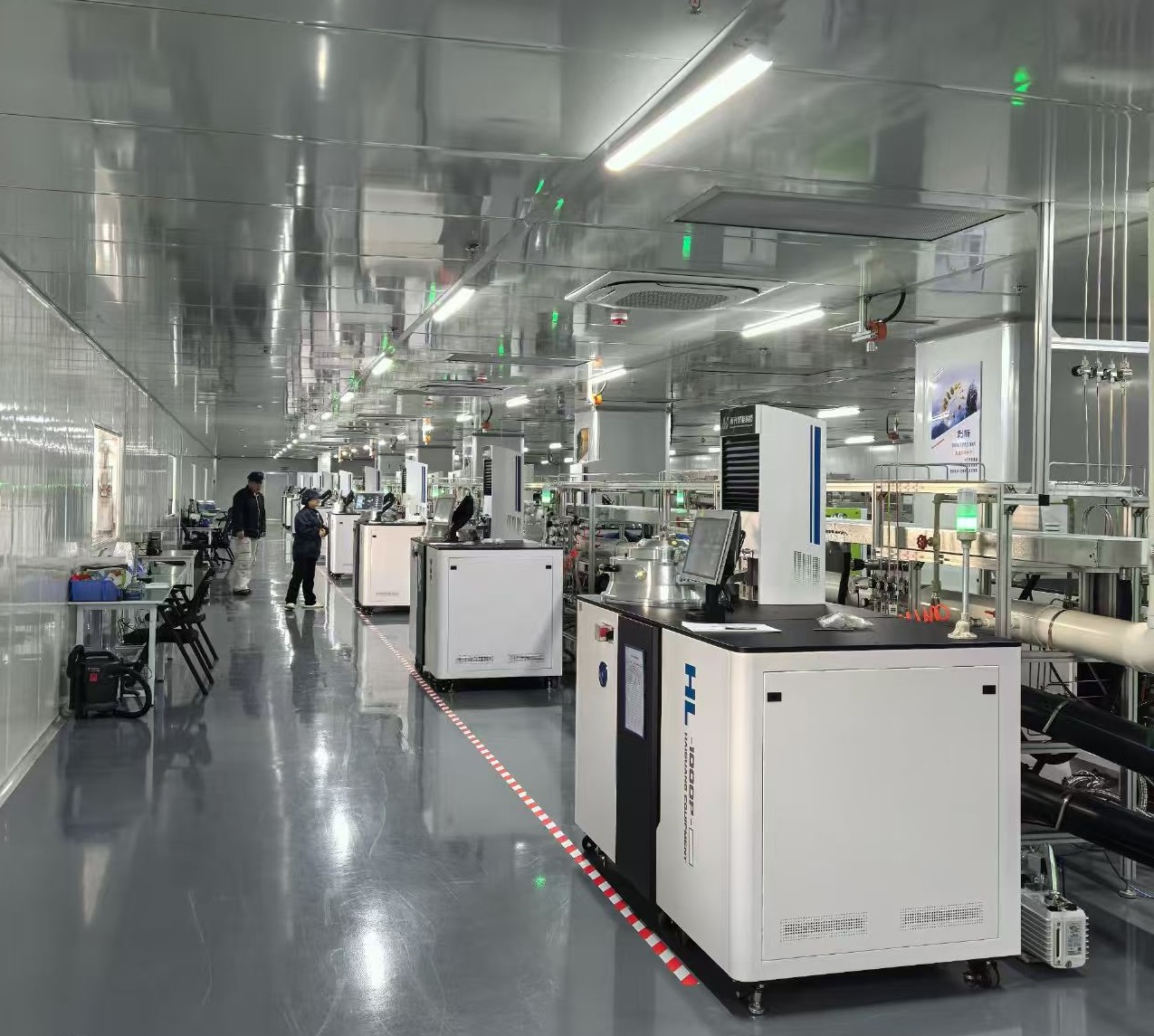
High Light Intelligent Technology is a leading manufacturer of CVD lab-grown diamonds, equipped with over 200 MPCVD machines and three production bases to ensure stable, large-scale supply. Our lab-grown diamonds come in a full range of specifications, weighing from 0.01 to 25 carats, and are available in round and fancy cuts. They achieve DEF color and VVS-VS clarity grades, with physical and chemical properties identical to natural diamonds. We also supply cultured colored diamonds in yellow, blue, pink, red, green, and other hues, featuring rich and vivid colors. To meet diverse needs, diamonds can be provided with authoritative IGI certification or as bulk inventory. For details, please feel free to contact us.
Foshan Highlight Intelligent Technology Co., Ltd. has been deeply involved in the CVD-grown diamond field for many years. Leveraging its mature core technologies and differentiated process layout, it has achieved full-dimensional coverage of white diamond products. All of the company's white diamond products are pure carbon crystals with a hardness of 10. Their physical and chemical properties are completely consistent with natural white diamonds, placing them firmly in the category of genuine diamonds.
Significant core technological advantages: Relying on a stable and controllable cultivation environment, it can produce high-color diamonds ranging from D to F, with clarity generally reaching VS1 or higher standards. They are virtually flawless to the naked eye, and their fire and brilliance rival top-grade natural white diamonds.
Our product highlights: Standardized grading standards, transparent and controllable selection: Strictly adhering to the international diamond grading system, key parameters such as color (D-J), clarity (SI1-VVS1), cut (EX-VG), and carat weight are clearly marked. Products come with authoritative IGI testing certificates, supporting full traceability and verification.
Green and sustainable development, fulfilling social responsibility: The cultivation process requires no extraction of earth's crustal resources, avoiding the environmental damage caused by natural diamond mining from the source. It is a superior choice that combines aesthetic value with environmental protection.
High cost-performance advantage, breaking down market price barriers: Compared to natural white diamonds, our CVD white diamonds are significantly more competitive in price. Within the same budget, consumers can choose larger carat or higher quality products, helping them easily achieve “real diamond freedom.”
*The articles and pictures are only for industry communication and sharing. If there is any infringement, please contact us to delete them.









-

CVD Single-Crystal Diamonds: An Analysis of the Complete Processing Workflow from Gas-Phase Deposition to Finished Diamond Chips
MPCVD (Microwave Plasma Chemical Vapor Deposition) technology is currently the core process for producing high-quality single-crystal diamond s. Thanks to its advantages of low defect rates, high purity, and controllable large dimensions, it is widely used in fields such as semiconductor heat dissipation, precision optics, and high-end sensors. The final quality of single-crystal diamond s depends on comprehensive process control throughout the entire workflow—from vapor deposition growth to pos
-
Single-Crystal or Polycrystalline Diamond — Which Has Greater Potential?
As diamond continues to enter industries such as semiconductors, thermal management, optics, high-power electronics, and precision machining, the requirements for diamond materials are also evolving.
-
Diamond Polishing and Grinding Processes: Core Challenges and Industry Hurdles
Diamond is often hailed as the “ultimate material” – ranking 10 on the Mohs hardness scale, boasting an ultra‑high thermal conductivity (~2,200 W/(m·K)), excellent chemical stability, and broad optical transparency. These properties make it irreplaceable in cutting‑edge applications such as semiconductor heat dissipation, high‑end optics, and quantum chips. Yet the paradox of “good materials are hard to process” is nowhere more evident than in diamond. From rough grinding for planarization to at
-
Single-Crystal vs Polycrystalline CVD Diamond: Process Difference Lies in Growth Logic, Not Equipment
The process difference between single crystal and polycrystalline CVD diamond lies not in equipment, but in growth logic. Single crystal and polycrystalline CVD diamond are two functional new materials with completely independent growth mechanisms, lattice structures and performance systems. Their process logic, product features and application boundaries diverge fundamentally from the very start of deposition and growth. Comparing or selecting materials without considering their underlying crys