- 中文
- English
- Español
The Fascinating Formation of Colored Diamonds and the Color Origins of Lab-Grown Diamonds
2026-01-23 14:04:12
Click:
“
Today, jewelry counters are dazzling with a wide range of diamond pieces. Alongside the traditional favorite white diamonds, a growing variety of colored diamonds have emerged. As people’s preferences shift, colored diamonds have gained increasing popularity. But how are these diamonds, from white to pink, blue, green, brown, and red, formed?
In this article, we’ll discuss how the colors of natural diamonds and the increasingly popular lab-grown diamonds come about.
”
Today, jewelry counters are dazzling with a wide range of diamond pieces. Alongside the traditional favorite white diamonds, a growing variety of colored diamonds have emerged. As people’s preferences shift, colored diamonds have gained increasing popularity. But how are these diamonds, from white to pink, blue, green, brown, and red, formed?
In this article, we’ll discuss how the colors of natural diamonds and the increasingly popular lab-grown diamonds come about.
White Diamonds
White diamonds are the most common and form the essential color spectrum in diamond grading. From the colorless D grade to the Z grade (which is a faint yellow or brown), the variation mainly results from the presence of nitrogen. A D-grade diamond typically contains little to no nitrogen. In colorless diamonds, a slight yellowish tint is the primary factor contributing to a lower grade.

Yellow Diamonds
Yellow diamonds are often the result of nitrogen elements. Nitrogen atoms replace some of the carbon atoms in the diamond's crystal structure (about 100 nitrogen atoms for every million carbon atoms). As the diamond forms, it absorbs parts of the red and blue-green light, giving the diamond its yellow hue.

Blue Diamonds
Blue diamonds are caused by the presence of boron. The boron atom has fewer electrons in its outer shell than carbon, creating vacancies in the diamond’s covalent bonds. These vacancies allow other electrons to fill the gaps, causing the red portion of the visible light spectrum to be absorbed, and leaving behind blue light. Blue diamonds are extremely rare, and most tend to have a grayish tint.

Red and Pink Diamonds
The formation of red and pink diamonds is somewhat unique. Unlike other colored diamonds, they lack specific chromophores responsible for their color. It is theorized that the color comes from lattice distortion caused by plastic deformation. When diamonds are formed under high-pressure geological conditions, internal structural changes occur, creating new energy levels that absorb certain light wavelengths, producing red or pink hues. Red and pink diamonds are particularly rare.


Green Diamonds
Green diamonds form due to natural radiation from the Earth’s natural radioactive particles, which alter the diamond’s crystal structure. These diamonds typically have a thin green layer on the surface, which can be lost when the diamond is polished. Therefore, naturally irradiated green diamonds are exceedingly rare, with most green diamonds being treated artificially to achieve their color.

With technological advancements, the colors of lab-grown diamonds are becoming more diverse. Unlike natural diamonds, the colors of lab-grown diamonds are typically influenced by the following methods:
Additives:
While diamonds are composed primarily of carbon, other elements are added during the synthesis process to replace carbon atoms in the diamond lattice. For example, nitrogen is prevalent in the atmosphere, so diamonds created using the high-pressure high-temperature method often display yellowish or brown hues. If metal elements are added, they can reduce brown hues and produce pleasant light yellow or golden diamonds. Additionally, the addition of boron can result in blue diamonds.
Pressure Effects:
During the high-pressure high-temperature synthesis, pressure causes plastic deformation in the crystal structure, creating defects that produce 'color centers.' This results in diamonds displaying colors like brown, pink, or red. In CVD-grown diamonds, stress within the crystal can also cause plastic deformation, giving rise to brownish hues.
Radiation and Heat Treatment:
Diamonds of lower quality with more impurities or undesirable colors can be artificially treated to alter their color. By exposing these diamonds to radiation, their crystal structure is altered, creating vacancies or displacements that produce colors such as green, blue, or deep blue. These diamonds can then undergo heat treatment to achieve colors like yellow, pink, or red.
Surface Treatment:
Surface treatments are primarily used to improve diamonds with yellowish hues. One such treatment involves coating the diamond’s girdle with a blue substance to improve its color. Another involves applying a thin layer of colored oxide on the diamond’s surface to conceal undesirable hues. Chemical vapor deposition (CVD) is another method in which a diamond film is grown on the surface of the diamond to improve its color.

The unique allure of colored diamonds stems from their extreme rarity and rich, vivid hues – the rarer and more intense the color, the higher their value. Precisely for this scarcity, colored diamonds have become a highly sought-after choice in investment and collection. With the continuous advancement of lab-grown diamond technology, colored lab-grown diamonds boast an even more diverse color spectrum, bringing abundant personalized options for consumers. Specializing in the lab-grown diamond sector, Foshan High Light Intelligence Technology Co., Ltd. owns an extensive inventory of colored lab-grown diamonds. We offer a full carat range from 0.5 to 15 carats, covering the complete color grades from Light to Fancy Vivid, with a wide selection of hues available. Our comprehensive supply fully meets the diverse needs of various designs, wear, investment and collection scenarios.

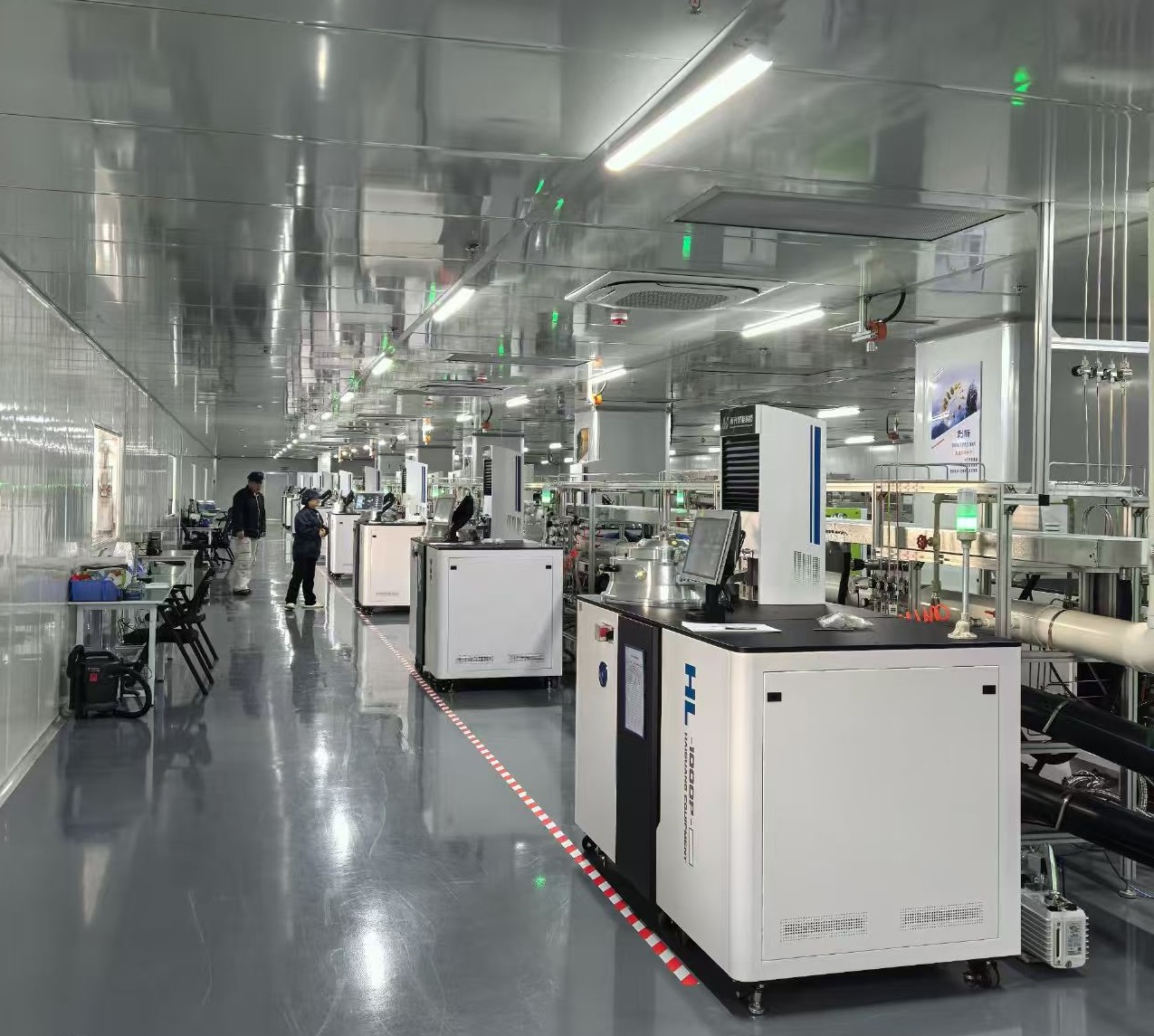
Foshan Highlight Intelligent Technology Co., Ltd. has been deeply involved in the CVD-grown diamond field for many years. Leveraging its mature core technologies and differentiated process layout, it has achieved full-dimensional coverage of white diamond products. All of the company's white diamond products are pure carbon crystals with a hardness of 10. Their physical and chemical properties are completely consistent with natural white diamonds, placing them firmly in the category of genuine diamonds.
Significant core technological advantages: Relying on a stable and controllable cultivation environment, it can produce high-color diamonds ranging from D to F, with clarity generally reaching VS1 or higher standards. They are virtually flawless to the naked eye, and their fire and brilliance rival top-grade natural white diamonds.
Our product highlights: Standardized grading standards, transparent and controllable selection: Strictly adhering to the international diamond grading system, key parameters such as color (D-J), clarity (SI1-VVS1), cut (EX-VG), and carat weight are clearly marked. Products come with authoritative IGI testing certificates, supporting full traceability and verification.
Green and sustainable development, fulfilling social responsibility: The cultivation process requires no extraction of earth's crustal resources, avoiding the environmental damage caused by natural diamond mining from the source. It is a superior choice that combines aesthetic value with environmental protection.
High cost-performance advantage, breaking down market price barriers: Compared to natural white diamonds, our CVD white diamonds are significantly more competitive in price. Within the same budget, consumers can choose larger carat or higher quality products, helping them easily achieve “real diamond freedom.”
*The articles and pictures are only for industry communication and sharing. If there is any infringement, please contact us to delete them.









-

CVD Single-Crystal Diamonds: An Analysis of the Complete Processing Workflow from Gas-Phase Deposition to Finished Diamond Chips
MPCVD (Microwave Plasma Chemical Vapor Deposition) technology is currently the core process for producing high-quality single-crystal diamond s. Thanks to its advantages of low defect rates, high purity, and controllable large dimensions, it is widely used in fields such as semiconductor heat dissipation, precision optics, and high-end sensors. The final quality of single-crystal diamond s depends on comprehensive process control throughout the entire workflow—from vapor deposition growth to pos
-
Single-Crystal or Polycrystalline Diamond — Which Has Greater Potential?
As diamond continues to enter industries such as semiconductors, thermal management, optics, high-power electronics, and precision machining, the requirements for diamond materials are also evolving.
-
Diamond Polishing and Grinding Processes: Core Challenges and Industry Hurdles
Diamond is often hailed as the “ultimate material” – ranking 10 on the Mohs hardness scale, boasting an ultra‑high thermal conductivity (~2,200 W/(m·K)), excellent chemical stability, and broad optical transparency. These properties make it irreplaceable in cutting‑edge applications such as semiconductor heat dissipation, high‑end optics, and quantum chips. Yet the paradox of “good materials are hard to process” is nowhere more evident than in diamond. From rough grinding for planarization to at
-
Single-Crystal vs Polycrystalline CVD Diamond: Process Difference Lies in Growth Logic, Not Equipment
The process difference between single crystal and polycrystalline CVD diamond lies not in equipment, but in growth logic. Single crystal and polycrystalline CVD diamond are two functional new materials with completely independent growth mechanisms, lattice structures and performance systems. Their process logic, product features and application boundaries diverge fundamentally from the very start of deposition and growth. Comparing or selecting materials without considering their underlying crys