- 中文
- English
- Español
Diamond chip technology: accelerating the future semiconductor revolution
2024-09-27 11:29:01
Click:
“
The semiconductor industry is at a critical juncture of transformation, with silicon-based technology encountering bottlenecks such as high power and high frequency. Third-generation semiconductors such as GaN and SiC are leading the miniaturization and integration of high-power devices, but heat dissipation and energy efficiency remain the focus. At this time, the diamond chip revolution has emerged. It is actually an unprocessed diamond, which has aroused heated discussions with its unique adv
”
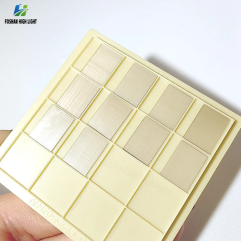
At present, the semiconductor industry has entered a critical period of transformation, and silicon-based semiconductors have encountered bottlenecks such as high power, high frequency, high temperature and radiation. The third-generation semiconductors, represented by GaN and SiC, lead power devices to move towards high power, miniaturization, integration and multi-functionality, but heat dissipation and energy efficiency are still the focus of the industry. Against this background, the chip revolution driven by diamond materials has quietly emerged, and its essence is unprocessed diamonds. The emerging "diamond" chip has attracted much attention for its unique charm and has great potential in the future, but it is also accompanied by technological progress and multiple challenges.

What is the charm of “diamond” chips?
Diamond, known as "the hardest in nature", combines high hardness, excellent thermal conductivity, high electron mobility, high voltage resistance, strong radio frequency, low cost, and high temperature resistance. Its semiconductor properties include ultra-wide bandgap, high breakdown field strength, high-speed carrier drift, high thermal conductivity and excellent device quality factor. It is suitable for high-temperature, high-frequency, high-power radiation-resistant electronic devices to solve the problems of "self-heating" and "avalanche breakdown". Diamond also exhibits excellent optical transmittance, stable electrical insulation, and high mechanical strength and wear resistance. It is widely used in optoelectronic devices, complex circuits and extreme working condition chips. It plays a key role in 5G/6G communications, microwave integrated circuits, sensors and other fields, and is regarded as the "ultimate semiconductor material". The use of diamond electronic devices can reduce the burden of thermal management, improve energy efficiency, and enhance pressure resistance and adaptability to harsh environments.

Diamond improves power conversion efficiency, extends battery life, and shortens charging time in electric vehicles; in 5G and future network deployments, it meets high-frequency and high-power requirements, and helps communication equipment such as RF switches and amplifiers; in the consumer electronics field, it promotes the miniaturization, high-speed, and high-efficiency of equipment. According to Virtuemarket's forecast, the diamond semiconductor substrate market will grow from US$151 million in 2023 to US$342 million in 2030, with a CAGR of 12.3%. Its characteristic advantages promote the application of diamond in multiple links of semiconductors, covering thermal management, packaging, micro-nano processing, BDD electrodes and quantum technology, leading technological innovation and industrial upgrading.

Accelerating the industrialization process

The global research and development and industrialization of diamond semiconductors are accelerating, with companies such as Element Six, Huawei, and Diamond Foundry leading the technological breakthroughs and mass production plans. With the active participation of many countries, the industrial chain is gradually improving, covering all aspects from raw materials to packaging and testing. The industry's high attention and resource convergence are accelerating the process, heralding the arrival of the "diamond" wafer era. Diamond semiconductors, with their excellent properties such as high thermal conductivity and wide bandgap, are moving towards a multifunctional development transition period. In the future, large-scale, high-quality diamond deposition technology will help integrated circuits enter a new era.
Conclusion
Although the research boom of diamond semiconductors started decades ago, it has not been widely used until now. Faced with challenges such as high cost, difficult processing and immature technology, diamond semiconductors still have potential in the semiconductor chain. In the future, with the efforts of all parties, diamond materials will develop further and play a key role in specific fields as a complement to traditional materials.










-

Foshan Highlight Intelligent Technology invites you to the 140th Canton Fair—join us at Booth 21.2A23-24 in the Friendship Hall to share in the brilliance.
Foshan Highlight Intelligent Technology invites you to the 140th Canton Fair—join us at Booth 21.2A23-24 in the Friendship Hall to share in the brilliance.
-
CVD Single-Crystal Diamonds: An Analysis of the Complete Processing Workflow from Gas-Phase Deposition to Finished Diamond Chips
MPCVD (Microwave Plasma Chemical Vapor Deposition) technology is currently the core process for producing high-quality single-crystal diamond s. Thanks to its advantages of low defect rates, high purity, and controllable large dimensions, it is widely used in fields such as semiconductor heat dissipation, precision optics, and high-end sensors. The final quality of single-crystal diamond s depends on comprehensive process control throughout the entire workflow—from vapor deposition growth to pos
-
Single-Crystal or Polycrystalline Diamond — Which Has Greater Potential?
As diamond continues to enter industries such as semiconductors, thermal management, optics, high-power electronics, and precision machining, the requirements for diamond materials are also evolving.
-
Diamond Polishing and Grinding Processes: Core Challenges and Industry Hurdles
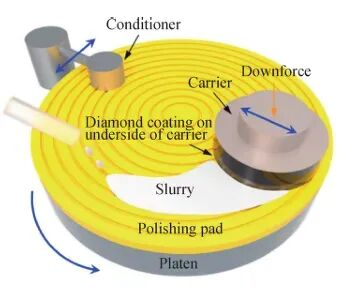
Diamond is often hailed as the “ultimate material” – ranking 10 on the Mohs hardness scale, boasting an ultra‑high thermal conductivity (~2,200 W/(m·K)), excellent chemical stability, and broad optical transparency. These properties make it irreplaceable in cutting‑edge applications such as semiconductor heat dissipation, high‑end optics, and quantum chips. Yet the paradox of “good materials are hard to process” is nowhere more evident than in diamond. From rough grinding for planarization to at