“In recent years, silicon carbide (SiC) and gallium nitride (GaN) have led the semiconductor innovation with their energy-saving and miniaturization advantages. If these two are the 'stars of tomorrow', diamond semiconductors are expected to become the future overlord due to their superior physical properties. In the past, SiC waste was transformed into moissanite, which was popular in the market for its high cost-effectiveness. Today, diamond is accelerating its entry into the semiconductor indu”
In recent years, silicon carbide (SiC) and gallium nitride (GaN) have led the semiconductor innovation with their energy-saving and miniaturization advantages. If these two are the 'stars of tomorrow', diamond semiconductors are expected to become the future overlord due to their superior physical properties. In the past, SiC waste was transformed into moissanite, which was popular in the market for its high cost-effectiveness. Today, diamond is accelerating its entry into the semiconductor industry, and its global layout and technological breakthroughs are building its industrial chain. 01 The Ultimate Power Semiconductor Material: Diamond The efficiency of silicon devices is limited at high temperatures, which promotes the application of materials such as SiC and GaN. The data capacity of communication systems has increased dramatically, and high-performance semiconductors are urgently needed. Diamond is known as the 'ultimate power semiconductor' for its high band gap, strong dielectric breakdown capability, high mobility, low power consumption and high-temperature radiation resistance, and its performance far exceeds that of silicon. Diamond semiconductors have great potential in fields such as communication satellites. They can replace vacuum tubes, improve signal amplification efficiency, and adapt to harsh environments. At the same time, they are also crucial for nuclear power simulation equipment and quantum computing. Although production faces challenges such as hardness processing, deterioration, large substrate production and cost, many institutions are still actively researching and making progress, paving the way for the industrialization of diamond semiconductors. 02 Japan is at the forefront Japan is a leader in diamond semiconductor material research and has a complete industrial chain. Orbray has mass-produced 2-inch diamond wafers and is developing 4-inch wafers; Saga University has developed diamond semiconductor circuits; Waseda University has made high-performance diamond P-type MOSFETs. Many start-ups such as Power Diamond and Ookuma Diamond Device are committed to diamond semiconductor production. Polishing technology is also improving, attracting investment from automakers. 03 America's pace accelerates In recent years, diamond semiconductor start-ups have emerged in the United States, using academic research and development to promote commercialization. Diamond Foundry created the world's first 100 mm single-crystal diamond wafer, which is planned to be used for chip heat dissipation and semiconductor substrates. Diamond Quanta has made breakthroughs in doping technology. Its founder Adam Khan is a pioneer in diamond semiconductor technology. Its unified diamond framework technology is expected to be applied to high-performance GPUs and logic chips, and is currently focused on power semiconductors. Advent Diamond has developed diamond diodes and received funding from the National Science Foundation of the United States. Its products meet high-frequency and high-power requirements. The University of Illinois has received funding from ARPA-E to develop diamond light-controlled semiconductor switching devices. Two U.S. universities have discovered new properties of boron-doped diamonds, which may promote the development of biomedical and quantum optical equipment. 04 Europe focuses on diamond manufacturing
DIAMFAB: A French startup focused on diamond epitaxy and doping, it holds four patents and plans to launch 4-inch diamond wafers in 2026. It has received 8.7 million euros in financing, uses HPHT or MPCVD technology, and cooperates with many international companies.
The European Union has allocated 81 million euros to support Diamond Foundry Europe in building a diamond foundry in Spain, with a total investment of 675 million euros, and plans to produce single-crystal diamond chips in 2025.
Element SiX: A synthetic diamond and metamaterials manufacturer that provides full value chain solutions for semiconductor and electronics manufacturing, including CVD diamond thermal management, cutting and polishing tools, and precision machining tools.
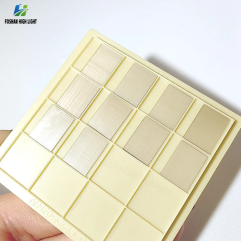
05 China is not inferior If diamond semiconductors are widely used, a stable supply of high-quality artificial diamonds will be crucial. As an important production base for artificial diamonds, China has many listed companies such as Power Diamond and Huifeng Diamond involved. China's diamond semiconductor research and development and industrialization are accelerating. The Xi'an Jiaotong University team successfully mass-produced 2-inch heteroepitaxial single crystal diamond substrates and won national honors; the Peking University Dongguan Optoelectronics Research Institute team jointly developed a large-scale ultra-smooth flexible diamond film preparation method, and the results were published in the journal Nature. On the corporate side, High Light Intelligence Technology focuses on the research and development and production of wide bandgap semiconductor materials, and has put into production a semiconductor high-power heat sink diamond functional material project to promote the application and development of diamond semiconductor materials. 06 Conclusion Diamond semiconductor materials have a promising future, and countries are increasing their investment in technology research and development. The global market is highly competitive. Companies in the United States, Japan, Europe, and China are actively engaged in research and development in order to seize the leading opportunities. Diamond is moving from the laboratory to industrial reality.
In recent years, silicon carbide (SiC) and gallium nitride (GaN) have led the semiconductor innovation with their energy-saving and miniaturization advantages. If these two are the 'stars of tomorrow', diamond semiconductors are expected to become the future overlord due to their superior physical properties. In the past, SiC waste was transformed into moissanite, which was popular in the market for its high cost-effectiveness. Today, diamond is accelerating its entry into the semiconductor indu